

 Login
Login
Articles
Raghu Vamsi Aerospace Group: Interview with the CMD
Sub Title : Mr Vamsi Vikas, CMD addresses a number of issues concerning his company, its initiatives and the challenges faced by the industry
Issues Details : Vol 19 Issue 6 Jan – Feb 2026
Author : Editorial Team
Page No. : 38
Category : Military Technology
: January 22, 2026
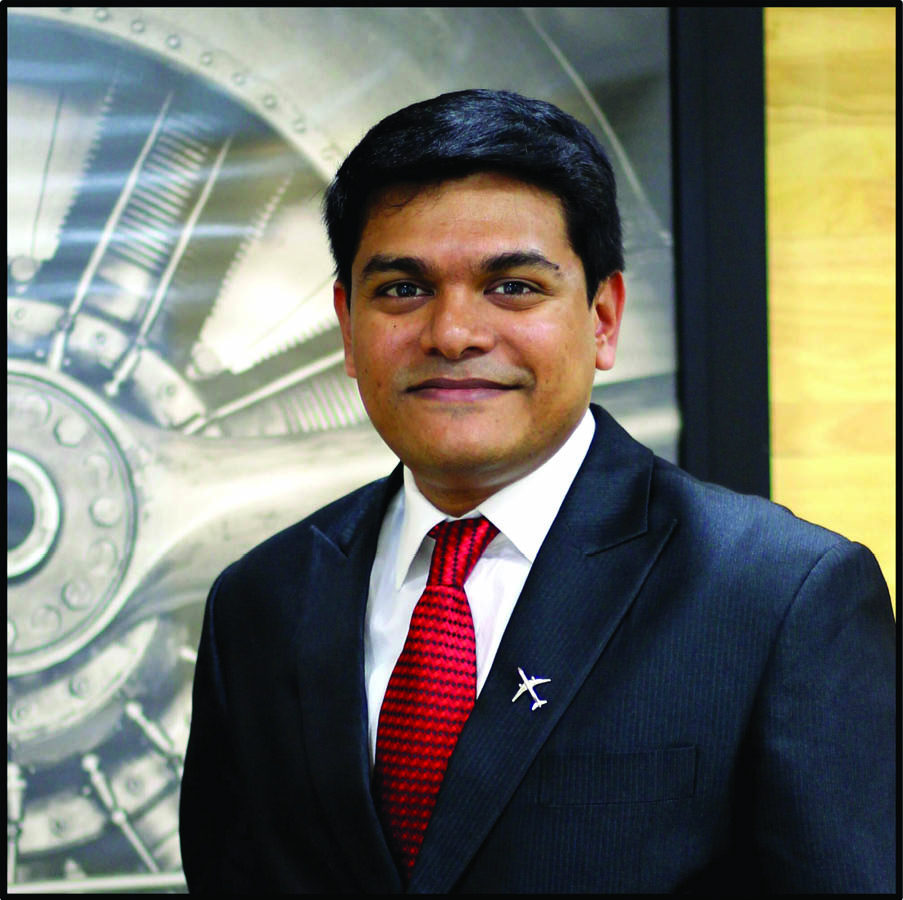
Interview: Mr Vamsi Vikas, Managing Director, Raghu Vamsi, Aerospace Group
Raghu Vamsi Aerospace Group is an Indian aerospace and defence manufacturing group with deep capabilities spanning precision manufacturing, mission systems, propulsion, and indigenous autonomous platforms. Built on execution discipline and engineering ownership, the Group supports critical defence and aerospace programmes from design through deployment and sustainment.
Mr Vamsi Vikas is the CMD of Raghu Vamsi Aerospace Group and is known for building long-cycle aerospace and defence capability in India. With over two decades of experience, he has led complex manufacturing, system integration, and indigenous technology programmes aligned with national security priorities.
In a free-wheeling interview with South Asia Defence & Strategic Review (Defstrat), Mr Vamsi Vikas spoke at length on the company’s initiatives, the prevailing industry environment, and the challenges facing India’s aerospace and defence manufacturing ecosystem. Excerpts from the interview:-
Defstrat: Raghu Vamsi Aerospace Group has evolved from a precision manufacturing into a system-level defence player. How do you describe this journey?
Vamsi Vikas: This transformation is powered by responsibility, not just ambition. We spring-boarded on our manufacturing strength, but true capability in defence is owning design intent, system integration and long term sustainment. Moving into systems, propulsion and unmanned platforms is a natural evolution as the company seeks full ownership of creating capability and lifecycle liability.
Defstrat: How mature is India’s private defence manufacturing ecosystem today, and where does the next leap need to happen?
Vamsi Vikas: Today, the Indian ecosystem is several orders of magnitude more capable than it was a decade ago and has significant depth in precision manufacturing, electronics, and software. The next jump needs to be made in system level integration and sustained production at scale. There has been a meaningful shift in industry confidence and so investments now outpaces certainty which is also a sign of structural maturity.
Defstrat: Where do you see the biggest stress points for industry?
Vamsi Vikas: The largest risk is transitioning from development to early production. Here is where industry places its capital for tooling, suppliers, and integrations without complete visibility on volumes or program continuity. As this phase gets extended, costs increase and you lose momentum even if the technology is really good. Finding a solution for this area of transition is the one critical element which when solved will enable indigenous capability to superscale.
Defstrat: What are your expectations from the Armed Forces as indigenous industry takes on greater system-level responsibility?
Vamsi Vikas: A partnership model where the Armed Forces are long-term stakeholders in capability creation will determine how successfully India builds and sustains indigenous systems at scale. Early and sustained feedback helps the industry align engineering decisions with operational reality and reduces rework later in the programme. It also supports a design-forward perspective, where we can start off with new architectures as opposed to retrofitting and upgrading legacy platforms over time. The capabilities can develop fastest when users remain involved beyond initial trials through refinement, induction, and iterative improvement.
Defstrat: Raghu Vamsi has announced multiple strategic partnerships. How do these collaborations add value?
Vamsi Vikas: Our partnerships with Armed Forces, defence PSUs, research organisations, and academia are for the identified capability gaps in propulsion, autonomy, and materials. The goal is not a symbolic partnership but to compress learning cycles, mitigate programme risk and see technologies mature into deployable and sustainable systems that meet operational requirements.
Defstrat: You have invested heavily in infrastructure like the Citadel Campus. Why is this important?
Vamsi Vikas: Citadel Campus has been built to break down walls between development, integration, and production. These phases usually end up slowing down a defence programme. Bringing them together under one roof forges the way to parallel execution, clear ownership, rapid decision-making and short feedback loops, all of which are vital when scaling complex defence systems effectively.
Defstrat: Could you outline your current product range and how it aligns with India’s defence requirements?
Vamsi Vikas: Our product portfolio today spans unmanned aerial platforms, loitering and mission-specific UAVs, indigenous micro-turbojet engines, propulsion subsystems, autonomous ground platforms, and associated mission and integration systems. The common thread across these products is that they are designed with deployment and sustainment in mind, not as standalone demonstrations.
We focus on systems that address real operational gaps including speed of deployment, survivability, modularity, and scalability rather than building niche platforms with limited lifecycle relevance. Importantly, these products are developed alongside our manufacturing and integration capabilities, which allows us to control quality, configuration, and repeatability. Over time, this integrated approach is what enables us to move from individual products to families of systems that can evolve with operational requirements.
Defstrat: Indigenous content and supply-chain security are critical policy priorities. How does Raghu Vamsi address this, particularly regarding foreign-origin software and hardware?
Vamsi Vikas: From the outset, we have taken a very deliberate position on supply-chain integrity. All our platforms are designed to comply fully with India’s indigenisation policies, and we consciously avoid the use of software or hardware of Chinese origin across our systems. This is not just a compliance requirement; it is a strategic necessity.
Supply-chain opacity creates long-term operational risk, especially in defence systems that must be sustained over decades. Wherever indigenous options exist, we prioritise them. Where they do not, we work with trusted partners from aligned ecosystems while actively investing in domestic alternatives. This approach sometimes slows early development, but it significantly strengthens long-term autonomy, upgrade control, and operational confidence for the user.
Defstrat: How real is the global interest in sourcing defence systems from India?
Vamsi Vikas: There is a possibility of defence export, yet it also requires consistency over the long term in compliance regimes, certification convergence, documentation discipline and lifecycle support. Those are all things industry has to invest in well before you get the commitment of an order. Export credibility is built up over time through execution and follow-through, not through announcements and intent alone.
Defstrat: Looking ahead, what would success look like for Raghu Vamsi Aerospace Group?
Vamsi Vikas: Success is defined by trust. When we take responsibility for the entire system, from design to sustainment, of a critical defence platform; that is progress. Beyond being free from the questioning of Indian industry’s capability as an end, success will be when it is all taken for granted that India can produce complex defence systems at scale and with consistency and long-term ownership.
