

 Login
Login
Articles
South Asia Instability, Alignment, and India’s Strategic Burden
Sub Title : South Asia is facing unstable political scenarios in majority of the countries in the region, placing added responsibility on New Delhi
Issues Details : Vol 19 Issue 6 Jan – Feb 2026
Author : Ashwani Sharma, Editor-in-Chief
Page No. : 16
Category : Geostrategy
: January 22, 2026
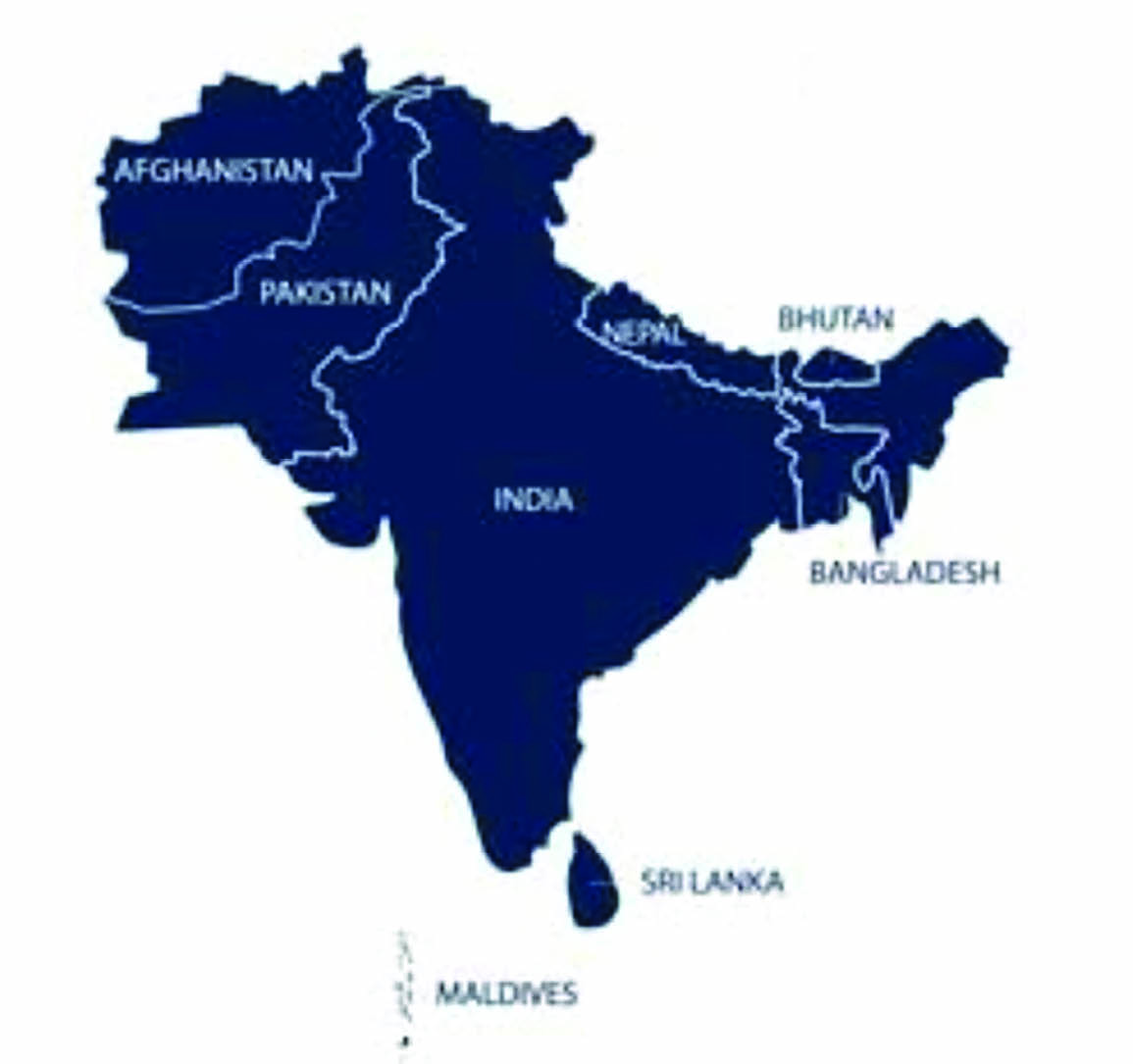
South Asia’s biggest problem is not external interference but internal failure. Weak institutions and short-term politics create openings that outsiders exploit. India must continue to act as a steady anchor, but it should be clear-eyed – goodwill has limits, and stability cannot be imposed. Ultimately, South Asia’s future depends on whether its states choose reform over rhetoric, and responsibility over resentment.
South Asia has always been a complex and uneasy region. History, geography, politics, and identity intersect here in ways that make stability difficult and fragile. Yet, in recent years, the region appears to have entered a particularly uncertain phase. Political churn, economic stress, social unrest, and external interference are coming together across several countries at the same time. Old problems are deepening, and new ones are emerging.
At the centre of this turbulence stands India, not by choice alone, but by circumstance. As the largest economy, strongest military power, and most stable political entity in the region, India increasingly finds itself carrying the burden of regional stability. Whether it is managing crises, extending economic support, or dealing with security spill overs, India’s role has become unavoidable. South Asia today is at a crossroads. The choices its nation states make about governance, alignment, and internal cohesion will determine whether the region moves toward stability or deeper fragmentation.
A Region Under Strain. South Asia’s problems are not new, but their intensity and simultaneity are. Political legitimacy is under question in many countries. Economies are struggling with debt, inflation, and unemployment. Social fault lines, religious, ethnic, and ideological are widening. At the same time, external powers are becoming more active, often exploiting local weaknesses for strategic gain. The region is also marked by weak regional institutions. SAARC, once envisioned as a platform for cooperation, has become largely irrelevant. Bilateral tensions dominate regional politics, leaving little room for collective problem-solving. In this environment, instability in one country rarely remains confined within its borders. Refugee flows, terrorism, organised crime, and economic shocks quickly spill over, affecting neighbours. For India, this interconnectedness means that internal crises in neighbouring states often turn into external challenges.
Let us take a brief look at the region:-
Pakistan. No discussion on South Asian instability can begin without Pakistan. It is a state trapped in Its own contradictions. The country is facing a deep and prolonged crisis that is political, economic, and institutional. At the heart of Pakistan’s problems lies an unresolved civil – military imbalance. The military continues to dominate national decision-making, while civilian governments remain weak, divided, and lacking legitimacy. Political leaders rise and fall, but the underlying structure remains unchanged. This has created a cycle of instability, where governance failures are repeated without accountability.
Economically, Pakistan is in a fragile state. High inflation, mounting debt, and dependence on external bailouts have eroded public confidence. The country’s reliance on international lenders has reduced policy autonomy, while domestic reforms remain politically risky and incomplete.
From India’s perspective, Pakistan’s instability poses serious security concerns. A politically weak and economically stressed Pakistan is more prone to adventurism, proxy conflicts, and internal radicalisation. Terror groups find space in governance vacuums, and anti-India narratives continue to serve as convenient distractions from domestic failures. The danger is not just of hostility, but of unpredictability. A Pakistan struggling to hold itself together is far more difficult to deal with than a stable adversary.
Bangladesh. Political Flux and Strategic Sensitivity in Bangladesh causes concern. For decades, Bangladesh was often cited as a relative success story in South Asia with steady economic growth, improving social indicators, and a firm stance against extremism. Today, however, the country is going through a period of political and social tension. Electoral credibility, political freedoms, and governance practices have come under scrutiny. Protests, opposition suppression, and questions over institutional independence have created unease. While the state remains functional, the political compact between rulers and citizens is under stress.
Bangladesh’s internal stability matters deeply to India. The two countries share a long and sensitive border, strong economic ties, and close security cooperation. Any prolonged instability in Bangladesh could have spill over effects, migration pressures, border tensions, and space for extremist elements.
At the same time, Bangladesh is also becoming a site of strategic competition. External actors are increasing their presence through infrastructure projects, investments, and political outreach. For India, the challenge is to support stability without appearing intrusive, and to maintain trust without being drawn into domestic political contests.
Sri Lanka and the Maldives. Small States, Big Pressures. The island nations of South Asia – Sri Lanka and Maldives highlight how economic vulnerability can quickly translate into strategic exposure.
Sri Lanka’s recent economic collapse was a wake-up call for the region. Years of poor fiscal management, unsustainable borrowing, and policy missteps led to shortages, protests, and political upheaval. India played a crucial role in extending timely economic assistance, helping Sri Lanka avoid a complete breakdown. However, economic recovery alone does not guarantee political stability. Social discontent, ethnic divisions, and governance challenges remain unresolved. External influence, particularly through debt and infrastructure, continues to shape Colombo’s strategic choices.
The Maldives, though much smaller, presents a different kind of challenge. Domestic politics there have increasingly linked foreign policy to internal power struggles. Shifts in leadership often result in sharp swings in external alignment. Anti-India rhetoric, even when driven by local political considerations, has direct implications for India’s maritime security and regional posture.
For India, dealing with smaller neighbours requires a careful balance, with firmness on core interests, sensitivity to sovereignty concerns, and patience in engagement.
Afghanistan. (Instability without borders) Afghanistan remains South Asia’s most complex and unpredictable problem. Since the return of the Taliban, the country has been largely isolated from the international system. Governance structures are weak, economic activity is limited, and humanitarian challenges are severe. For the region, Afghanistan is not just a distant concern. Instability there affects Pakistan, Central Asia, and India through terrorism, radicalisation, and illicit networks. The absence of an inclusive political process and continued restrictions on basic rights have reduced prospects for long-term stability.
India’s approach to Afghanistan has been cautious and pragmatic. Without formal recognition, India has maintained channels focused on humanitarian assistance and people-to-people ties. The challenge is to protect long-term interests without legitimising policies that undermine regional stability.
Afghanistan reminds South Asia of an uncomfortable truth and that is – unresolved conflicts do not remain frozen. They evolve, spread, and resurface in new forms.
India as the Reluctant Stabiliser
Across South Asia, a pattern is becoming clear. When crises erupt which may be of economic, political, or humanitarian nature, it is India that is expected to respond. Whether through financial assistance, diplomatic engagement, or security cooperation, India often becomes the first port of call. This role is not without cost. Resources are limited, domestic priorities are pressing, and public opinion does not always favour generous regional outreach. Moreover, India’s actions are often scrutinised and misinterpreted, sometimes even politicised by neighbouring elites.
Yet, India cannot afford disengagement. Geography does not allow distance, and instability in the neighbourhood directly affects India’s security and economic interests. The choice is not between involvement and non-involvement, but between proactive engagement and reactive crisis management.
India’s challenge is to shape outcomes without dominating them and to lead without appearing hegemonic.
External Powers and the Regional Chessboard
South Asia is no longer insulated from global strategic competition. External powers see opportunity in the region’s vulnerabilities. Investments, military cooperation, and political influence are increasingly tools of alignment. For smaller South Asian states, engaging multiple partners offers leverage and options. For India, it complicates the strategic landscape. The concern is not competition per se, but the erosion of regional autonomy and the creation of dependencies that undermine long-term stability.
India’s response has been to emphasise connectivity, capacity-building, and development partnerships rather than coercive leverage. Whether this approach can consistently compete with more transactional models remains an open question.
The Road Ahead for South Asia
South Asia’s future will depend largely on internal reforms within its states. No amount of external support can substitute for accountable governance, inclusive politics, and economic resilience. At the regional level, trust deficits remain deep. Without a minimum level of cooperation, shared challenges like climate stress, public health, migration, and security will only intensify.
For India, the task ahead is demanding. It must secure its borders, manage competition, support neighbours, and protect its own growth trajectory, all at the same time. Strategic patience, policy consistency, and institutional trength will be critical.
Conclusion
South Asia stands at a critical crossroads. The choices made today by leaders and societies alike, will shape the region for decades. Continued instability will trap the region in cycles of crisis and dependency. A turn toward reform and cooperation could unlock its enormous potential.
India cannot solve South Asia’s problems alone, but it cannot escape them either. Its role as a stabilising force is less about ambition and more about responsibility. The challenge is to carry this burden without being overwhelmed by it.
