

 Login
Login
Articles
The Cost of Poor Sustainment
Sub Title : Sustainment of equipment is imperative as it has a major bearing in shaping the outcome of wars
Issues Details : Vol 19 Issue 6 Jan – Feb 2026
Author : Lt Gen NB Singh, PVSM, AVSM, VSM
Page No. : 33
Category : Military Technology
: January 22, 2026
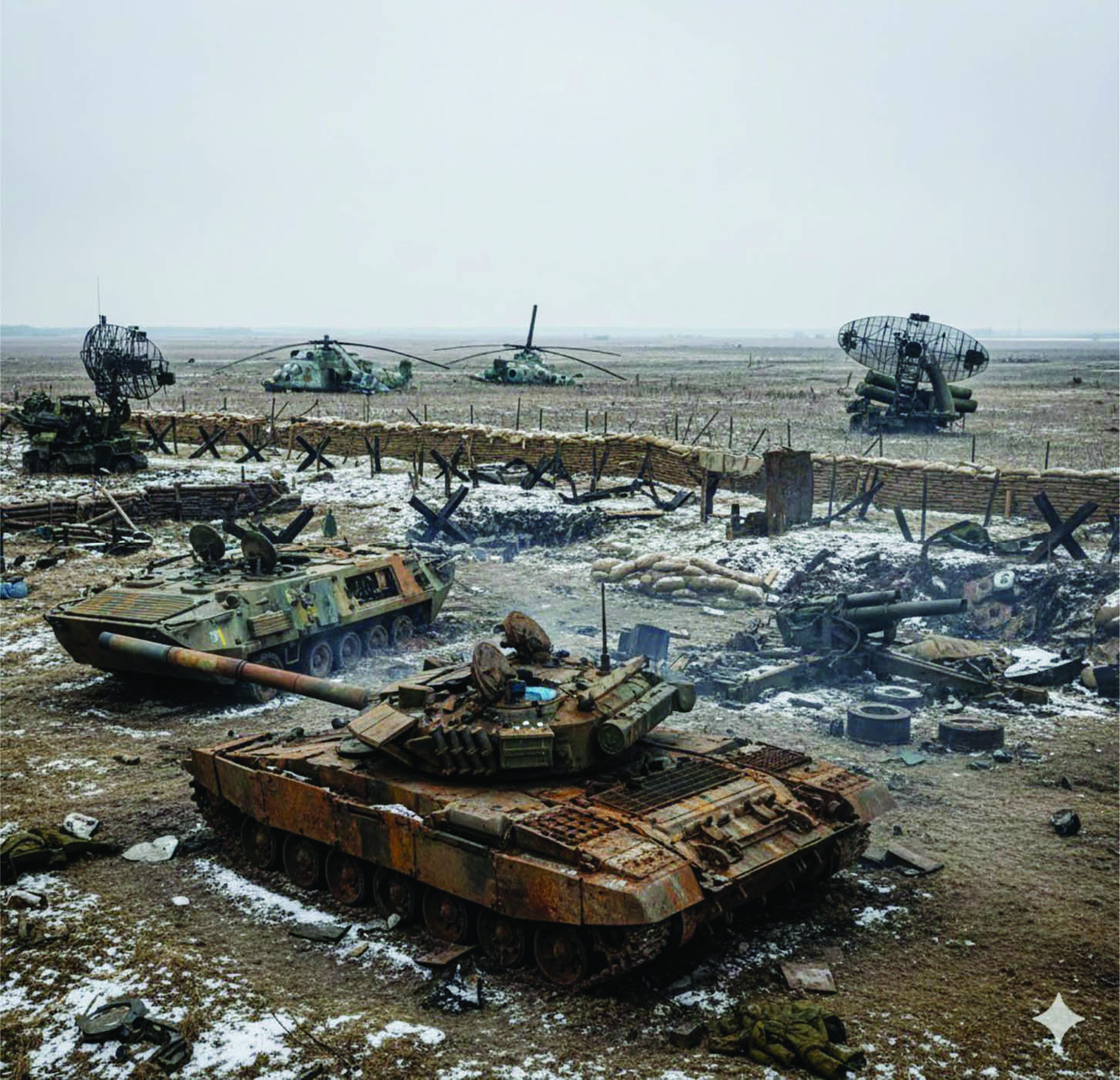
The costs of poor engineering sustainment for combat platforms are rarely just financial; they manifest as a catastrophic “cascade of failure” that compromises strategic objectives, drains national reserves, and leads to preventable loss of life. In modern conflicts like the war in Ukraine, sustainment has often proven to be the “primary” factor deciding the overall strategy itself. Militaries that don’t sustainably support their platforms risk erosion of readiness during prolonged high-intensity conflict. In our context , for platforms lined up in the North, a pragmatic approach to sustaining readiness and operational resilience is required as over a period of time age, usage and deployment effects will take a heavy toll of equipment capability silently and surely. Some of the significant costs that impact mission outcomes are:-
- Operational Cost: The Loss of “Combat Mass”. The most immediate cost of poor sustainment is the rapid depletion of operational equipment. In the early phases of the Ukraine invasion, Russian forces suffered from “deep operation” failures because recovery vehicles were insufficient for the distances planned . When a $5 million tank breaks down due to a lack of basic maintenance and no recovery vehicle is available, it is often abandoned. This turns a repairable failure into a total hull loss. Poor industrial sustainment leads to “battlefield stripping” and cannibalisation. Design inadequacies contribute to loss of mass. A top attack on T series tank is almost always a total hull loss. This makes the “repair and return” cycle impossible, leading to a permanent drain on combat mass.
- Economic Cost: The “Refurbishment Trap”. Neglecting sustainment creates an exponential increase in life-cycle costs. Sustainment typically accounts for 70% of a platform’s total lifetime cost (70-30 rule). When this is neglected, the “reset” cost can spike to 3–5 times the original maintenance budget. Analysis shows that due to depletion of reserves, Russia’s reliance on refurbishing old Soviet-era stocks became a necessity.
- Logistical Cost: The Interchangeability Nightmare. A hidden cost of poor engineering sustainment is the lack of parts interchangeability. In the Ukraine conflict, the variety of different engine models and fire control systems has created a “logistical nightmare. Poor sustainment makes a military more vulnerable to supply chain shocks as there is not enough “buffer” of critical spare parts.
- Strategic Cost: The Loss of Momentum. The inability to sustain platforms leads to a loss of initiative and maintenance of operational tempo. The “Mud” Factor in Ukraine, poor maintenance of basic parts like tires and batteries led to vehicles being mired in mud. This didn’t just cost a few trucks; it stalled 60km-long convoys, allowing the adversary to target them with cheap3, $500 FPV drones
Poor Availability of NATO platforms
While the first phase of the war highlighted Russian engineering failures, the second phase (2023–2025) exposed a different crisis: the low mission-capability rates within NATO’s own inventories. The adverse impact on Ukraine’s war effort can be categorized into four primary inhibitors:
- The “Paper Tiger” Inventory Gap. Many NATO nations pledged equipment based on garage availability rather than “mission capable” rates. In 2023, reports emerged that some German units had availability rates below 50%. When it came time to donate Leopard 2 tanks, European allies struggled to find enough hulls that didn’t require months of deep maintenance before they could be shipped. This led to “drip-feeding” of armour.
- Cannibalization (The “Spare Parts” Black Hole). Because NATO militaries had moved to “Just-in-Time” logistics, spare part stocks were nearly non-existent. German-made PzH 2000 howitzers sent to Ukraine began failing within weeks due to the high rate of fire. Because European stocks of replacement barrels and breech blocks were low, active NATO units had to be cannibalized to keep Ukrainian guns firing.
- The “Rube Goldberg” Logistics Chain. NATO’s poor sustainment forced Ukraine to manage a “Frankenstein Fleet”—a mix of over 15 different types of Western armoured vehicles. Because these armaments were too complex for field repair, they had to be shipped back across the border to hubs in Poland. At any given time, 20–30% of donated advanced Western hardware was unavailable for combat.
- Readiness-Driven Political Hesitation. The poor state of NATO’s own mission-capable platforms created a “Zero-Sum” political environment. The delay in F-16 transfers was partly due to the fact that many European F-16s were at the very end of their service lives. When the US industrial base struggled to produce new Abrams or Bradleys fast enough, European donations stalled.
Minimising Sustainment Costs
To minimize the costs of poor engineering sustainment, militaries must move from “reactive” maintenance to a Life Cycle Management model where sustainment is treated as a primary combat capability. Based on lessons from recent conflicts here are some essential measures:
- Shift to “Sustainment as a KPP” (Key Performance Parameter). Traditionally, militaries prioritize lethality over sustainment. Designating «Sustainability” as a mandatory KPP forces contractors to prove that a platform is maintainable and highly reliable . It prevents the “Augustine’s Law” trap—where equipment becomes so complex and expensive to maintain that a military can only sustain a handful of mission-capable units.
- Implementation of Digital Twins and Predictive Maintenance. Instead of relying on manual inspections, modern fleets use Digital Twins—virtual replicas of physical assets that mirror their real-world condition. Embedding IoT sensors into engines, transmissions and structural hulls to feed real-time data into AI-driven predictive models is a must. This identifies a “part-of-consequence” (like a failing bearing) before it leads to a catastrophic engine failure.
- Move Towards Modular and Open Architectures. A major cost of poor sustainment is the inability to upgrade aging hardware. A Modular Open Systems Approach (MOSA) wherein hardware (like optics or radios) use standardized interfaces that allow parts from different vendors to be swapped is called for.
- Distributed Manufacturing (Additive/3D Printing). The “iron mountain” of traditional logistics-vast warehouses of spare parts—is a vulnerability and a massive cost sink. Deploying industrial-grade 3D Metal Printers from the brigade to base workshops can bypass global supply chain disruptions. If a tank needs a specific hydraulic bracket that is out of stock, a field unit can print a certified replacement in hours rather than waiting months for a shipment, drastically reducing “Non-Mission Capable” (NMC) time.
- Standardized “Cannibalization” Metrics. Cannibalization destroys long-term fleet health. Formalising and tracking cannibalization through digital logistics systems to identify systemic supply gaps is a way forward
Regeneration of Combat Power: Gold Standard
The Yom Kippur War (1973) is often cited as the gold standard for “battlefield regeneration”—the ability to repair and return damaged equipment to the front line while the war is still being fought. While the Arab coalition (Egypt and Syria) relied on massive initial inventories and Soviet resupply, the IDF relied on a superior Maintenance
Corps that effectively treated damaged tanks as “temporary losses.” Some of their best practices were :-
- The “50% Return” Statistic. The most staggering example of sustainment excellence is the IDF’s tank recovery rate on the Sinai front. During the war, Israel lost approximately 840 tanks to battle damage. Due to the rapid intervention of maintainers, fully half (over 400 tanks) were recovered, repaired in field workshops, and returned to the fight .This effectively meant that the IDF “produced” a massive armoured division’s worth of tanks without needing a single new shipment from overseas.
- The Golan “Revolving Door” (Valley of Tears). In the North, the 7th Armoured Brigade faced an onslaught of 1,400 Syrian tanks with only 177 Centurions. IDF maintainers established repair points just hundreds of meters behind the active firing ramps. Technicians worked 24 hours a day under heavy artillery fire. A tank would roll off the firing ramp with a broken track or a jammed turret, be swarmed by maintainers and be back in its “hull-down” position within an hour .This “revolving door” created a psychological illusion of infinite Israeli reinforcements.
- The “Checkpoint” System. General Avraham Adan established a revolutionary “Checkpoint” system behind the Suez Canal crossing. As damaged tanks and wounded crews retreated, they were met by «Sortie Officers» at a designated checkpoint. Technicians would immediately swap parts between two damaged tanks to create one functional one. This turned a chaotic retreat into a structured regeneration cycle.
- The Human Factor: Crew-Platform Synergy A critical sustainment failure in modern wars (like Ukraine) is the separation of the crew from their machine. The IDF minimized this cost through “Integrated Recovery.” Whenever possible, the original crew stayed with their tank during repairs. If the tank was a “total loss,” the crew was immediately assigned to a repaired hull from the workshop. This prevented the “de-cohesion” of units.
Mobile forward Repair Teams
The Yom Kippur War proved that sustainment is a force multiplier. The IDF didn’t just win because of better tanks; they won because they could use the same tank three times in a single week, while their adversaries could only use it once. While the U.S. airlift under Operation Nickel Grass could deliver approximately 100–150 tanks ,in the same period, the IDF Maintenance Corps recovered and repaired over 400 tanks. Without this «internal production,» Israel’s armoured divisions would have reached a “zero-point” before American deliveries. The “cost” of poor sustainment for the Arab coalition was that they effectively fought a “one-life” war; once their initial 2,000+ tanks were damaged, they stayed out of the fight. The IDF’s sustainment success in the 1973 Yom Kippur War was driven by a philosophy of “Battlefield Reconstitution,” where the maintainers treated damaged equipment not as wreckage, but as a temporary state. Fig below gives a graphical account of how combat force re-generation occurred. If failure rates are low ( highly reliable systems) and repair capacity high, most platforms are returned back in 2-6 hours.
Sustainment by US Army during the Gulf War
During the Gulf War (1991), US Army sustainment reached a level of sophistication that essentially “broke” the Iraqi military’s ability to respond. While the air war was high-profile, the ground victory was fuelled by an unprecedented logistics feat known as the “Logistics of the 100-Hour War.”. Despite the extreme heat and fine “moon dust” sand, 3rd Infantry Division maintained a 95% mission-capable rate during the dash to Baghdad. Maintainers rapidly optimized the V-pack air filters on the Abrams tanks and ensured that thermal sights remained calibrated despite 40°C temperature swings between day and night. The Gulf War saw the first major use of Aircraft Maintenance and Munitions Support Systems (AMMS).Instead of paper logbooks, maintainers used early computerized systems to track “Mean Time Between Failures” (MTBF) for high-wear components like helicopter rotor blades and tank filters.
Imperatives for Readiness in Mountains and High Altitude
Maintaining combat platforms in mountainous and high-altitude areas (typically above 10,000 feet) is a battle against three primary environmental enemies: thin air (hypoxia for machines), extreme cold, and vertical terrain. Standard maintenance protocols often fail in these zones because the engineering assumptions of «sea-level” operations no longer apply; some issues are highlighted below:-
- Mechanical & Engine Sustainment. The most critical challenge at high altitude is volumetric efficiency. Engines designed for sea-level lose roughly 3% of their power for every 1,000 feet of elevation due to reduced oxygen . Engines must rely heavily on turbochargers to compensate for thin air. Modern “Electronic Control Units” (ECUs) must be recalibrated for “High Altitude Compensation” to prevent “rich” fuel mixtures that lead to carbon build up on valves and rapid oil degradation. Cooling systems must be kept under higher pressure to prevent “boil-off” and engine overheating, despite the external cold.
- Structural & Material Integrity. The combination of high UV radiation and extreme temperature swings (diurnal cycles) creates a unique “fatigue” environment. Rubber seals on hydraulic struts and hatch surrounds become brittle and crack. A “daily exercise” of moving all hydraulic parts (turret traverse, suspension levelling) is required to prevent seals from “setting” and leaking. Continuous downhill manoeuvres on steep slopes cause rapid “brake fade.”
- Aerial & Drone Sustainment. High-altitude drones could face “thin-air” lift challenges and may often require larger or more aggressively pitched propellers to generate lift in lower air density. In the thin atmosphere, heat dissipation for electronics is actually less efficient (due to fewer air molecules to carry heat away), meaning flight controllers can overheat even in cold weather . This calls for better thermal management systems for electronics.
Cocooning and Mothballing in High Altitudes.
While cocooning and mothballing are standard practices for long-term preservation in deserts/plains, applying them at high altitudes (above 10,000 feet) is generally not advisable. The very factors that make high altitudes unique- low oxygen, extreme UV and intense pressure differentials – undermine the “hermetic seal” that mothballing relies on. If even a small amount of moisture is trapped inside the cocoon during the sealing process, these temperature swings will cause it to constantly evaporate and then condense directly onto sensitive electronics and engine bearings (the “greenhouse effect”). At high altitudes, this cycle is more aggressive, leading to accelerated internal corrosion .
Better Alternatives for High-Altitude Preservation
Instead of traditional cocooning, the Army could consider using :–
- Controlled Humidity Warehouses (CHW): Hard-structure hangars with industrial dehumidifiers. This provides a physical shield against UV and wind while maintaining a stable internal atmosphere.
- Vapour Corrosion Inhibitors (VCI): Instead of a physical wrap, platforms are «fogged» internally with chemicals that bond to metal surfaces at a molecular level, protecting them even if the external air is thin and cold.
- Engine “Motoring” Protocols: Rather than mothballing, engines are «motored» (turned over without starting) every 30 days to keep oil films on critical bearings, which is more effective than sealing them in a potentially damp cocoon.
A Sustainment Audit Framework.
It is crucial that the Army moves away from “hope-based” readiness toward data-driven readiness for platforms at the LAC at least. A “Combat Ready” assessment process could help evaluate if a platform is a “liability” or an “asset” give out the readiness state of a unit- how far it can run and how long it can jump.
Conclusion
Combat operations in our context are likely to be multi domain as Op Sindoor has demonstrated. MDOs require sustainment to be as agile and “stealthy” as the combat units themselves. Distributed engineering where small, mobile repair teams remain hidden and frequently move to the damaged platform will be a must. Equipment will have to “self-diagnose” to ensure it doesn’t fail during a critical multi-domain window (e.g., a tank failing during an electronic warfare blackout .IoT has the advantage that a commander can look at a “Heat Map” of the fleet’s health and know exactly which tanks have a 99% probability of surviving a 72-hour high-intensity breakout .
