

 Login
Login
Articles
Modern and Legacy Platforms : Strategic Continuity, Technological Integration and Generational Renewal
Sub Title : Discusses blending legacy and modern platforms for strategic renewal.
Issues Details : Vol 20 Issue 1 Mar – Apr 2026
Author : Maj Gen Sanjiv Slaria, YSM, VSM
Page No. : 60
Category : Military Affairs
: March 21, 2026
India’s strategic environment characterised by high-intensity conventional threats along multiple borders, asymmetric challenges, and a rapidly modernising regional military landscape requires a calibrated approach to force modernisation. Legacy platforms, particularly India’s tank fleet, continue to offer strategic relevance when systematically modernised and doctrinally integrated. Simultaneously, structural obsolescence necessitates timely replacement to prevent survivability gaps and capability erosion. Drawing upon military innovation theory, global modernisation trends, conflict analysis, cost-effectiveness studies, and Indian operational requirements, this paper develops a Modernise – Replace decision framework and measurable modernisation threshold indicators. The findings emphasise a dual-track strategy of modernisation where feasible and replacement where essential, to maintain operational readiness and doctrinal continuity.
Introduction
The evolution of modern warfare is defined by both technological innovation and doctrinal adaptation. While technological breakthroughs such as precision-guided munitions, unmanned aerial vehicles, AI-enabled command networks, and network-centric operations receive widespread attention, sustainable combat effectiveness relies on seamless integration into doctrine, sustenance, training, and logistics ecosystems. India, with its unique geostrategic position, faces multifaceted threats: high-altitude standoffs along the Northern Borders, sub conventional threat and conventional confrontations along the Western Border, and the need for maritime projection and security in the Indian Ocean Region. These challenges necessitate a balanced modernisation approach that maintains quantitative and qualitative combat power.
The debate over modernisation versus replacement reflects a theoretical tension between evolutionary and revolutionary military innovation. Revolutionary leaps may yield dramatic capability gains but often induce doctrinal disruptions, create industrial bottlenecks, and demand extensive training and logistical realignment. Evolutionary modernisation, by contrast, preserves operational continuity and institutional knowledge, enabling incremental integration of next-generation capabilities (Krepinevich 2002). In the Indian context, the dual-track approach of modernising existing tank fleet while planning the phased introduction of future-ready platforms such as the Future Ready Combat Vehicle (FRCV) and Indian Light Tank (ILT) is essential to maintain a credible deterrent posture and operational readiness across multiple domains.
Legacy Platforms and Obsolescence
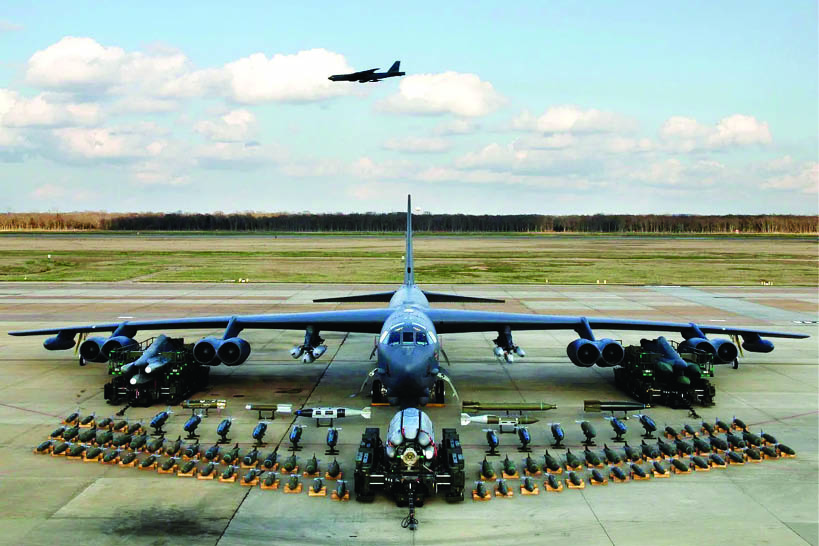
Legacy platforms are characterised by proven operational performance, structural robustness, and modular design that allows incremental upgrades without destabilising existing doctrine or training paradigms. The B-52 Stratofortress exemplifies a legacy platform characterised by proven operational performance and structural robustness, having remained in service since 1955. Its large, adaptable airframe allows continuous modernisation through upgraded avionics, radar, engines, and weapons integration. These incremental improvements enhance capability without disrupting established doctrine or training systems. As a result, the B-52 demonstrates how legacy systems can sustain operational continuity while integrating next-generation technologies. Contrary to popular perception, the term “legacy” does not imply obsolescence; it denotes enduring utility, strategic continuity, and upgrade potential. Indian tank fleet legacy platforms such as the T-72, T-90 and Arjun, exemplify systems that can absorb technological enhancements ranging from digital fire control systems to Active Protection Systems (APS), counter-UAS solutions, and advanced communications networks.
Obsolescence occurs when a platform is unable to accommodate upgrades, suffers from structural limitations, lacks electrical or weight margins, or cannot survive emerging battlefield threats. For example, legacy vehicles that cannot integrate APS or digital communications, computers, intelligence, surveillance, and reconnaissance (C4ISR) systems face increasing vulnerability against precision-guided weapons or swarm drone attacks (Watling and Reynolds 2022) come under the zone of obsolescence.
The Changing Battlefield Environment
The modern battlefield has undergone profound transformation over the past two decades. It is now characterised by transparency, digital connectivity, precision dominance, compressed operational timelines, and multi-domain integration. Persistent ISR capabilities enabled by satellites, UAVs, and networked sensors have made concealment and surprise increasingly difficult. Precision-guided munitions and loitering weapons can neutralise conventional mass with remarkable efficiency. Digital C4ISR systems allow real-time decision-making and integrated operations across land, air, maritime, cyber, and space domains.
Apart from the threat from drones, electronic warfare, cyber operations, and communications jamming have introduced a new dimension of vulnerability. In India’s operational context, this multidimensional threat environment necessitates mechanised forces that are resilient, networked, and capable of operating under degraded conditions.
Strategic Logic of Modernisation and Replacement
Modernisation provides a strategically efficient pathway to preserve combat power. Operational reliability is central; India’s armoured fleet has demonstrated resilience in extreme environments, from deserts to high-altitude regions such as Ladakh. Modernisation enhances survivability, improves situational awareness, and allows incremental integration of new technologies, extending the service life of legacy platforms.
Cost efficiency further justifies modernisation. Comprehensive upgrades typically cost 25–35 percent of the expense of acquiring new platforms while preserving approximately 70–75 percent of combat capability. Modernisation sustains domestic industrial capacity by engaging ordnance factories, research and development laboratories, and private sector defense manufacturers. These programs provide predictable demand for spares, enable local technological innovation, and preserve skill bases essential for future platform development.
Finally, modernisation preserves doctrinal continuity, allowing mechanised formations to evolve incrementally. However, modernisation alone cannot indefinitely guarantee operational relevance. Replacement becomes strategically necessary when platforms reach structural, survivability, or doctrinal ceilings. Continued investment in platforms that cannot meet contemporary survivability thresholds risks diminishing returns and potential capability gaps.
Replacement programs serve a complementary strategic function. They introduce generational advancements in protection, mobility, sensor fusion, digital architecture, and power generation that cannot be retrofitted onto aging chassis. Moreover, new platforms are designed from inception for network-centric warfare and Manned–Unmanned Teaming (MUM-T), ensuring seamless integration into future operational concepts.
Accordingly, the strategic logic is not modernisation versus replacement, but calibrated sequencing of both. Modernisation preserves immediate combat mass and fiscal efficiency; replacement ensures long-term technological parity and survivability. Together, they constitute a balanced force development approach that safeguards operational readiness, doctrinal continuity, and strategic credibility.
Lessons from Global Programmes
Global examples highlight the effectiveness of evolutionary modernisation. The Israeli Merkava series exemplifies this approach. Successive variants, from Mk 1 to Mk 4, incorporated modular armour, digital fire control, and APS integration without discarding the core design. Built with structural growth margins in weight, volume, and electrical power, the platform could absorb new technologies, such as the Trophy APS, over decades. The evolutionary approach preserved doctrinal stability, ensured industrial sustainability, and minimised acquisition costs over time.
Global armoured modernisation trends are also reflected in the development of next-generation tank programmes. The joint Franco-German Main Ground Combat System (MGCS) aims to replace the Leopard2 main battle tank and Leclerc main battle tank by the mid-2030s through a networked “system-of-systems” approach integrating manned platforms, unmanned ground vehicles, and advanced sensors. In the United States, the AbramsX main battle tank demonstrator, developed by General Dynamics Land Systems, represents a conceptual pathway for the future evolution of the M1 Abrams main battle tank, incorporating features such as hybrid-electric propulsion, an unmanned turret, AI-enabled targeting, and improved battlefield networking. These global lessons affirm the dual-track model: modernise structurally sound platforms while simultaneously planning the phased introduction of next-generation systems to replace obsolete units. For India, this approach validates upgrades to its amoured fleet while preparing the FRCV and Indian Light Tank for operational gaps in the future.
Financial Rationale. Financial considerations strongly favor modernisation. A new main battle tank typically costs $8–9 million, whereas a comprehensive modernisation costs approximately $2–3 million per unit, retaining 70–75 percent of operational capability and extending service life by 15–20 years. Modernisation thus sustains numerical strength, preserves combat effectiveness, and reduces the industrial burden associated with integrating entirely new fleets. The balance therefore needs to be maintained in modernising the ‘in service equipment’ and simultaneously processing cases for new platform.
Conflict-Based Insights
Conflict analysis offers validation for the dual-track strategy. The Ukraine war demonstrates that modernised Soviet-era tanks retain operational relevance when augmented with UAVs, sensors, and APS. Middle Eastern conflicts involving Hezbollah and Hamas illustrate the value of legacy systems adapted to counter asymmetric threats. India’s experience in Ladakh and desert regions reinforces the importance of optimising weight, mobility, maintainability, and power generation for high-altitude and extreme-temperature operations. These insights inform upgrade priorities for India’s mechanised forces.
Limits of Modernisation and Criteria for Replacement
- While modernisation is cost-effective and operationally beneficial, structural and doctrinal limits inevitably emerge. Platforms must be replaced when:
Structural growth margins are exhausted, preventing integration of new technologies.
Survivability cannot meet contemporary precision-guided and networked threats.
Maintenance and logistics costs exceed sustainable levels.
Industrial support or spares supply cannot be assured.
Doctrinal integration is unfeasible.
Generational replacement programs, such as the FRCV and ILT, are designed to complement modernised legacy fleets, filling critical capability gaps while introducing features such as increased mobility, modular armour, advanced sensors, and network-centric integration.
Modernise–Replace Decision Framework
Effective force development requires a structured methodology to determine whether legacy platforms should be modernised or replaced. The Modernise–Replace Decision Framework provides a systematic approach by evaluating multiple dimensions of capability, cost, and operational relevance. Six key criteria form the backbone of this framework: structural growth margins, electrical and power capacity, survivability against modern threats, lifecycle cost, industrial ecosystem health, and doctrinal alignment.
Structural growth margins assess whether the platform’s chassis, weight-bearing capacity, and internal volume can accommodate new armour, sensors, or weapon systems without compromising mobility or reliability. Electrical and power capacity evaluates whether engines, generators, and onboard power networks can support modern digital systems, APS, and communications upgrades. Survivability assessment considers the platform’s ability to withstand contemporary precision-guided munitions, drone swarms, electronic warfare, and cyber threats. Lifecycle cost includes initial acquisition or upgrade expenditure as well as long-term maintenance and logistics. Industrial ecosystem health evaluates domestic production capacity, technology readiness, and supply chain reliability. Finally, doctrinal alignment measures whether the platform can integrate into combined arms operations, networked formations, and future operational concepts such as Manned–Unmanned Teaming (MUM-T).
Platforms meeting at least 70 percent of these criteria need to be considered suitable for modernisation, allowing cost-effective extension of service life while preserving operational capability. Systems failing to meet critical thresholds particularly in structural growth, survivability, or doctrinal alignment, require phased replacement to prevent capability gaps.
The framework emphasizes sequencing – modernisation should precede replacement whenever feasible to preserve operational mass, minimise disruption, and sustain industrial capacity. Replacement programs must proceed in parallel for platforms that cannot meet structural or survivability thresholds. For India, this ensures that modernisation of the current fleet complements the introduction of the FRCV and ILT, balancing cost, capability, industrial sustainability, and doctrinal continuity.
India-Specific Strategic Implications
India’s strategic environment is uniquely complex, requiring a careful balance between force modernisation, cost-effectiveness, and operational relevance. The Northern Borders present extreme-altitude challenges, while the Western frontier requires rapid mechanised maneuverability and sustained mass in desert conditions. Simultaneously, maritime security and expeditionary requirements in the Indian Ocean Region demand multi-domain coordination. Against this backdrop, India’s mechanised forces must maintain credible mass, technological relevance, and doctrinal adaptability.
Modernising current legacy platforms provides a cost-effective path to preserve operational readiness and numerical strength. Upgrades including APS, digital fire control, thermal imaging, counter-UAS solutions, and C4ISR integration enhance survivability and situational awareness, allowing these platforms to remain relevant in high-intensity conflicts. At the same time, generational replacement programs such as the FRCV and ILT are essential to address structural obsolescence, weight limitations, and survivability gaps that cannot be overcome through upgrades alone.
Doctrinal integration is central to operational effectiveness. Modernised and new platforms must be embedded within combined arms operations, integrated into MUM-T concepts, and networked across multi-domain battle spaces. Incremental modernisation preserves familiarity among crews and logistics personnel, enabling smooth transitions to new operational concepts.
Conclusion
India’s mechanised forces face a complex operational landscape, requiring a nuanced approach to modernisation and replacement. Legacy platforms, when systematically upgraded, retain operational relevance, enhance survivability, and preserve doctrinal continuity. Structural obsolescence necessitates timely replacement to ensure survivability and technological parity. A dual-track strategy—modernise where feasible, replace where necessary—ensures that India maintains credible deterrence, operational readiness, and cost-effective force development. Integrating these efforts with doctrinal adaptation, MUM-T, and industrial sustainability forms the foundation for future combat effectiveness in the Indian operational context. The current approach of modernising the existing fleet while advancing the ILT and FRCV as future replacement programmes reflects a balanced and pragmatic strategy. Incremental upgrades preserve operational readiness, sustain institutional expertise, and extend platform viability, while parallel development of next-generation systems mitigates long-term capability gaps. This dual-track model reduces risk, spreads financial burden over time, and ensures doctrinal continuity during transition.
