

 Login
Login
Articles
AI and National Security: Power, Speed, and Responsibility.
Sub Title : Artificial Intelligence is transforming the world with unprecedented speed and reach.
Issues Details : Vol 20 Issue 2 May – Jun 2026
Author : Col KL Viswanathan (Retd)
Page No. : 58
Category : Military Technology
: June 1, 2026
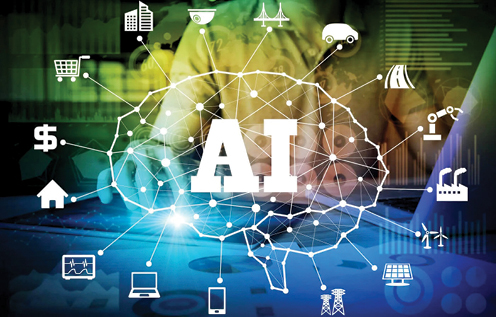
Artificial Intelligence is transforming the world with unprecedented speed and reach. Tasks that once required days of analysis can now be completed in seconds. AI is reshaping governance, communication, commerce, education, warfare, and national security alike. Yet the central question before humanity is not whether machines can become more capable, but whether human beings can remain wise enough to guide them responsibly.
Technology has always altered the balance of power. Gunpowder changed warfare. Industrialisation transformed economies. Nuclear technology reshaped global deterrence. AI represents another such turning point, perhaps even more profound because of its speed, scalability, and accessibility. Unlike nuclear capability, which required rare material and massive infrastructure, AI requires code, computing power, and skilled talent. The barriers to entry are significantly lower, making both innovation and misuse easier.
At its core, AI is not intelligence in the human sense. It does not possess morality, intuition, empathy, or conscience. It processes data, detects patterns, and generates outputs based on probabilities. Human beings still provide intent, values, objectives, and accountability. AI amplifies capability; it does not create wisdom.
Broadly, AI today can be understood in three forms:
- Traditional AI performs tasks requiring human-like analysis or decision-making.
- Adaptive AI continuously learns from new data and evolves over time.
- Generative AI creates content – text, images, audio, video, and code by recognising patterns in massive datasets.
In simple terms we can say that AI thinks; Adaptive AI evolves; Generative AI creates.
AI and the Transformation of National Security
The implications for national security are immense. Modern conflicts increasingly operate at machine speed. Vast streams of information flow from satellites, sensors, drones, cyber networks, and intelligence systems. Human analysis alone cannot process this volume rapidly enough. AI enables faster threat detection, predictive analysis, pattern recognition, and operational coordination. It enhances intelligence gathering, surveillance, logistics, cyber defence, autonomous navigation, and battlefield awareness.
In military operations, AI can support target recognition, drone coordination, predictive maintenance, supply-chain optimisation, and real-time battlefield assessment. In cyber warfare, AI systems can detect anomalies and respond to attacks within seconds. In border management and internal security, AI-driven surveillance and behavioural analysis are already being deployed.
In this sense, AI acts as a force multiplier. It compresses decision time and increases operational efficiency. But therein lies both its power and its danger.
The double-edged nature of AI. Technology itself is neutral. Intent is not. The same AI system that predicts equipment failure can identify vulnerabilities in critical infrastructure. The same algorithm that improves precision targeting can also improve deception. AI can defend networks or automate cyber intrusion. It can support truth or generate deepfakes and synthetic propaganda capable of destabilising societies without a single shot being fired. The risks are not theoretical. They are immediate and structural.
Autonomous Weapons and the Accountability gap
One of the greatest dilemmas concerns autonomous weapons. At what point should meaningful human control be removed from lethal decision-making? If an AI-enabled weapon makes a catastrophic error, who bears responsibility – the programmer, the commander, the political leadership, or the machine? A machine cannot bear moral responsibility. Responsibility ultimately remains human. Yet AI systems increasingly operate through layers of algorithms, training data, and autonomous responses that even their creators may not fully understand. This creates what analysts describe as an “accountability gap.” Traditional warfare assumes humans decide, humans act, and humans answer. AI risks diffusing that chain of responsibility.
This is why many strategic thinkers insist on maintaining “meaningful human control” over lethal systems. The issue is not merely ethical; it is strategic. Once accountability becomes unclear, deterrence weakens, escalation risks increase, and trust between nations erodes.
Cyber Warfare and the Invisible Battlefield
Another major concern is AI-driven cyber warfare. Adaptive malware, automated penetration systems, and real-time exploit generation are transforming cyber conflict into a domain where attacks and counterattacks occur faster than human response cycles.
The danger lies not only in destruction but also in invisibility. A nation may face crippling attacks on infrastructure, banking, communication, or power systems without ever seeing a conventional battlefield. Information warfare presents an equally serious challenge. Deepfakes, synthetic media, and algorithmic manipulation can influence public opinion, distort democratic processes, and undermine trust in institutions. A society uncertain of what is real becomes vulnerable without a single missile being launched.
AI as a Determinant of Power
At the strategic level, AI is increasingly becoming a determinant of national power. Nations now compete not only for territory or resources, but also for data, computing infrastructure, semiconductor capability, and technological talent.
Data sovereignty and indigenous capability are emerging as strategic necessities. Dependence on foreign AI infrastructure may create long-term vulnerabilities. Yet perhaps the greatest danger is not that AI becomes intelligent, but that humans become intellectually lazy.
Overdependence on algorithms can weaken judgment. Blind trust in automated systems can create decision complacency. AI systems often produce confident answers even when incorrect. They can inherit biases from training data and reflect flawed assumptions embedded within their design. Used carelessly, AI may not replace human thinking — it may gradually erode it.
Security, therefore, cannot be outsourced to code.
AI versus humans
This brings us to the central question – should AI replace human decision-making in warfare?
The answer is more complex than simple acceptance or rejection. AI already outperforms humans in many narrow domains involving speed, pattern recognition, and data processing. In missile defence or cyber response, machine-speed decisions may become operationally necessary. But warfare is not merely computation. It involves ambiguity, deception, ethics, intuition, cultural understanding, and political consequence.
An AI system may identify a target based on probability. A human officer may hesitate because something “does not feel right.” History contains several instances where human judgment prevented catastrophic escalation precisely because individuals questioned systems, assumptions, or data. The wiser model, therefore, is not AI versus humans, but AI with humans. AI should augment decision-making, not replace it. Machines may provide rapid analysis and options; human leadership must retain final judgment, accountability, and restraint.
Ethics, Power, and the Global debate
The larger global debate surrounding AI also reflects tensions between governments, corporations, and ethical principles. Private technology companies increasingly possess capabilities once associated only with states.
This raises difficult questions:-
- Can corporations refuse military use of their AI systems?
- Should governments compel cooperation in the name of national security?
- Who defines ethical limits during geopolitical competition?
These are not merely technical debates. They are civilisation-level questions. Every transformative technology has demanded caution alongside innovation. Prudence is not fear. The mature approach lies neither in blind enthusiasm nor blind resistance.
AI will not determine the future of humanity on its own. Human values, political systems, ethical choices, and strategic wisdom will determine whether AI becomes a stabilising force or an accelerant of instability.
In the end, AI will magnify national character. If leadership is reckless, AI will accelerate recklessness. If leadership is wise, AI will amplify wisdom. Technology does not replace human intent; it scales it. The machine will execute. The human must decide.
And the responsibility for that decision must remain non-negotiable.
