

 Login
Login
Articles
Shifting Paradigm of Aerial Battlespace
Sub Title : Lessons from Ukraine, Iran and Operation Sindoor
Issues Details : Vol 20 Issue 2 May – Jun 2026
Author : Gp Capt Anil Sharma (retd)
Page No. : 38
Category : Military Affairs
: June 1, 2026
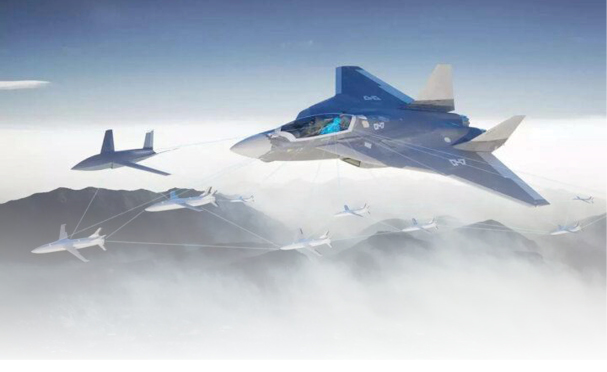
For almost a century, military planners have regarded control of the aerial battlespace as the indispensable pre-requisite for victory. Every major military campaign since the first world war has reinforced the belief that control of the skies is the essential first step in any war. Not anymore. That paradigm is shifting.
The earlier logic of defeating or deterring enemy platforms to gain control of the air is no longer sufficient. The reason lies in the changing nature of aerial firepower. Drones, cruise missiles, loitering munitions and long-range stand-off weapons have separated the weapon from the platform and, increasingly, the platform from the human operator. This multiplication of aerial threats challenges the very foundation of traditional air superiority.
The old concept was largely binary. You either had air superiority or you did not. Today, the reality is far more complex. No air-defence system can guarantee 100 per cent interception. The experiences of Ukraine, Israel and Iran demonstrate that some weapons will always get through. Future air control will therefore be measured not by complete denial but by acceptable levels of leakage and attrition.
For decades, military history appeared to validate the importance of air dominance. The Second World War demonstrated the destructive potential of strategic bombing. The Arab-Israeli wars showed how quickly air superiority could influence the outcome of a campaign. Operation Desert Storm in 1991 elevated air dominance to near-doctrinal status when coalition air forces dismantled Iraq’s military machine before the ground offensive began. The lesson seemed simple as – ‘control the air and shape the battle on the ground’. However, recent conflicts suggest that this understanding needs revision.
The wars of the 2020s have revealed a very different aerial battlespace. The sky remains critical, but it has become far more crowded and contested. The Russia-Ukraine war offered the first major warning. Many expected Russia to establish air superiority quickly due to its larger and technologically superior air force. Yet years into the conflict, neither side enjoys complete control of the air. Ukrainian air defences, electronic warfare, dispersal tactics and rapid adaptation prevented Russia from achieving the level of dominance seen in earlier wars.
The ongoing conflict involving Iran offers another important lesson. Israel demonstrated considerable capability by penetrating Iranian air defences and conducting deep strikes. Yet Iran retained the ability to launch missiles and drones that struck targets in Israel and threatened American assets in the region. Air dominance did not translate into immunity from attack. Even after suffering significant losses, Iran continued to impose costs through missiles, drones and other long-range systems.
This marks a significant departure from earlier assumptions. Historically, once air superiority had been established, the adversary’s ability to retaliate declined sharply. Today, even a country that loses much of its conventional air capability can continue fighting effectively through drones, missiles, cyber attacks and long-range precision weapons.
Among all these developments, the drone stands out as the most disruptive. Traditionally, air power depended on expensive aircraft, sophisticated infrastructure and highly trained pilots. Today, relatively inexpensive unmanned systems can perform many of the same missions. A fighter aircraft worth tens of millions of dollars can be threatened by drones costing only a tiny fraction of that amount.
The cost equation is equally important. A low-cost drone may compel the defender to launch an interceptor missile worth hundreds or even thousands of times more. Such economics favour the attacker and are difficult to sustain over a prolonged conflict. Future air-defence systems must solve this cost asymmetry if they are to remain effective. Military historians may eventually view the drone as one of the most transformative technologies in warfare. Adversaries have increasingly adopted “swarm saturation” tactics designed to overwhelm defences through sheer numbers. Instead of relying on a few expensive platforms, future forces may launch hundreds of drones simultaneously to exhaust interceptor stocks and create gaps in defensive networks. What artillery was to the twentieth century, drones could become to the twenty-first.
For India, these developments have immediate relevance. Operation Sindoor in 2025 demonstrated that modern warfare is increasingly about integration and networking rather than individual platforms. Pakistan’s use of drones and missile-based attacks highlighted the changing character of conflict. India’s response depended not on a single weapon system but on an interconnected architecture of sensors, radars, command networks, electronic warfare assets and missile defences.
This may well represent the future of warfare. Increasingly, the decisive factor is not a platform by itself but the network connecting multiple platforms and sensors. Fighter aircraft, airborne warning systems, missile batteries, satellites and drones become far more effective when linked through a common command architecture.
This shift does not mean the end of manned aviation. Predictions regarding the death of the fighter aircraft are premature. Air forces will continue to require advanced fighters for air defence, strategic strike, deterrence and power projection. Programmes such as India’s AMCA, America’s Next Generation Air Dominance initiative and China’s next-generation fighter projects confirm that major powers still see manned combat aircraft as indispensable.
However, no single platform is likely to dominate the battlespace on its own. The future aerial environment will include fighters, drones, loitering munitions, hypersonic weapons, cruise missiles, cyber capabilities, electronic warfare systems and space-based assets operating simultaneously. Stand-off ranges are increasing, making it easier to strike targets without entering heavily defended airspace. For India, this challenge is particularly significant. The country faces two nuclear-armed adversaries that are investing heavily in drones, missiles and advanced air-defence systems. Future conflicts are likely to unfold in a highly contested air environment. The challenge will be not only to penetrate enemy defences but also to protect India’s own airspace from a diverse range of aerial threats.
Rather than speaking of “control of the air”, it may be more accurate to think in terms of “contested airspace management”. Future air warfare will involve a continuous struggle across multiple domains and layers. Success will depend on disrupting entire kill chains rather than simply destroying aircraft. Blinding a radar, jamming a data link, disabling a satellite connection or destroying a drone production facility may prove just as important as shooting down an incoming missile.
Layered air defence will therefore become essential. Systems such as Iron Dome, David’s Sling and Arrow provide a useful model, although recent conflicts have shown that even sophisticated defences are not impenetrable. Future solutions will require directed-energy weapons, artificial intelligence-enabled sensor fusion and greater automation to handle attacks at machine speed. Equally important will be the hardening and redundancy of critical infrastructure, because no defence system can guarantee complete protection.
Concluding Thoughts. The most important conclusion is that modern weapon systems no longer permit unchallenged access to enemy airspace. Air superiority remains important, but its meaning is changing. The twentieth century sought complete control of the sky. The twenty-first century may settle for temporary and localised dominance, achieved for specific missions and limited periods of time.
Aircraft remain indispensable and control of the air remains a critical military objective. Yet future air power will depend less on individual platforms and more on the effectiveness of the wider combat network. The sky remains decisive, but it is becoming more crowded, contested and dangerous than ever before. The future belongs not necessarily to the side with the most aircraft, but to the side with the most effective network of sensors, platforms, weapons and decision-making systems. In tomorrow’s wars, victory will belong to the force that can integrate the platform, the sensor, the drone, the missile, the algorithm and the network into a single combat system. That is the new face of air power, and it is already reshaping the battlefield.
