

 Login
Login
Articles
Expanding the Battlefield: How Iran Shaped the Strategic Outcome
Sub Title : Iran's regional strategy demonstrates how indirect power projection can influence conflicts far beyond conventional battlefields
Issues Details : Vol 20 Issue 3 Jul – Aug 2026
Author : Maj Gen Jagatbir Singh, VSM (Retd) & Ashwani Sharma, Editor-in-Chief
Page No. : 24
Category : Geostrategy
: July 28, 2026
Introduction
The US-Israeli campaign against Iran (Operation Epic Fury) demonstrated that the United States and Israel possessed the capability to strike Iranian targets with precision and at will. Yet Iran proved far more resilient than anticipated and demonstrated that it could impose significant costs in return. The most important lesson from the conflict lies not merely in the exchange of military strikes, but in the manner in which the battlefield itself expanded, and the degree to which warfare, accelerated by technology, algorithms and Artificial Intelligence (AI), can remain politically and strategically controllable.
Although this conflict has been framed as a conventional war, the manner in which it unfolded points towards a far more complex form of hybrid warfare. According to the European Centre of Excellence for Countering Hybrid Threats, “hybrid threats are methods and activities targeted towards the vulnerabilities of an opponent,” where the range of methods employed is deliberately broad.
The Iran War demonstrated that hybrid warfare is no longer confined to proxy attacks, covert action, terrorism, sabotage or grey-zone pressure. Those remain central instruments, but they now operate within a much wider strategic environment encompassing commercial shipping, insurance markets, financial systems, data centres, missile and ammunition production, rare earth supply chains, AI-enabled targeting, and strategic alliances.
Increasingly, the targets are not merely military formations but the systems that enable the effective employment of military power. This was visible in the manner in which Iran recognised that it did not need to defeat the United States militarily. Instead, it sought to create conditions where the surrounding political and economic system would find the costs of continuing the conflict increasingly difficult to absorb. Simultaneously, Iran demonstrated an ability to absorb repeated strikes while preserving the essential elements of its military capability and political cohesion. The large public funerals for senior Iranian leaders and military commanders illustrated that the joint US-Israeli campaign ultimately strengthened domestic resolve rather than weakening it.
The broader lesson extends beyond the Strait of Hormuz. The conflict demonstrated that modern warfare increasingly seeks to influence the political, economic and technological systems that sustain military operations. Victory, therefore, is becoming as much about controlling these interconnected systems as it is about success on the battlefield.
Centre of Gravity
The opening strikes by the United States and Israel focused on Iran’s political and military leadership, which was identified as the principal centre of gravity. It was assumed that eliminating the leadership would create a power vacuum, weaken the state’s capacity to respond, and perhaps trigger a popular uprising against the regime.
Iran’s strategy, however, was never to win a conventional military contest against the United States and Israel. Rather, it sought to make the conflict progressively more difficult to contain. Gulf capitals, shipping insurers, global energy and fertiliser markets, data centres and American allies all became integral components of the battlefield.
Tehran responded both vertically and horizontally. It identified sensitive targets and expanded both the scope and the geography of the conflict. Vertically, it placed significant economic and political interests at risk, thereby raising the potential costs of war far beyond the immediate battlefield. Horizontally, it expanded pressure across additional theatres and systems, including countries hosting American military bases, commercial shipping, energy markets, insurance networks and critical infrastructure.
By doing so, Tehran deliberately shifted the conflict away from areas where the United States enjoyed overwhelming military superiority and towards economic and commercial systems capable of producing cascading strategic effects. Thus, an adversary unable to match American military power directly succeeded in imposing costs geographically, economically and politically.
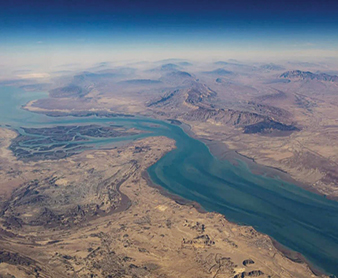
The objective was not battlefield victory but strategic survival, cost imposition and the displacement of pressure beyond the immediate theatre of operations. Iran effectively shifted the centre of gravity towards the Strait of Hormuz, thereby constraining American strategic options and forcing Washington to devote increasing attention towards ensuring the reopening and security of one of the world’s most vital maritime arteries.
The larger lesson is that, in future conflicts, an adversary may not need to defeat an attacking force militarily. It may simply need to make the wider strategic system too costly to sustain. Air power may dominate the battlefield, yet still leave the broader strategic environment contested.
Tactical versus Strategic Success
One of the enduring lessons of the Iran War is the distinction between tactical, operational and strategic success. Modern militaries often achieve remarkable tactical results through precision strikes, stealth platforms and advanced intelligence capabilities. Operationally, these successes may degrade an adversary’s command structure, destroy infrastructure and disrupt military operations. Yet none of these automatically translates into strategic success.
The United States and Israel achieved considerable tactical and operational successes by striking Iranian military facilities, command nodes and key leaders. However, Iran’s political leadership remained intact, its capacity to retaliate endured, and the wider regional and economic consequences of the conflict increasingly imposed costs on all participants. Rather than collapsing, the Iranian state adapted, absorbed punishment and widened the contest into domains where military superiority alone offered no decisive advantage.
This distinction is likely to become increasingly important in future wars. Tactical brilliance may secure victories on the battlefield, but strategic success will depend upon the ability to maintain political legitimacy, economic resilience, alliance cohesion and public confidence over the duration of a conflict. Modern wars are therefore likely to be decided less by the destruction of opposing forces than by the ability of each side to preserve the systems that sustain national power.
Commercial and Sea Control
One of the most important lessons of the Iran War concerns the changing nature of sea control. The United States retained the ability to strike military targets throughout the conflict, yet commercial transit through the Strait of Hormuz became functionally impossible. This was not solely because of the physical threat posed by Iranian missiles, drones and naval assets, but because insurers, shipowners, traders and energy markets concluded that passage through the Strait had become commercially unacceptable.
The statistics are revealing. Within twenty-four hours of the US-Israeli attacks on 28 February, transits of all vessel types through the Strait of Hormuz had fallen by approximately 81 per cent. There were only four crude tanker movements on 1 March compared with a January daily average of twenty-four. By 12 March, Kpler vessel-tracking data indicated that tanker transits had declined by nearly 92 per cent compared with the week preceding the conflict. On 2 March, almost six per cent of the world’s tanker capacity remained stranded inside the Persian Gulf.
By early March, outbound crude oil exports had declined by approximately 95 per cent, LNG shipments by 99 per cent and fertiliser exports had virtually ceased. These figures underline the immense strategic significance of the world’s most important maritime energy chokepoint.
From the very outset of the conflict, Iran’s drones and missiles were directed not merely towards contesting American air superiority but towards rendering that superiority strategically irrelevant. Tehran shifted the focus to the air littoral over and around the Strait of Hormuz, where relatively inexpensive drones, cruise missiles and ballistic missiles transformed the world’s most important energy corridor into an area that commercial shipping considered too dangerous to enter.
Iran did not require conventional naval superiority to achieve this objective. It required mines, anti-ship missiles, drones, fast attack craft and, above all, the demonstrated willingness to raise the perceived cost of commercial transit.
The experience echoes developments in the Black Sea. When Russia invaded Ukraine in February 2022, Ukraine effectively found itself without a conventional navy after scuttling its flagship to prevent capture. Yet within two years, Ukraine had compelled the Russian Black Sea Fleet to withdraw from Sevastopol and had destroyed or damaged a substantial portion of Russia’s naval combatants. It achieved this not through conventional naval expansion but by combining aerial surveillance drones with increasingly sophisticated maritime unmanned surface vessels.
The lesson is profound. Sea denial is no longer the exclusive preserve of large navies. Precision weapons, autonomous systems and persistent surveillance have significantly lowered the threshold at which relatively weaker powers can contest maritime space. Consequently, the central question is no longer whether a navy can defeat an opposing fleet. It is whether it can convince commercial shipping, insurers and global markets that maritime movement remains sufficiently secure to resume normal activity. Commercial confidence has become an integral component of sea control.
Strategic Resilience as a Weapon
Perhaps the most overlooked lesson of the Iran War is that resilience itself has become a strategic capability. Traditional military thought has often measured combat effectiveness in terms of offensive firepower and the ability to destroy enemy assets. Increasingly, however, the ability to absorb punishment while continuing to function may prove equally decisive. Modern states are investing not only in precision strike capabilities but also in redundancy, dispersal, hardened infrastructure, decentralised command networks and resilient logistics.
Iran demonstrated many of these characteristics. Despite sustained attacks against military installations, command facilities and senior leadership, the Iranian state continued to function. Missile production, command and control, and retaliatory capabilities remained sufficiently intact to sustain operations and maintain strategic pressure. Equally important, political authority remained cohesive and public mobilisation reinforced, rather than undermined, the regime’s legitimacy.
Strategic resilience extends beyond military institutions. It encompasses national leadership, civil administration, industrial production, communications, energy networks and public morale. The side that can recover more rapidly from disruption and continue functioning under sustained pressure acquires a significant strategic advantage.
Future conflicts are therefore likely to be contests not simply between opposing armed forces but between competing systems of national resilience. Victory may increasingly belong not to the side capable of inflicting the greatest destruction, but to the side best able to absorb it while maintaining political purpose and military effectiveness.
Precision Attacks
The rapid diffusion of precision technologies is transforming the character of warfare and empowering weaker states as well as non-state actors. Advanced military technologies, once the exclusive preserve of major powers, are increasingly enabling smaller states to impose disproportionate costs upon militarily superior adversaries.
Precision-guided munitions, loitering munitions, autonomous systems and AI-enabled targeting are fundamentally altering long-held assumptions regarding military power. States possessing these capabilities can now generate battlefield effects that, until recently, required overwhelming numerical or technological superiority.
Missiles are reshaping warfare by making conflicts faster, less predictable and increasingly political. Even limited conventional missile strikes can paralyse critical infrastructure, disrupt national decision-making and impose strategic costs that extend well beyond the immediate battlefield.
Equally significant is the economic asymmetry that precision warfare creates. Relatively inexpensive drones can compel the deployment of sophisticated and costly air defence systems, thereby imposing disproportionate financial burdens on the defender. The economics of warfare are changing almost as rapidly as its technology.
Iran’s principal weapon of disruption was the Shahed series of unmanned aerial systems. By Western standards these drones are comparatively slow, fly at low altitude and are individually inexpensive. Yet when employed in large numbers and integrated with missile strikes, they proved capable of destroying or degrading assets worth many times their own cost, including radar installations, command-and-control facilities, oil production infrastructure and critical regional targets.
The disruptive potential of precision capability was further demonstrated by Iranian strikes in and around Dimona, home to Israel’s Shimon Peres Negev Nuclear Research Centre. Whether or not such attacks produce decisive military effects, they compel political leaders to divert resources, reinforce strategic facilities and reassure domestic audiences. Precision therefore achieves influence not only through physical destruction but also through psychological and political pressure.
AI Accelerated Both Targeting and Legitimacy
That AI is increasingly becoming integral to modern warfare is no longer in doubt. AI-enabled targeting allows commanders to process vast quantities of information, identify targets more rapidly and accelerate decision-making. However, speed creates its own strategic risks. Warfare depends not merely upon military effectiveness but also upon legitimacy. Targeting decisions must therefore remain lawful, proportionate and accountable.
On 28 February, the Shajareh Tayyebeh Girls’ Elementary School in Minab was destroyed by missile strikes. The attack reportedly killed at least 175 people, including 120 schoolchildren, triggering widespread international condemnation and calls for an independent investigation. It was one of the deadliest civilian bombing incidents involving the United States military in recent decades. Yet several months later, the Pentagon had still not publicly explained why a Tomahawk cruise missile had struck the school. When President Trump was questioned during a press conference at the G7 Summit, he replied:
“It’s such a strange question to be asked at this date, because you’re talking about a long time ago,” before adding, “Nobody did that on purpose.”
The larger issue extends well beyond this single incident. The central question is not simply whether AI can accelerate targeting, but whether military and political leaders can adequately explain how targets are identified, reviewed, authorised and ultimately engaged. As AI-enabled systems become increasingly common, the legitimacy of the decision-making process may become as strategically important as the military effectiveness of the strike itself.
AI governance therefore requires armed forces to develop institutional capacity not merely to exploit technology but also to understand and manage its consequences. The issue is not simply whether military forces can target faster. It is whether they can do so while preserving legitimacy, minimising collateral damage and retaining public confidence. Legitimacy in modern warfare cannot be relegated to a public relations afterthought; it has become an operational requirement.
The Cognitive Battlefield
The Iran War also demonstrated that conflicts are increasingly fought simultaneously in the physical, digital and cognitive domains. Military operations now unfold in parallel with battles for public opinion, international legitimacy and strategic narrative.
Throughout the conflict, both sides sought to shape perceptions as actively as they sought to destroy military targets. Every missile strike was accompanied by carefully crafted media messaging. Every successful interception, damaged installation or civilian casualty rapidly became part of an information campaign directed not only at domestic audiences but also at international opinion.
Social media platforms such as X, Telegram and TikTok have transformed the speed with which narratives are created and disseminated. Images captured by civilians often reached global audiences before official military statements were issued. The battle to establish credibility increasingly became as important as the battle to establish military superiority.
This evolution represents a significant departure from earlier wars. Information operations are no longer supporting activities conducted after military action; they have become integral to military operations themselves. Commanders must therefore consider not only the physical effects of military action but also how those actions will be interpreted politically, legally and psychologically across multiple audiences. Strategic communication has consequently become another dimension of deterrence. Victory increasingly depends upon convincing allies, adversaries, domestic populations and international observers that one’s actions are legitimate, proportionate and ultimately sustainable.
Targeting the Gulf
Iran’s pressure on the Persian Gulf states was directed not solely against American military bases. It also sought to undermine the perception that Gulf states could simultaneously function as secure investment destinations, global logistics hubs and reliable partners while hosting major American military facilities. Airfields, ports, desalination plants, energy infrastructure, cloud services, logistics hubs and public confidence have all emerged as critical strategic assets. These are no longer merely vulnerabilities or sensitivities; they have become central elements of national resilience.
Iran’s attacks against energy and other infrastructure challenged one of Washington’s principal strategic objectives i.e. the assurance of regional security for its allies. The 2025 Iranian missile attack on Al Udeid Air Base in Qatar illustrates this point. Although Qatari air defences successfully intercepted the incoming missiles, the broader strategic effect extended far beyond the military outcome. The attack placed the host nation, its civilian population, its airspace and its political relationship with Washington squarely within the conflict. It reinforced the reality that foreign military bases can no longer be viewed as isolated military installations.
Another important lesson emerging from both the Ukraine and Iran conflicts is the growing importance of integrated operational architectures that seamlessly connect sensors, analysts, commanders and shooters. Such networks enable remotely operated surveillance systems, autonomous platforms and precision weapons to operate at unprecedented scale and speed.
As the conflict continued, Iranian social media accounts celebrated missile strikes against American facilities through animated, game-like videos distributed widely on TikTok and other platforms. While militarily insignificant, these products formed part of a broader effort to shape perceptions of declining American influence and rising Iranian resilience.
Cloud is Part of Campaign Geography
The Iran War highlighted another significant shift in the character of warfare. Data centres, internet cables, commercial cloud providers, logistics platforms and software infrastructure have all become components of the modern battlespace. They support military operations, financial transactions, communications, intelligence processing, logistics and regional economic confidence. They are no longer distant commercial assets existing beyond the battlefield.
Iran identified American technology companies maintaining offices, data centres, cloud infrastructure and research facilities across the Gulf region. Strikes against facilities associated with commercial cloud providers in the United Arab Emirates and Bahrain illustrated how digital infrastructure is increasingly assuming strategic significance.
The attacks disrupted services and forced operators to reroute workloads across multiple locations. For perhaps the first time, core cloud infrastructure—long regarded as abstract digital architecture – became the direct target of military operations. The cloud is no longer an intangible digital concept. It is a physical system built upon land, concrete, electrical grids, transformers, cooling systems, fibre-optic cables and data centres. Like ports, refineries and airfields, these facilities are increasingly vulnerable to the logic of modern warfare.
Much of the infrastructure that enables contemporary military and economic activity is privately owned, globally distributed and operated by commercial enterprises. These companies may not regard themselves as participants in armed conflict, but future adversaries are unlikely to recognise such distinctions. The boundary between civilian infrastructure and military utility is becoming increasingly blurred, expanding the battlefield into domains that were once considered immune from direct attack.
Implications for the Indo-Pacific
The lessons emerging from the Iran War extend well beyond West Asia. They are equally relevant to a potential contingency in the Indo-Pacific, where economic interdependence, maritime trade and digital infrastructure are even more deeply intertwined with military operations.
A future crisis in the Taiwan Strait is unlikely to be decided solely through naval or air superiority. Commercial shipping, semiconductor supply chains, undersea communication cables, cloud infrastructure, financial markets and strategic chokepoints are all likely to become integral components of the battlespace. The disruption of these systems could generate economic consequences far beyond the immediate theatre of conflict, affecting global markets and political decision-making. The experience of both Ukraine and Iran suggests that technologically sophisticated militaries may continue to achieve operational successes while finding it increasingly difficult to translate them into decisive strategic outcomes. Military superiority alone may no longer guarantee political success if an adversary succeeds in imposing costs upon the wider strategic ecosystem.
Future wars are therefore likely to be contests between competing national systems rather than simply opposing armed forces. The side that best integrates military power with economic resilience, technological superiority, information dominance and alliance cohesion is likely to shape the strategic outcome.
Implications for India
For India, the lessons are both immediate and significant. India’s economy remains heavily dependent upon uninterrupted maritime commerce, secure energy supplies and resilient digital infrastructure. Any prolonged disruption in the Strait of Hormuz would inevitably affect energy security, shipping costs and broader economic stability. Consequently, maritime security can no longer be viewed solely through the traditional prism of naval operations. It must encompass the protection of commercial shipping, energy flows, logistics networks and critical digital infrastructure.
The conflict also reinforces the importance of integrated national preparedness. Military capability alone will not suffice. National resilience increasingly depends upon the ability of government, industry, financial institutions, technology companies and critical infrastructure operators to function under sustained pressure.
For the Indian Armed Forces, the emphasis must increasingly shift towards integrated theatre operations supported by resilient command-and-control systems, distributed logistics, artificial intelligence, autonomous platforms and precision long-range fires. Equally important will be the protection of national data centres, communication networks, space-based assets and critical infrastructure that underpin both military operations and economic activity.
India’s strategic advantage lies not only in building military capability but in strengthening the resilience of the entire national security ecosystem. Preparing for such conflicts will require a genuinely whole-of-government and whole-of-nation approach.
Conclusion
Historically, the outcome of war depended largely upon the side possessing superior military capability, greater industrial capacity and deeper national resources to sustain prolonged conflict. Operation Epic Fury demonstrates that this equation is undergoing a profound transformation. Modern warfare increasingly extends across systems that were once regarded as peripheral to the battlefield. Military operations today are inseparable from commercial shipping, financial markets, data centres, cloud infrastructure, artificial intelligence, logistics networks, public opinion and political legitimacy.
In The Art of War, Sun Tzu employed water as the central metaphor for military power, describing how expanding torrents derive strength not from rigidity but from adaptability. Water conforms to the terrain, gathers momentum through accumulation and ultimately shapes its environment. Modern warfare appears to be evolving in much the same manner. Rather than confronting an adversary solely at the point of military contact, states increasingly seek to influence the wider environment in which military power operates.
The central challenge is therefore no longer simply how to strike, defend or deter. It is how to preserve strategic freedom of action when adversaries possess the ability to impose costs across interconnected military, economic, technological and cognitive domains. Success will increasingly depend not merely upon destroying enemy forces but upon preserving the resilience, legitimacy and functionality of one’s own national systems.
The Iran War illustrates that the battlefield has expanded beyond its traditional physical boundaries. Military power remains indispensable, but it no longer operates in isolation. The side that best understands this expanding battlespace and successfully integrates military power with economic resilience, technological innovation, political legitimacy and national endurance, will be best placed not merely to win battles, but to shape the outcome of future wars.
