

 Login
Login
Articles
Homegrown Hardware: The High-Stakes Race for Defence Self-Reliance
Sub Title : India's drive for indigenous defence manufacturing is redefining military capability, industrial resilience and strategic autonomy
Issues Details : Vol 20 Issue 3 Jul – Aug 2026
Author : Lt Gen N B Singh, PVSM, AVSM, VSM, ADC, PhD (Retd)
Page No. : 57
Category : Military Technology
: July 28, 2026
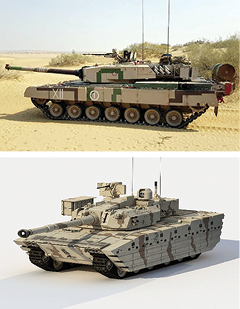
Need to develop technologies built in India, engineered for scale and deployable in our terrain
India’s defence self-reliance initiative, driven by the Atmanirbhar Bharat mission has transitioned from a policy-heavy phase into a period of tangible industrial output. While the country has reached historic highs in production and exports, it remains one of the world’s largest importers, highlighting a complex “dual-track” reality. The most visible progress is reflected in the record-breaking financial figures reported for the 2024–2025 and early 2026 periods. Annual domestic defence production crossed ₹1.54 lakh crore ($18.5 billion) in FY25, an 18% increase over the previous year. The target for 2026 is approximately ₹1.75 lakh crore. Defence exports reached a record ₹24,000 crore in 2025. The private sector’s share in production has risen to 23%, supported by over 16,000 MSMEs now integrated into the defence supply chain.
The challenge still remains the critical import dependency. India still accounts for 8 to 9% of global arms import. It lacks world class foundational hardware that is essential to build complex platforms ground up. Dependency on GE (USA) for Tejas, Europe for most foundational systems for Zorawar light tank and Safran (France) for future platforms remains a strategic vulnerability. Even in naval platforms, while significant indigenisation has been achieved in the Float segment, significant dependencies under Move and Fight segments remain.
There is a need to not only increase the budgeting for R& D but more importantly how the money is being spent. The budgetary allocation for IDEX for the period 2023-24 to 2025-26 was 498.78 crores and for ADITI 750 crores. Spent correctly, this amount is sufficient to make India self-reliant in power pack technologies for land systems, both conventional and hybrid ! India has successfully built a manufacturing base and an export engine. However, it is still in the middle of the “hardest mile”: achieving self-sufficiency in critical sub-systems, the building block harware. The sights have to be set to move away from being an “assembler” of platforms to a “creator” of core defence technologies .
The “Import Paradox”
- Despite progress, the “self-reliance” journey faces significant headwinds. Import dependence still remains high; it accounts for 8-9% of global arms imports. If you take into account the import of sub systems and components, this figure could well touch 12-15%.There are critical gaps in key foundational technologies like propulsion, armaments, sensors, payloads, etc. R&D budget is insufficient, not driven by national security priorities and work on deep tech break through technologies is inadequate.
- As of early 2026, India’s drone and unmanned aerial vehicle (UAV) sector has transitioned from a “screwdriver industry”- assembling foreign kits to a rapidly maturing manufacturing ecosystem. While high-level airframes and software are now largely indigenous, the industry is currently fighting the “battle” over core high-tech sub systems and components. India has successfully built the “Body” and the “Brain” of its drone fleet. The focus for the next few years (2026–2029) needs to shift to building the “Heart and Eyes” (engines and advanced sensors) for other complex systems. It is a strategic vulnerability and requires a plan to permanently fix these. This could avoid the bitter Arjun, LCA experience where manufacture of next lot on order got delayed due to non- availability of propulsion system.
Industrial and Maintenance Surge – Race is to the Swift
The war in Ukraine has ushered in great clarity on the importance of industrial and maintenance surges on combat outcomes. Both sides have struggled to sustain readiness rates over 50%. If a military is unable to sustain a readiness rate upwards of 70%, a stalemate is assured, anything below 50% defeat is certain. Sustained equipment readiness of 85-90% alone can guarantee success. Industrial capacity or surge implies the ability of a state to transform into a war economy to manufacture airplanes, tanks, trucks, guns, missiles and ammunition needed to prosecute and sustain war. It cannot be achieved with critical import dependencies.
Maintenance surge implies industrial capability to keep most weapon platforms mission capable; moving and firing consistently. In 1941, on 22nd June Guderian`s Panzer group fielded 963 tanks of all types, but by late July, a month later only 286 (30%) were combat ready. The operation failed because of Soviet resilience and poor equipment readiness. German industrial capacity was inadequate to carry out Op Barbarossa. War diary entry had recorded “ Guderian`s Panzer group received only 45 engine replacements in a month in 1941”. Sovereign strength depends on how effectively a country can cultivate a native DIB. Wars are a high stakes affair. Battlefield reconstitution will be constant; constant repair and constant resupply under fire will be the new race to the swift.
DAP 2026
The newly drafted Defence Acquisition Procedure (DAP) 2026 is specifically designed to transition India from a “manufacturing hub” to a “technology owner.” Here is how the new DAP addresses some procedural “choke points”
- Redefined Indigenous Design. An Indian vendor must own the IP, design documents and software source codes. There is a tightening of IC thresholds by raising it to 60% from 50% with added focus on high- tech sub systems rather than structural parts .
- Solving the “Valley of Death” for Sub-systems. It is seen that small companies often develop a versatile sub-system but fail to move from prototype to bulk production due to lack of assured orders. DAP 2026 addresses this category. If a company invests in a critical sub-system, the government may provide a long-term commitment.
- Trial Reforms. The DAP now integrates Technology Readiness Levels (TRL 1-9). This allows the military to fund and evaluate projects at early stages (TRL 1-5) through the “Make” or iDEX schemes, ensuring that sub-systems mature before a full platform tender is floated.
- SQR Formulation. Subject matter experts can now be on boarded in finalising Services Qualitative Requirements.
Localisation -The Real Race
While the Indian Defence Acquisition Procedure (DAP) aims to promote self-reliance, several practices continued to inhibit growth due to a procedure centred approach instead of capability. Streamlining procurement, encouraging greater private sector participation and addressing challenges in make procedures and offset obligations are essential steps to boost India’s defence autonomy. India has to reduce its dependence on foreign defence suppliers and develop a robust, self-sufficient defence industrial base (DIB).Below are some key actions that could stimulate genuine localisation:
- National Defence Industrial Strategy: Government should create a clear, long-term policy framework to promote defence manufacturing, with specific targets for local production, technology transfer, and self-reliance. A strategic plan needs to be rolled out, outlining specific sectors of defence prioritized for local production, starting with foundational hardware.
- Technology Transfer & Joint Ventures. Government should negotiate defence procurement contracts that include provisions for black box level technology transfer from foreign suppliers to local firms. It cannot be done by simply stipulating that Indian vendor must own IP and source codes. What if the foreign vendor declines or shares the source codes of an obsolescent system. One way out can be, by considering the total long term requirements ab initio rather than placing repeat orders as was done for Arjun and K9 systems.
As an example, If the DRDO developed Zorawar meets the operational requirements, there is a case to consolidate the entire 354 numbers that are planned for induction into a single order. It makes little sense to procure only 59 tanks and follow yet another acquisition cycle that could delay full scale deployment. This will facilitate genuine indigenisation of the tank which today is more an assemblage of imported sub-systems. The technology tree of the light tank at Fig 1 amply illustrates the magnitude of localisation work involved. An ISRO type approach has to be adopted; the initiative has to be led by a knowledge leader like Dr V Sarabhai.
Suffice to say, that even after 35 years, critical dependencies on subsystems and components remain in most indigenous platforms. Even in respect of systems where ToT was taken three decades ago, self reliance remains elusive. DPSUs are mostly reluctant to share the true picture on localisation with the military. It is only after a few years of deployment, that the correct picture emerges as black boxes get opened and tinkered by maintainers to sustain readiness.
- Public-Private Partnerships (PPP). The government needs to partner with private firms to co-develop foundational as well as critical technologies in fields like complex platforms, drones, UAS, electric propulsion, high powered microwaves, etc. Such partnerships can commence with knowledge transfer wrt existing platforms e.g. for an industry major planning to enter the gun missile system domain it is essential that reasonable access to existing platforms like Schilka and Tangushka is provided to help incubate a knowledge base and proceed with development of sub-systems. Such R&D has to be categorised as a strategic weapon and a survival interest.
- Foreign Direct Investment (FDI) with Local Partnerships. Encouraging foreign defence firms especially sub-systems houses to set up joint ventures with local companies, can help create a robust local supply chain and improve technology absorption. The 60:40 JV between John Cockerill and Pune based Electro-Pneumatics & Hydraulics (India) Pvt Ltd to manufacture, assemble and commission advanced gun turrets for the Zorawar tank could address a strategic capability gap, if it goes beyond screw driver assembly to genuine localisation. Here, manufacture of 354 turrets vs 59 turrets could impact the level of localisation.
- Infrastructure Investment. Defence Industrial Corridors have to shift from a real estate model to an industrial eco system model transforming into defence manufacturing hubs. DPSUs and industry primes have to be asked to set up manufacturing facilities inside rather than just sourcing from them. DICs need to be dedicated to niche technologies; generalised manufacturing to be avoided. Investing in domestic research and development centres, testing facilities, and innovation hubs is crucial. Adequate cybersecurity, secure supply chains and physical security are key to protecting sensitive technologies. Incidents like the leakage of iPhone 18 PRO documents and internal test photos can be catastrophic in defence domain. Government should invest in training programs and partnerships with universities to develop a highly skilled young workforce in areas critical to defence like South Korea. In order to develop local suppliers for critical defence components , Government has to incentivize defence primes to look beyond black boxes integrated ex- import and facilitate smaller, local suppliers to innovate and provide indigenous LRUs, SRUs.
A Localisation Driven Approach for Modernisation
Focus on creating locally designed and produced defence technologies that must mandatorily be integrated to combat platforms, aircraft, naval vessels, and radar system in a progressive manner, is an approach to be adopted. Instead of rolling out programmes to develop new platforms, it would be prudent to aim for upgradation of vintage platforms to provide contemporary capabilities using indigenous options. This could comprise sights, fire control, navigation, auto loading, mobility and computing systems. Why not modernise the existing fleet and arm it with contemporary capabilities? A novel project to develop local capabilities in hydraulics, controls and digitalisation for a tracked platform was launched by Directorate of Indigenisation, EME Directorate (Fig2). Today the project has come to fruition with not only large scale localisation of components but a distinct enhancement in operational capabilities. It has extended the life of the workhorse (VT72) by 10 to 15 years at a fraction of the cost of a new platform (Fig3). There is a need to adopt an approach of maintaining, upgrading and developing future variants of an existing combat platform. This is one approach to ensure that future combat systems are truly of indigenous built with engines, transmissions, main armament, electro-optics, fire control systems, sensors and energetics sourced from local suppliers.
Enabling Eco-System
- Export Promotion and International Collaboration. Exporting defence hardware both platforms and aggregates can create economies of scale, incentivise local production and strengthen diplomatic ties with other nations. We need to increase collaboration with friendly countries on joint defence R&D programs. Engines for aerospace, land or marine platforms can be developed through collaborative co-development and trusted partnerships. Mutual dependencies helps in localizing technology, fosters enduring diplomatic relations and security cooperation .
- Creating a Favourable Business Environment. Streamlining the process for defence contractors to obtain government contracts and reducing bureaucratic barriers can rev up manufacturing in such a large defence market. Offering tax holidays, customs duty exemptions or direct subsidies for research can incentivise domestic manufacturers. Providing long-term contracts and stable funding ensures sustainability and competitiveness in the market. The frustrating issue is that despite provisions in the DAP and DPM, old mind sets and procedures prevail with little signs of course corrections.
- Building Strategic Alliances and Diplomacy. Establishing defence cooperation agreements with technologically advanced nations should facilitate knowledge transfer in critical technologies and agreements to co-develop and co-manufacture, not merely buy and try arrangements.
Key Technological Trends Shaping the Sector
Several key technological trends are currently driving innovation in defence. AI, data analytics, decision support, cyber warfare, space based systems, hypersonic and directed energy weapons are reshaping strategic landscapes and creating new markets. Stimulating defence manufacturing involves a mix of policy, investment in infrastructure, human capital, technology transfer, and industrial development. Government needs to ensure that local defence capabilities are nurtured by a renewed focus on incubating critical and foundational technologies through long-term strategic planning, supportive frameworks, international cooperation and knowledge & competency based leadership. Some IDEX, ADITI and TDF programmes have to be mentored by competent military leaders with a deep understanding of system requirements on ground, at the military`s technical institutions.
