

 Login
Login
Articles
The Indian Ocean: The New Epicentre of Global Strategic Competition
Sub Title : As great-power rivalry intensifies, the Indian Ocean is emerging as the world's most consequential maritime theatre.
Issues Details : Vol 20 Issue 3 Jul – Aug 2026
Author : Defstrat Editorial Team
Page No. : 40
Category : Geostrategy
: July 28, 2026
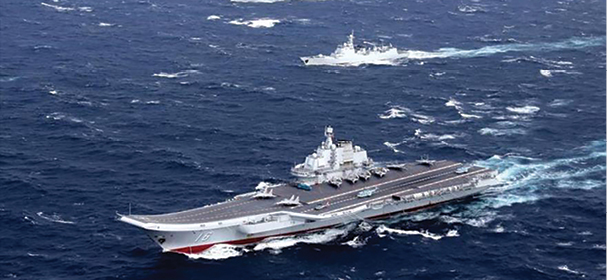
As the geopolitical centre of gravity shifts from the Atlantic to the Indo-Pacific, the Indian Ocean has emerged as the world’s most consequential maritime theatre. Once viewed primarily as a commercial highway, it is today the arena where economic interests, naval power, technological competition, and geopolitical ambitions increasingly intersect.
For nearly five centuries, global power has been closely linked to control of the world’s oceans. From the Portuguese and Dutch empires to the Royal Navy’s dominance and later the overwhelming maritime superiority of the United States, command of the seas has translated into political influence, economic prosperity, and military advantage. Today, as the international system undergoes its most profound transformation since the end of the Cold War, the Indian Ocean has become the principal arena where the future balance of global power will be contested.
This shift is neither sudden nor accidental. It reflects fundamental changes in the world’s economic geography. Nearly two-thirds of global oil shipments, around one-third of bulk cargo, and a substantial proportion of container traffic transit the Indian Ocean through strategic chokepoints such as the Strait of Hormuz, Bab el-Mandeb, and the Strait of Malacca. These narrow waterways have become indispensable arteries of the global economy, connecting the energy-rich Middle East with the manufacturing hubs of East Asia and the consumer markets of Europe and North America.
Unlike the Atlantic, which was the principal theatre of great power rivalry during the twentieth century, or the Pacific, where attention has traditionally centred on East Asia, the Indian Ocean combines economic significance with geopolitical vulnerability. It is bordered by politically diverse states, several of which face internal instability, while its maritime routes remain susceptible to piracy, terrorism, regional conflicts, and increasingly sophisticated grey-zone activities. The result is a maritime environment in which competition below the threshold of war has become almost routine.
From the Atlantic Century to the Indo-Pacific Century
The twenty-first century is widely regarded as the “Indo-Pacific Century.” This is not merely a change in geographical terminology but a reflection of shifting centres of economic and strategic gravity. More than half of the world’s population resides within the broader Indo-Pacific, and the region accounts for the largest share of global economic output. Consequently, securing the maritime routes that sustain this economic ecosystem has become a strategic imperative for both resident and extra-regional powers.
The Indian Ocean occupies a unique position within this evolving framework. It links the Mediterranean and Europe through the Suez Canal with East Asia via the Malacca Strait, making it the world’s most important maritime bridge. Unlike the Pacific Ocean, which is characterised by expansive naval manoeuvre space, the Indian Ocean’s strategic value derives largely from its constrained geography. A handful of chokepoints effectively regulate maritime access, giving states that can influence these passages disproportionate strategic leverage.
Alfred Thayer Mahan, the influential American naval strategist, argued more than a century ago that control of sea lines of communication was the foundation of national power. His observations resonate strongly today. Nations capable of protecting maritime trade, sustaining naval deployments, and ensuring uninterrupted access to critical sea routes enjoy significant geopolitical advantages. Conversely, disruption of these routes-even temporarily-can have cascading effects on energy security, supply chains, and global financial markets.
Recent events have demonstrated this reality with striking clarity. The attacks on commercial shipping in the Red Sea by Houthi militants, disruptions linked to the Israel–Hamas conflict, and renewed concerns over the security of the Strait of Hormuz have forced shipping companies to reroute vessels around the Cape of Good Hope, increasing transit times and costs. Such developments underscore the interconnected nature of maritime security and global economic stability.
The Return of Great Power Competition
The end of the Cold War fostered hopes that the Indian Ocean would evolve into a cooperative maritime commons. Instead, the past two decades have witnessed the return of intense strategic competition. The principal driver has been China’s remarkable economic and military rise, which has fundamentally altered regional power dynamics.
China’s dependence on maritime trade is profound. The overwhelming majority of its imported hydrocarbons traverse the Indian Ocean before reaching Chinese ports. Beijing therefore regards secure access to these sea lanes as a core national interest. This concern, often described as the “Malacca Dilemma,” reflects China’s vulnerability to potential disruption at strategic chokepoints during periods of crisis.
To mitigate these vulnerabilities, China has pursued an ambitious maritime strategy encompassing port investments, overseas logistics facilities, naval modernisation, and sustained deployments of the People’s Liberation Army Navy (PLAN) into the Indian Ocean Region (IOR). While Beijing presents these initiatives as essential for protecting commerce and contributing to international security, many regional states view them as elements of a broader effort to establish long-term strategic influence.
The evolution of the PLAN illustrates the scale of China’s ambitions. Once primarily a coastal defence force, it has transformed into a blue-water navy capable of sustained operations far from home waters. Chinese naval task groups now conduct regular anti-piracy patrols, intelligence-gathering missions, submarine deployments, and joint exercises throughout the Indian Ocean. The establishment of China’s first overseas military support base in Djibouti marked a significant milestone, signalling Beijing’s intention to maintain a permanent strategic presence beyond the Western Pacific.
At the same time, China’s extensive infrastructure investments under the Belt and Road Initiative have extended its economic footprint across the Indian Ocean littoral. Ports in Pakistan, Sri Lanka, Myanmar, East Africa, and the Gulf have become central components of an expanding network that enhances China’s commercial reach while also raising concerns regarding potential dual-use military applications.
For many regional observers, the issue is not whether China has the right to protect its maritime interests—every major trading nation does—but whether the cumulative effect of these initiatives will fundamentally alter the strategic balance in the Indian Ocean. This question increasingly shapes defence planning not only in New Delhi but also in Washington, Tokyo, Canberra, Paris, and several Southeast Asian capitals.
The Indian Ocean is no longer a peripheral maritime theatre; it has become the strategic crossroads of the twenty-first century. As the global balance of power shifts towards the Indo-Pacific, this vast expanse of water is increasingly shaping the calculations of every major power. China’s expanding naval presence, America’s enduring maritime dominance, India’s emergence as a leading regional security provider, and the growing involvement of middle powers have collectively transformed the Indian Ocean into the focal point of global geopolitical competition.
Yet, the contest is about far more than warships and naval bases. It encompasses economic connectivity, critical infrastructure, energy security, digital networks, and technological innovation. Control over sea lines of communication, access to strategic ports, and influence among the island and littoral states will determine not only regional stability but also the future architecture of the international order.
The Indian Ocean is therefore entering an era where cooperation and competition will coexist, often uneasily. Understanding this evolving strategic landscape requires a closer examination of the competing maritime visions, naval strategies, and diplomatic initiatives of the principal actors.
In Part II, we examine China’s expanding maritime footprint through the Belt and Road Initiative and the so-called “String of Pearls”, India’s evolving maritime doctrine under SAGAR and the Indo-Pacific Oceans Initiative, and the increasingly significant role of the United States, the QUAD, France and Australia in shaping the region’s security architecture.
