

 Login
Login
Articles
Why Modern Wars No Longer Produce Decisive Political Outcomes
Sub Title : Military victories are increasingly proving insufficient to secure lasting political objectives in today's conflicts.
Issues Details : Vol 20 Issue 3 Jul – Aug 2026
Author : Lt Gen Syed Ata Hasnain, PVSM, UYSM, AVSM, SM, VSM** (Retd), His Excellency, The Governor of Bihar
Page No. : 19
Category : Geostrategy
: July 28, 2026
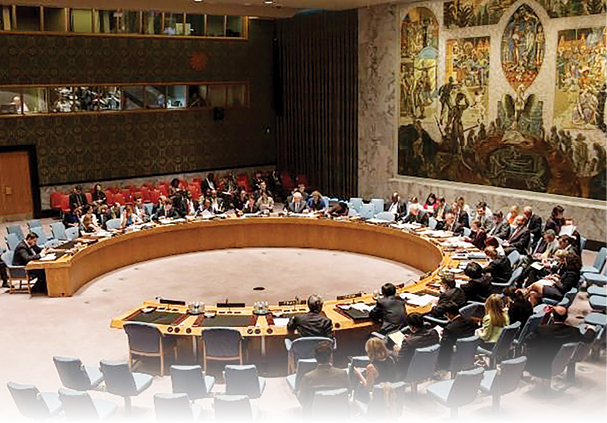
Defining Victory is a Greater Challenge than Ever Before
For over two centuries, military thought has rested on an enduring proposition that superior military power, intelligently employed and resolutely sustained, can compel an adversary to accept one’s political will. From the Napoleonic Wars to the World Wars and, in South Asia, the 1971 India-Pakistan War, battlefield success generally translated into political success. Armies were defeated, territory was occupied, peace treaties were negotiated and new political realities emerged. Victory was visible, measurable and decisive.
That relationship is now undergoing a profound transformation.
Wars continue to be fought with immense intensity. Militaries today possess capabilities that earlier generations could scarcely imagine. Artificial intelligence, autonomous systems, cyber operations, precision-guided munitions, space-based surveillance, hypersonic weapons and real-time intelligence have fundamentally altered the conduct of warfare. Yet despite these extraordinary advances, truly decisive political outcomes have become increasingly rare. States continue to dominate battlefields, inflict severe military punishment upon their adversaries and demonstrate technological superiority, only to find that their larger political objectives remain elusive.
The paradox is striking. Military capability has never been greater, yet the political utility of military force has become increasingly constrained.
Clausewitz’s timeless dictum that war is the continuation of politics by other means remains valid. What has changed is not the principle but the political environment within which war is conducted. Modern conflict unfolds within an ecosystem shaped by global media, interconnected economies, technological diffusion, international institutions, domestic politics and the constant scrutiny of public opinion. Military power remains indispensable, but it is no longer sufficient by itself to secure political success.
This is perhaps the defining strategic reality of the twenty-first century.
When Military Success Stops Short of Political Success
History illustrates how fundamentally the character of conflict has evolved.
The decisive wars of the past were fought between identifiable states pursuing clearly defined political objectives. Military victory generally led to political settlement because governments retained authority over both armies and populations. Territorial conquest carried unmistakable political significance, while defeated societies accepted the consequences of military defeat.
The Second World War ended with unconditional surrender and occupation. The 1971 India-Pakistan War concluded with the liberation of Bangladesh, the surrender of over ninety thousand Pakistani soldiers and a transformed strategic landscape in South Asia. The Falklands War produced a clear military and political outcome despite its limited geographical scope.
Such examples shaped generations of military thinking. Victory meant destroying the enemy’s military capability, compelling surrender and imposing a favourable political settlement. Today’s conflicts rarely follow that pattern.
Modern wars increasingly produce prolonged instability rather than decisive conclusions. Tactical victories are achieved without strategic closure. Military superiority creates leverage but often fails to generate enduring political outcomes. The distinction between winning battles and winning the peace has widened considerably.
The reason lies not in declining military competence but in the changing character of the strategic environment itself.
Six Forces that have Changed the Character of War
The first and perhaps most significant transformation is the fragmentation of conflict.
States no longer fight conventional armies alone. They confront insurgencies, terrorist organisations, proxy forces, ideologically driven movements, cyber actors and private military companies. Many of these actors do not seek conventional victory. Their objective is survival, disruption or the denial of an opponent’s political success. For them, avoiding defeat may itself constitute victory.
Military force can destroy formations, eliminate leaders and capture territory, but it cannot by itself extinguish an ideology or reconstruct fractured political legitimacy.
The second transformation is the emergence of information as an operational domain.
Every military campaign is now fought simultaneously across the battlefield, television screens, digital platforms and diplomatic forums. Images travel faster than military manoeuvres. Narratives influence alliances, shape public opinion and determine international legitimacy. Governments today must wage an information campaign alongside military operations, because strategic perception increasingly influences strategic outcomes.
Winning the narrative has become almost as important as winning the battle.
The third transformation concerns political endurance. Modern democracies possess formidable military capabilities but face growing constraints in sustaining prolonged conflict. Continuous media scrutiny, electoral cycles, economic pressures and public fatigue impose limits that strategic planners cannot ignore. Political patience has become a finite national resource. Military campaigns must therefore achieve their objectives within increasingly compressed political timelines.
The fourth transformation is technological diffusion.
Advanced military technology has unquestionably enhanced operational effectiveness, but it has also levelled aspects of the battlefield. Cheap drones, commercially available satellite imagery, cyber capabilities, precision-guided missiles and artificial intelligence have enabled relatively weaker actors to impose disproportionate costs upon stronger militaries. Technology has increased the capacity to resist as much as it has enhanced the capacity to dominate.
The fifth transformation is global economic interdependence.
Wars are no longer fought in economic isolation. Supply chains, financial markets, maritime trade, energy flows, digital infrastructure and critical technologies are deeply interconnected. Escalation now carries immediate economic consequences extending far beyond the battlefield. Governments must therefore balance military objectives against economic resilience, technological access, investor confidence and diplomatic relationships. Surge and resurge are inevitable, thus enabling longer sustainment.
The preservation of national power increasingly takes precedence over the pursuit of absolute military victory.
The sixth transformation is external intervention.
Few regional conflicts remain regional for long. Major powers intervene diplomatically, economically or militarily. International organisations, sanctions regimes, coalition politics and mediation efforts influence the trajectory of conflict before decisive military outcomes can emerge. Consequently, wars increasingly conclude through negotiated settlements, controlled escalation or strategic exhaustion rather than unconditional victory. Of course, it is not necessary that these efforts outside military engagements will always succeed.
Taken together, these six forces have fundamentally altered the relationship between military operations and political outcomes.
The Battlefield Is No Longer the Sole Arena of Decision
Recent conflicts reinforce this conclusion with remarkable consistency. The US demonstrated overwhelming military superiority in Vietnam, Iraq and Afghanistan. Governments were removed, armies defeated and territory secured. Yet durable political settlements consistent with the original strategic objectives remained elusive. Military dominance could not manufacture political legitimacy, social cohesion or stable governance.
Russia’s continuing campaign in Ukraine presents another example. Years of intense combat, extensive mobilisation and enormous expenditure have produced extraordinary military adaptation on both sides. Yet decisive political outcomes remain beyond immediate reach. The battlefield continues to evolve while diplomacy, economic sanctions, industrial capacity and international support have become equally decisive components of the contest.
Israel’s operations in Gaza reveal the complexity of translating battlefield superiority into sustainable political stability. Military objectives may be achieved against organised militant structures, yet the larger political questions concerning governance, legitimacy, reconstruction and regional security remain unresolved.
Equally instructive has been the calibrated military exchange between Israel and Iran during 2025-26. Both demonstrated advanced military capabilities while simultaneously exercising restraint to avoid uncontrolled regional escalation. Military signalling, deterrence and diplomatic messaging became as important as the strikes themselves.
India’s own experience offers an important illustration of this evolution.
Operation Sindoor was not conceived as a campaign of territorial conquest. It was designed to demonstrate India’s capability and political resolve, reinforce the credibility of its deterrence, impose costs on state-sponsored terrorism and reaffirm its willingness to defend national interests without permitting uncontrolled escalation. Military force was employed as an instrument of statecraft in pursuit of clearly defined strategic objectives, not as an end in itself.
This reflects an important shift in contemporary military strategy.
Modern campaigns increasingly seek deterrence, coercion, denial, signalling and escalation management rather than territorial acquisition or unconditional surrender. The objective is frequently to influence an adversary’s strategic calculus rather than to destroy entirely his capacity to wage war.
Military success has become one instrument within a much larger framework of statecraft.
Strategic Restraint Is Becoming a Form of Power
One of the least understood characteristics of modern strategy is the growing importance of restraint.
Restraint should never be mistaken for hesitation or weakness. On the contrary, it often reflects strategic confidence. Mature powers increasingly recognise that preserving escalation control, maintaining international legitimacy, protecting economic stability and retaining diplomatic flexibility may produce greater long-term political dividends than pursuing maximal military objectives.
The ability to terminate military action at the appropriate moment is itself an expression of strategic judgement.
The challenge for political and military leadership is therefore no longer confined to planning campaigns that defeat opposing forces. Success depends upon integrating military operations with diplomacy, economic policy, technological innovation, strategic communication, intelligence, national resilience and international partnerships.
Military force has become one pillar of an integrated national strategy rather than its sole determinant.
What This Means for India’s National Security
For India, this transformation has profound implications.
India confronts a uniquely complex security environment characterised by simultaneous continental and maritime challenges, persistent cross-border terrorism, strategic competition in the Indo-Pacific, technological disruption and an increasingly contested information domain. Future conflicts involving India are unlikely to remain confined to geographical frontiers. They will encompass cyber operations, space assets, economic coercion, influence campaigns, supply-chain vulnerabilities and technological competition.
Accordingly, India’s national security architecture must continue evolving towards a genuinely integrated approach.
Military preparedness will remain indispensable. However, deterrence in the twenty-first century will increasingly derive from the combined strength of military capability, economic resilience, technological self-reliance, indigenous defence manufacturing, secure digital infrastructure, civil-military fusion, effective strategic communication and whole-of-government coordination. National resilience is becoming as important as military readiness.
The armed forces will continue to serve as the principal guarantors of India’s security. Their effectiveness, however, will increasingly depend upon how successfully every other instrument of national power contributes towards achieving clearly defined political objectives. The military will need to be increasingly sensitive to accommodate and encourage integrated thinking and conceptualization of modern conflict. That is the essence of integrated statecraft.
Winning the Peace rather than merely Winning the War
Clausewitz’s central insight endures because it reminds us that war has never been an end in itself. Military force exists to serve political purpose.
The strategic environment of the twenty-first century has not diminished the importance of military power; it has expanded the range of factors that determine whether military success ultimately translates into political success. Economic resilience, technological superiority, information dominance, diplomatic legitimacy, national cohesion and international partnerships now shape outcomes alongside battlefield performance.
Future wars will undoubtedly remain violent and destructive. They may also become increasingly protracted, multi-domain and politically complex. Tactical victories will continue to matter, but they will rarely prove decisive in isolation. The decisive victories of the future will belong to nations that understand this transformation before their adversaries do. They will integrate military power with diplomacy, technology, economic strength, strategic communication and resilient national institutions. They will recognise that success lies not merely in defeating an opponent’s armed forces but in shaping the political environment that follows conflict.
In the final analysis, modern wars are no longer won solely by armies. They are won by nations that can align every instrument of national power towards a coherent political objective. The battlefield will remain indispensable, but it will no longer be the place where decisive political outcomes are determined.
