

 Login
Login

Dana Pittard, Vice President, Defence Programs, Allison Transmission
Designation :
Author :
: March 23, 2026
“Powering Mobility for Modern Battlefields and Heavy-Duty Platforms”
Allison Transmission is a global leader in automatic transmissions and electrified propulsion solutions for armoured, tactical, and heavy-duty vehicles. Its battle-proven systems deliver superior mobility, reliability, and low lifecycle costs for militaries worldwide.
With expanding manufacturing in India and strong local partnerships, the company actively supports India’s modernisation and self-reliance goals while serving both domestic and export markets.
South Asia Defence & Strategic Review had the opportunity to meet and interact with Dana Pittard, Vice President Defence Programmes, Allison Transmission. Excerpts from the free flowing QA Session:-
Dana Pittard – VP, Defence Programs, Allison Transmission Inc.
Dana Pittard, former US Army general and West Point graduate, serves as Vice President of Defence Programs at Allison Transmission. A SAMS alumnus and Harvard fellow, he is an award-winning leader, defence commentator, and author on military strategy, counterinsurgency, and modern warfare, including the book Hunting the Caliphate.
Defstrat: Allison Transmission is a global leader in heavy-duty and military transmission systems. How is the company positioning itself for the next decade as mobility moves toward higher power demands, hybrid power packs, and digital integration?
Dana: The next decade will redefine mobility for both Tracked & Wheeled military vehicles. Vehicles are becoming heavier, smarter and more energy intensive for electric and electronic capabilities. Beyond traditional propulsion, platforms today must power sensors, self-protection systems such as soft & hard kill APS, communication systems, counter-UAS suites and electronic warfare payloads. This means transmissions are becoming even more vital as they help enable advanced power-management systems.
Allison is positioning itself as a full spectrum solutions provider. While our fully automatic transmissions remain most prominent, we have also expanded into electrified and hybrid architectures and digitally enabled drivetrains as well. We are also embedding smart controls, onboard diagnostics, and predictive maintenance analytics into our systems.
As we understand that new platforms like the Future Ready Combat Vehicle (FRCV) will need more onboard power and electric mobility as it evolves, Allison Transmission offers the Indian Army incremental upgrade capabilities such as electric-hybrid capabilities, higher torque handling, improved fuel efficiency, increased onboard power, and smarter integration. The goal is to help vehicle manufacturers deliver more capability without increasing logistical or maintenance burdens.
Defstrat: Modern battlefields demand greater mobility, survivability, and reliability under extreme conditions. How is Allison evolving its defence transmission portfolio to meet next-generation military vehicle requirements?
Dana: As I mentioned earlier, modern combat vehicles operate in harsher, more unpredictable environments than ever before. We have observed certain requirements like system diagnostics on armoured vehicles operating in Middle East conflicts. They carry heavier armour, active protection systems, sensors, and remote weapon stations. All of these technical requirements increase power demand and mechanical stress.
Our approach is to engineer transmissions that maximise torque and power delivery while reducing driver and crew fatigue. Fully automatic systems allow smoother acceleration, better gradeability, and consistent performance across terrain whether desert, mountains, or urban battlespace.
We are also developing hybrid-electric and silent drive capabilities that enable low-noise reconnaissance, improved fuel economy, and exportable electrical power for on board systems. Survivability today is not only armour, it’s mobility. A vehicle that keeps moving faster, has a higher likelihood of surviving longer. That philosophy helps guide our entire defence portfolio.
Defstrat: Allison products are known for lifecycle durability and ease of maintenance. How important are these factors in today’s military procurement decisions, and how does Allison differentiate itself in this area, especially in price sensitive markets?
Dana: Acquisition costs should be important, but never be the decisive factor while developing capability. Operational reliability, durability and maintainability all help reduce total cost of ownership and have greater impact than upfront cost, especially for military fleets that operate for 20–30 years. Downtime directly impacts readiness.
Allison transmissions are designed for extended service intervals and fewer wearable components. Automatic shifting reduces driver-induced damage, and built-in diagnostics allows for quick troubleshooting. This translates to lower lifecycle costs, fewer spare parts, and higher fleet availability. In price-sensitive markets, we focus on total cost of ownership rather than acquisition price. When customers calculate fuel savings, reduced maintenance, and longer service life, our systems consistently deliver better value over the vehicle’s lifespan.
Defstrat: Allison has established and is further investing in its facility in Chennai. What strategic considerations led to expanding your footprint in India at this stage?
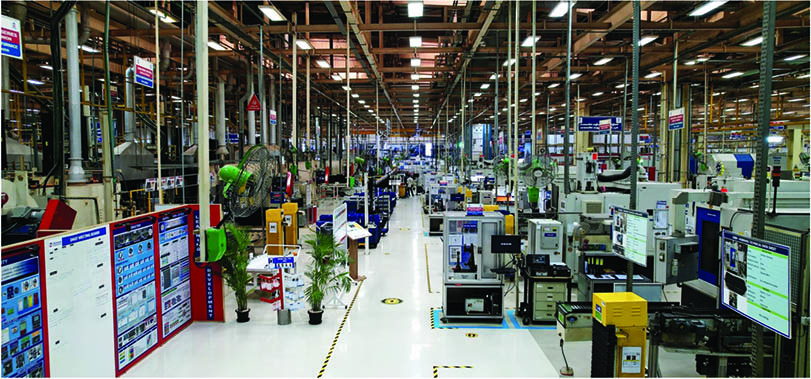
Dana: India is one of the world’s fastest-growing heavy mobility and defence markets. The Government of India’s emphasis on localisation, indigenous manufacturing and self-reliance makes it important for global suppliers to build a strong domestic presence. Allison has invested heavily in manufacturing facilities in India including Chennai, and more recently through our acquisition of Dana’s Off-Highway Drive and Motions Systems business, which has a robust presence in India. I am happy to inform you that we employ approximately 4,000 employees in India, which reflects our long-term commitment.
Defstrat: How does the Chennai facility fit into Allison’s global manufacturing and supply-chain strategy, particularly in terms of supporting both Indian and export markets?
Dana: Chennai is increasingly becoming a strategic node in our global network. It supports localisation for India while also serving as a competitive manufacturing base for exports to Asia-Pacific, the Middle East and Africa.
By integrating local suppliers into our ecosystem, we improve resilience, shorten lead times and reduce dependency on distant supply chains. In today’s geopolitically uncertain environment, distributed manufacturing is a strategic advantage.
Defstrat: What role do partnerships with Indian OEMs, defence PSUs, and private industry play in Allison’s long-term India strategy?
Dana: Partnership is central to our strategy. India’s defence ecosystem is highly collaborative, involving defence PSUs, private OEMs, and MSMEs. We work closely with vehicle manufacturers and system integrators to customise solutions for specific platforms. We enjoy a close relationship with leading DPSUs. DRDO and private OEMs and are working closely with them on certain significant projects for the Indian armed forces.
Beyond supply, we aim to co-develop products, share technical knowledge, and build long-term capability within the local industry. These partnerships help ensure our technology is embedded within India’s indigenous programmes rather than simply imported.
Defstrat: With electrification, hybrid drivetrains, and digital health monitoring gaining traction, what key technologies will define Allison’s product roadmap over the next five to ten years?
Dana: Allison is fast adapting to the changing warfare realities. We have already developed an electric-hybrid transmission system which is now at a very advanced stage and actively being evaluated in the United States XM30 combat vehicle program. We are also looking at fully electric combat vehicles and software-driven transmission management for optimal performance under varying loads. Predictive maintenance involving telematics and health monitoring to anticipate failures before they occur is one of our priorities.
Cyber security is another sensitive issue that we are conscious of, to ensure that platforms are hardened against cyber-attacks, which is a real an increasing threat today.
Defstrat. Looking ahead, how do you envision Allison Transmission’s role in India’s defence and heavy-mobility ecosystem over the next decade?
Dana: We see ourselves as a long-term technology partner supporting India’s modernisation goals. As India upgrades its logistics fleets, armoured vehicles and next-generation combat platforms, reliable propulsion, partnerships and assured sustenance capabilities will be critical.
Our role will be to provide proven technology, engineering collaboration and lifecycle support. We want to help India build not only vehicles, but a sustainable mobility ecosystem that supports both domestic needs and exports.
We are also ready and keen to work closely with the end user and engage in imparting knowledge about the latest trends in propulsion systems in any way considered suitable by the Indian army. In the process we shall also learn about the distinct requirements of the Indian end -users. Allison would be happy to interact and impart knowledge at all levels.
Defstrat: Have the ongoing conflicts in Ukraine and West Asia thrown up any lessons for companies like Allison Transmission?
Dana: Recent conflicts have reinforced the importance of mobility, logistics and maintainability. Vehicles must operate continuously under extreme stress, often far from maintenance bases. Reliability and ease of repair become decisive. Another lesson is the growing power demand from electronics, drones, and battlefield networks. Future vehicles must generate and manage more electrical power.
For companies like ours, the takeaway is clear- transmissions and propulsion systems must be tougher, smarter, and more energy-efficient. Mobility remains the backbone of combat effectiveness, as the future is likely to demand mass mobility in protected vehicles. With our substantial capabilities and in India abroad, we are sure to be able to fulfil India’s requirements in the tracked and wheeled, combat and heavy vehicles domain.
