

 Login
Login
Articles
2025, The Year that was
Sub Title : Conflicts during 2025 at a glance
Issues Details : Vol 19 Issue 6 Jan – Feb 2026
Author : Ajay Singh
Page No. : 41
Category : Geostrategy
: January 22, 2026
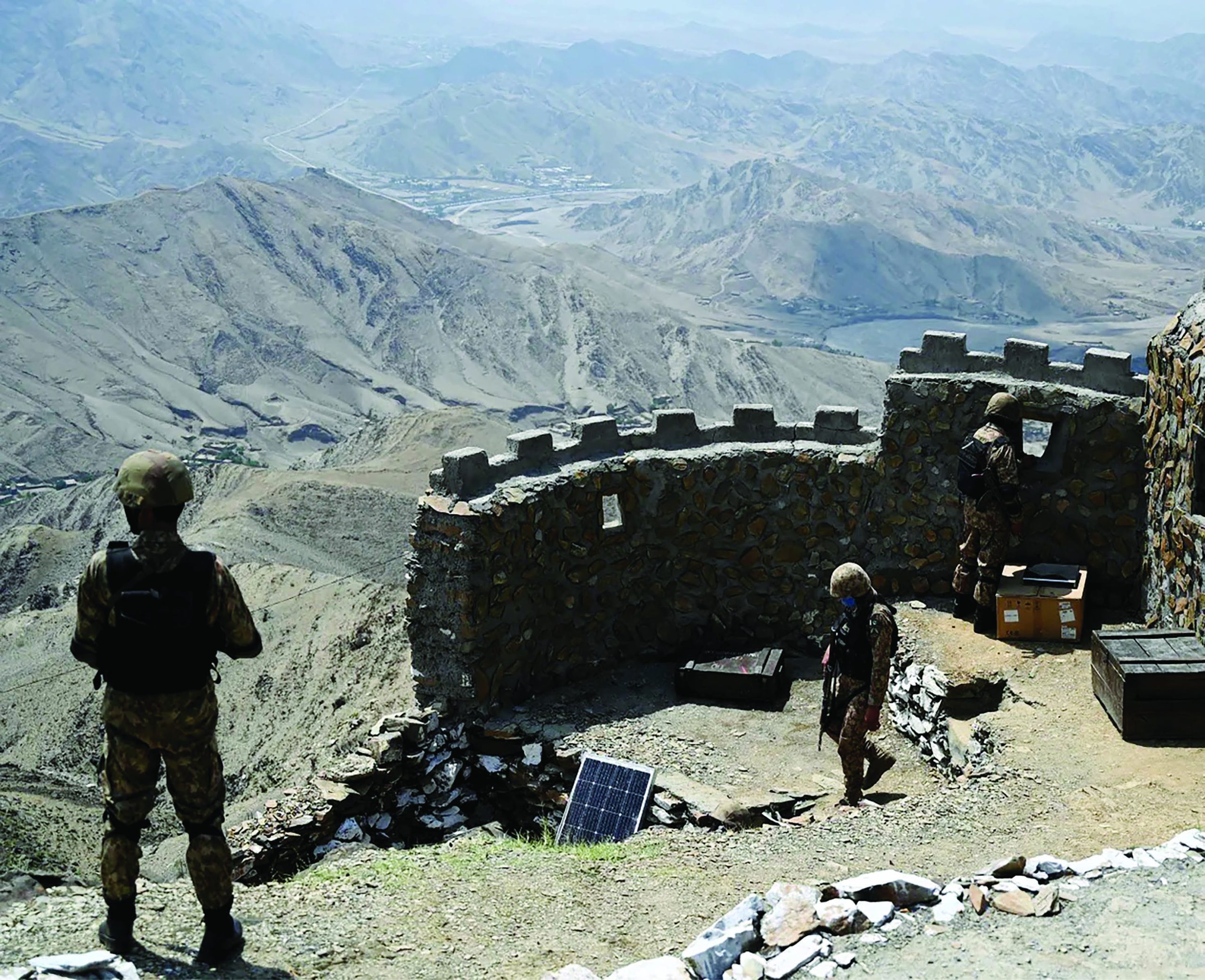
2025 shattered hopes of global stability, as wars persisted, new flashpoints emerged, and peace initiatives collapsed. From Europe and the Middle East to South Asia and beyond, conflict, coercion, and strategic uncertainty defined a year that ended far more turbulent than it began.
The year 2025 began with a glimmer of hope. There had been peace talks in the two major conflicts of Ukraine and the Middle East. Trump had been re-elected with the promise that he would lead America into “no more wars.” Yet, the hopes were soon belied. The Russia–Ukraine war, in spite of a series of peace meets, continues unabated, and Russia is close to attaining its military aims. In the Middle East, despite a peace deal between Israel and Hamas, the fighting continues in Gaza, and Israel and the USA bombed Iran’s nuclear facilities, leading to an 11-day confrontation. In the subcontinent, India and Pakistan had a tense exchange of fire for four days that threatened to get dangerously out of control. The Durand Line between Pakistan and Afghanistan erupted in August following a Pakistani air strike in Kabul. To add to the mix, Thailand and Cambodia had a four-day war over an ancient temple. And yes, the simmering insurgencies of Sudan, Myanmar, Yemen, Congo, and Somalia continue erupting with no hope of an end.
Internally too, nations in the neighbourhood were roiled by conflict. The student uprising of last July has plunged Bangladesh into a cycle of hate and revenge, with repeated attacks on minorities. Nepal witnessed its own Gen Z moment when students took to the streets—fed up with rampant corruption and the ineptitude of the government—overthrew the regime, and placed Nepal under an interim government. The promised elections in both nations could bring some measure of stability—but that remains to be seen.
Yes, 2025 has been a tumultuous ride. And as the year ended, it saw the spectacle of the sovereign president of a sovereign nation being whisked away from Venezuela by US commandos to face trumped-up charges in the USA. Greenland too faces the prospect of annexation by the USA—which could also lead to China trying its hand at Taiwan. It seems that 2026 will be even more turbulent.
The Russia-Ukraine War
By early 2025, Russia had already attained most of its battlefield aims. It had taken over 18 percent of prime Ukrainian territory, including the provinces of Kherson and Zaporizhzhia and most of the Donbas. The Ukrainian incursion towards Kursk was eliminated by January 25 with a fierce riposte by around 50,000 Russian and North Korean troops, and with that, Ukraine lost its last bargaining chip. Russia also intensified its offensive in the Luhansk and Donetsk provinces towards the crucial cities of Kramatorsk and Pokrovsk—along with a supplementary attack towards Kharkiv. While the offensive inched forward, a doughty Ukrainian defence ensured that the key cities still held—if only temporarily.
The war has degenerated into a series of long-range strikes on each other’s territories by drones and missiles. Kyiv and Moscow have been attacked repeatedly, and much of Ukraine’s energy infrastructure has been crippled. Yet the clinching strike was the audacious OPERATION SPIDERWEB by Ukraine, in which 118 FPV drones and their operators were smuggled into Russia and then activated in June to hit five Russian air bases—some as deep as 4,500 km inside Russian territory. That strike damaged 21 Russian aircraft parked on the runways—including crucial Tu-22 and Tu-95 strategic bombers and A-50 surveillance aircraft—and caused an estimated USD 7 billion worth of damage and an enormous loss of Russian prestige.
In all this, Ukraine had to face the ignominy of seeing Zelensky being insulted by Trump in the White House and also witnessing Trump and Putin meet at Anchorage, Alaska, to discuss a “peace deal.” The so-called “land-for-peace deal” amounts to a virtual capitulation of Ukraine and an acceptance of all Russian demands. This recognises Russian annexation of its captured territories along with Crimea, which was taken over in 2014. Ukrainian membership of NATO is a flat “NO”—though it can apply for inclusion in the European Union. All Ukraine gets in return are ambiguous security guarantees, which would not amount to much.
Predictably, the terms have been rejected by both Ukraine and Europe. But with the USA cutting off aid to Ukraine—and even claiming its minerals and rare earths as compensation for aid given earlier—Ukraine cannot sustain the fight. Elusive peace, or even some sort of ceasefire, is still out of reach. But perhaps in 2026, a war-weary Europe will finally reach some sort of compromise—even if it is purely on Russian terms.
The Middle East
Conflict in the Middle East is like a multi-headed hydra. Lop off one, and another appears. Stop one conflict, and a new one emerges. In most cases, the conflicts never stop. They just keep erupting over and over again.
This year was no different for the Middle East. The Gaza conflict saw a peace deal between Hamas and Israel, in which Israel agreed to halt military actions and permit the resumption of aid in Gaza. Hamas agreed to release the remaining 48 hostages and the remains of the dead. The plan did see a short-lived ceasefire. But predictably, as soon as the hostages were released, Israel resumed military action in both Khan Younis and Gaza City through OPERATION GIDEON’S CHARIOT. The bombing and strikes continue, and for the beleaguered inhabitants of Gaza, the “peace” exists only on paper.
Yet, the most serious eruption in the Middle East was in June 2025, when Israel attacked Iran’s nuclear facilities with over 200 aircraft, striking Natanz, Fordow, Isfahan, and Arak—along with over a hundred military installations and missile production facilities. They also virtually decapitated Iran’s military and scientific leadership. The Israeli attack was followed by a US strike on the facility at Fordow, using B-2 bombers and GBU-57 Massive Ordnance Penetrators to reach the nuclear plant located deep underground. While considerable damage was caused to Iran’s nuclear production facilities, it has not halted them completely.
Iran responded with largely symbolic strikes at Tel Aviv and the US military base in Qatar (after helpfully informing the USA of the strike beforehand). After 11 days, a ceasefire came into being, and the conflict did not escalate further. But the action set the stage for the destabilisation of Iran. In December, large-scale demonstrations took place in Iran against inflation and rising prices. The protesters were brutally put down by the Ayatollah regime, with an estimated 2,000 deaths. All this has set the ground for US intervention in Iran to bring about regime change, which could well be on the cards.
India-Pakistan
War returned to Indian soil after almost twenty-five years in a tense four-day exchange of fire between India and Pakistan from 7–10 May.
Following the killing of 26 innocent tourists in Kashmir by Pakistani-sponsored terrorists, India launched OP SINDOOR. On the night of 7 May, an IAF strike package of Rafale, Mirage 2000, and Sukhoi-30 MKI fighters launched a precision attack on terrorist camps inside Pakistan—in conjunction with long-range artillery and BrahMos strikes. These attacks hit nine terrorist camps, five in Pakistan-occupied Kashmir and four in Pakistani Punjab. These included the headquarters of Lashkar-e-Taiba at Muridke and even the headquarters of Jaish-e-Mohammed at Bahawalpur, located over 100 km deep.
For three days and nights thereafter, both sides struck each other with drones and missiles virtually along the entire length of the IB and LoC, extending from Sindh and Gujarat in the south to Leh and Skardu in the north. The clinching moment came on the night of 10 May, when India struck eight PAF airbases and three air defence installations, including Nur Khan, Chakwal, Sargodha, Shorkot, Jacobabad, Sukkur, Bholari, and Rahim Yar Khan, hitting runways, radars, hangars, and installations. The crippling damage caused by these strikes—and the gaps they created in Pakistan’s air defence network—forced Pakistan to ask for a ceasefire that came into effect at 1700 hours on 10 May, after 87 hours and 56 minutes of intense conflict—which fortunately remained a non-contact one.
Yet, the impact of OP SINDOOR was nebulous. Pakistan claimed success in the air war by shooting down Indian aircraft. India claimed that it managed to strike at the heart of terrorist camps operating inside Pakistan and severely damage its military infrastructure. The message has been delivered to Pakistan about the cost it would pay for sponsoring terrorism. Unfortunately, this action has now lowered the threshold for war. If another terrorist strike takes place, will India respond similarly? And will it lead to all-out war? That is a question our planners would be pondering upon.
Pakistan-Afghanistan
Pakistan also has problems with its western neighbour—especially after the Taliban took over Afghanistan and proved that they were not the eternally grateful allies that the ISI had hoped they would be. Rather, with the Taliban in Kabul, the actions of the Tehrik-e-Taliban Pakistan (TTP) intensified as they stepped up attacks within Pakistan with the stated aim of imposing Sharia law in the country. Attacks on Pakistani posts and convoys took place virtually every day.
Things came to a head in October when a TTP strike killed 11 Pakistani soldiers, including a Colonel and a Major, in Waziristan. This triggered a Pakistani air attack on Kabul and Paktika, which killed civilians on the ground. The Durand Line erupted thereafter, with an exchange of artillery, mortar, and machine-gun fire by Afghan and Pakistani forces, the closure of crossing points on the border, and attacks on each other’s posts. The Taliban claimed to have captured three Pakistani posts and killed 59 soldiers in Waziristan. They even displayed the trousers and rifles of the captured soldiers, comparing it to the abject surrender of the Pakistani army in 1971.
Peace talks between the Taliban and Pakistan have failed. An uneasy ceasefire prevails along the border. The Taliban do not recognise the Durand Line—which they call “the Hypothetical Line”—and claim all of Waziristan as part of Pashtunistan. TTP activities have increased across Waziristan, in conjunction with the actions of Baloch freedom fighters in Balochistan. Slowly, Pakistan’s control over both its western provinces is being eroded, and its policy of sponsoring terrorism has come back to haunt it. Its chickens have come home to roost.
Thailand-Cambodia and Other Wars
A hitherto peaceful corner of the world also saw an unexpected conflict. Cambodia and Thailand have been engaged in a border dispute since 1953, largely over the status of the Preah Vihear temple in the disputed area, which is now the focal point of the problem. Things escalated into an armed confrontation in July when a Thai soldier was injured in a landmine blast. Both sides responded with artillery and rocket fire along the border, each claiming that the other had initiated the fighting. The Royal Thai Air Force launched strikes on Cambodian military installations using F-16s, marking the first time the Thai Air Force had been used in conflict. Fortunately, a ceasefire came about in four days—for which Trump claimed credit. But every now and then, fresh firing erupts along the border, and the tenuous ceasefire is fast fraying.
Other regional conflicts—some forgotten by the world community—also continue unabated. The Myanmar civil war has entered its fifth year, with rebels taking control of many border provinces and the army maintaining a tenuous hold in the cities. In Somalia, Yemen, Sudan, and Congo, internal conflict has claimed over 2 million lives and displaced over 10 million, with little sign of abating. Islamic insurgency in Mali, Niger, Burkina Faso, Chad, and Benin threatens to bring the entire Maghreb under Islamic fundamentalism. To add to the mix, Islamic State bases in Nigeria were bombed by US fighters on Christmas Eve—apparently to express Trump’s pique at the treatment of Christians in Nigeria—though it is likely that massive oil reserves under Nigerian soil could have been the real cause of US interest there.
Chasing an Elusive Peace in 2026
All the major conflicts taking place across the world have one thing in common: they have all been victims of Trump’s peace initiatives. He has claimed to have halted the conflicts of India–Pakistan, Thailand–Cambodia, and “Azerbaijan and Albania” (as he called Azerbaijan and Armenia).
Yet this Nobel Peace Prize-coveting president has also initiated military strikes on Venezuela, abducted its president, and virtually laid claim to its vast oil reserves—estimated to be the largest in the world. He has now set his sights on Greenland, threatening to annex it. All this has raised fears in Europe and among other allies, whom he has wantonly disregarded.
So, what will 2026 bring? The Russia–Ukraine war could end on Russian terms. Gaza could well be taken over by Israel and the USA, and its population relocated to establish “the Riviera of the Middle East.” Regime change in Iran is very much on the cards. In India, the continuing OP SINDOOR could erupt again in the event of another terrorist attack linked to Pakistan. And China could well be emboldened to seize Taiwan by military means.
A quarter of the so-called “Century of Peace” has elapsed. Yet this century has already seen more conflict-related deaths and displacement than the entire 20th century—less the two World Wars. Will the coming year hold more promise? Unfortunately, there are already too many clouds forming across the horizon, and the promise of peace seems distant.
