

 Login
Login
Articles
Attrition Warfare
Sub Title : Modern attrition warfare demands not just weapons, but the capacity to continuously regenerate combat power.
Issues Details : Vol 20 Issue 4 Sep– Oct 2026
Author : Lt Gen NB Singh, PVSM, AVSM, VSM (Retd)
Page No. : 31
Category : Military Affairs
: September 23, 2026
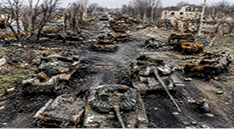
Attrition warfare is undergoing a fundamental transformation. Ukraine demonstrates how drones, electronic warfare, precision fires, industrial capacity and rapid battlefield adaptation are redefining the ability to sustain combat power. For India, the challenge is building an ecosystem capable of continuous regeneration.
Most wars in history, though, have been won by attrition, by exhausting the opponent through sustained loss of manpower and material on the battlefield. Indian military history contains several good examples of attritional warfare, although the term itself is modern. The most useful examples are not necessarily battles in which India simply suffered heavy casualties; they are campaigns where the ability to sustain losses, replace resources, maintain morale and gradually exhaust the adversary became central to the outcome. Shivaji and the Maratha war against the Mughals is probably India’s best historical example of asymmetric attrition. The Marathas did not destroy the Mughal army in one battle. They needed to ensure that the cost of maintaining Mughal military power in the Deccan continually increased.
Ukraine seems to be in contention simply because of a strategy of attrition. The Ukrainian experience demonstrates that attrition warfare is evolving from the traditional “exhaust the enemy through manpower and firepower” model, into a technology-enabled, industrialised system of continuous cost imposition.
What is different about Ukraine’s Attrition Warfare?
- Traditional attrition warfare generally seeks to destroy the enemy’s personnel, equipment and ammunition faster than he can replace them. The important conceptual change is that the unit of attrition is no longer simply the soldier or tank-it is the entire enemy combat operating system. The Ukrainian model adds new dimensions: Sense → Decide → Strike → Assess → Adapt. Massed fire, concentration of troops and hardware, the traditional attrition tools are unable to operate effectively in this environment.
- The battlefield has become a “kill zone”. Ukraine has demonstrated that ubiquitous surveillance makes concentration of forces extremely dangerous. Small UAVs continuously search for troops, artillery, tanks and IFVs ,command posts, logistics vehicles ,ammunition dumps, electronic-warfare, air-defence systems. Once detected, the target can be engaged by an FPV drone, artillery, missile or another UAV. The result is a very short sensor-to-shooter cycle, making attrition more attractive.
- Ukraine has changed the meaning of “mass”. The Ukrainian experience suggests that future mass may not mean concentrating thousands of soldiers or hundreds of tanks. Ukraine’s drone production expanded enormously during the war. Estimates suggest annual capacity could reach several million systems. This has creates what might be called “precision mass.
- Attrition has moved deep behind the front. Ukrainian attrition is not confined to the tactical battlefield. Ukraine increasingly attempts to impose costs on Russia’s entire combat echelons:- frontline forces → logistics → fuel → ammunition → command infrastructure → air defence → industrial base → economic infrastructure.
- Logistics itself has become an Attrition Target. A drone-saturated battlefield makes conventional logistics extraordinarily difficult. Vehicles moving toward the frontline can be detected and attacked. Consequently, sustainment becomes part of the battle rather than a support activity outside it.
- Electronic Warfare is an Integral part of Attrition. The Ukrainian battlefield is also a contest between drone, EW, counter-EW, autonomous drone, counter-drone systems. A drone that works today may become ineffective tomorrow because the adversary changes frequencies, navigation techniques or jamming methods. Therefore, the weapon system is no longer just the physical drone. It is drone + software + communications + EW resistance + operator + data + production capability.
- The Industrial Base becomes a Combat Arm. In a prolonged attritional war, victory depends increasingly on rate of learning × rate of production × rate of replacement rather than initial technical superiority of the weapon. Small firms and workshops continuously modify designs while the State provides resources and demand.
This is different from the conventional model in which combat power was heavily associated with platform numbers and quality. The emerging concept of attrition warfare is the continuous, distributed and economically asymmetric destruction of an adversary’s combat system-using massed inexpensive unmanned systems, artillery, EW, intelligence networks and deep strikes. For India, the particularly important implication is that attrition readiness cannot be measured simply by war reserves of tanks, missiles and ammunition; it must also include the capacity to manufacture millions of inexpensive expendable systems, replace them rapidly, absorb battlefield losses and continuously restore/upgrade them.
Russia`s Mixed Response
Russia has adapted considerably during the war. The paradox is that Russia’s large industrial base has been much better at producing more weapons and replacing losses than at converting that industrial capacity into a rapid operational innovation and decisive battlefield manoeuvre. Industrial capacity is not the same as military adaptability. Russia possesses a large defence-industrial base. But industrial capacity only answers: “How many can we produce?” Modern warfare increasingly asks: “How quickly can we learn, redesign, test, manufacture and field the next version?” Ukraine’s drone ecosystem has been much more decentralised and bottom-up.
US Iran conflict
The 2026 US–Iran war provides a remarkably useful second case study alongside Ukraine, but the lesson is somewhat different. Iran demonstrates how even a technologically dominant force can be drawn into economic and logistical attrition by a weaker opponent. The US achieved extraordinary tactical effects: thousands of strikes, severe damage to Iranian military infrastructure and leadership and major degradation of Iranian air and naval capabilities. Yet the war did not produce a decisive strategic outcome, similar to Ukraine. Iran’s use of large numbers of relatively inexpensive Shahed drones created a difficult economic problem for the US, which alongside allies reportedly fired more than 1,700 Patriots each costing $3.5M, while the Shahed drones cost a fraction of the interceptor. This creates an attrition asymmetry:- $35,000 drone → $3.5 million platform. The current shortage of munitions and hardware in US military is driven by systemic constraints within the US industrial base and its supply chains.
Attrition Asymmetry
For India, the implications are particularly significant because India faces the possibility of a long-duration, high-intensity conflict with a technologically superior adversary. India would need to set up an attrition-resilient military architecture comprising; millions of inexpensive expendable systems, large stocks of ammunition and missiles, low cost defence comprising platforms, EW, interceptor drones, directed energy and HPM weapons , distributed command posts and logistics. Redundancy in communications, sensor to shooter links and navigation systems, will bring in strategic resilience.
China`s Strategic Readiness (SR)
Taking into account the broader definition of SR, it appears that China is ahead of both Russia and India in several dimensions and in some respects is approaching or exceeding the United States. Looking at some major dimensions of SR, it would be reasonable to assume that with respect to industial mass, munitions regeneration, marine systems, electronics/technology, drones and mass manufacturing of military hardware, civil military industrial integration, supply chain resilience, ability to sustain prolonged high- intensity war, the readiness levels are very high to exceptional. However, with respect to dimensions like overseas logistics, combat experience, joint forces operations, battle field adaptation, ability to learn from actual war the rating could be medium to low. It may be reasonable to assume that overall SR level is very high (unvalidated). The important qualification is “unvalidated.” China has never fought a major war since the 1979 Sino-Vietnamese conflict. Consequently, we should distinguish between latent readiness-what China appears capable of doing-and demonstrated readiness-what its military has actually demonstrated under sustained combat conditions.
China’s greatest advantage is that it has built a “war economy” without being at war. Its military-civil fusion system gives the PLA access to enormous commercial manufacturing capacity. China’s strategic depth is much greater than its peacetime military inventory suggests.
Pakistan`s SR
Pakistan has relatively high “initial attrition readiness” but considerably weaker “deep attrition readiness.” It can impose significant costs and sustain a high-intensity confrontation for a limited period, but its ability to sustain a prolonged, ammunition-intensive, industrial war against India is much more constrained. Pakistan’s effective industrial base is larger than its domestic industrial base because of access to Chinese industrial ecosystem. The August 2026 Pakistan-Turkey-Saudi defence agreement explicitly envisages cooperation in defence industries, unmanned systems, electronic warfare, AI and joint production. Pakistan has a credible capacity to generate attrition, but limited capacity to sustain industrial attrition.
Attrition Readiness: India
Attrition readiness is the ability to generate, sustain, regenerate and adapt combat power under prolonged high-intensity conditions. Historically, India has had a military, separate defence industry and a separate civilian industry with its defence arsenal sourced from Russia, France, Israel, US, South Korea and indigenous sources. An analysis of SR dimensions indicates that India would be placed in medium category in most dimensions and in some like combat experience , joint forces operations, ability to sustain prolonged high intensity war, domestic resilience it may be rated high. But in areas like battle field adaptation, force regeneration, civil military integration, technology ecosystem, supply chain resilience there could be vulnerabilities. India is gradually moving toward a self reliant, integrated eco system through private defence manufacturing, semiconductor initiatives, drones, space, electronics, defence corridors, dual-use technology Make in India, iDEX, civil-military technology partnerships.
India needs to move beyond conventional stockpiling and create what can be called a National Attrition-Readiness Architecture. India has made substantial progress: defence production reached about ₹1.78 lakh crore in FY2025–26. But production value is not the same as war-sustaining capacity. India needs to plug the vulnerabilities identified and work on strategic reserves, surge capacity and resilient supply chains. Some changes that can be looked into:-
- Re-define SR. The first change has to be conceptual. India traditionally measures readiness largely through availability of platforms + trained manpower + ammunition holdings + equipment serviceability. The new metric should be- how many days/months can the Armed Forces sustain a specified tempo of operations, after suffering specified levels of losses and industrial disruption? Every major capability should have an Attrition Readiness Index calculated for major platforms and munitions.
- Create a National “Surge Manufacturing” System. This is probably the single biggest institutional change required. India should identify 100–150 critical defence products and establish peace-time production capacity + dormant surge capacity. Factories should not simply be capable of producing 10,000 units annually. They should be contractually and technically capable of moving from: 10,000/year to 50,000/year within a defined period during mobilisation.
- Create a “Drone–Counter-Drone Industrial Complex. Ukraine has demonstrated that drones are no longer a niche capability. India should establish a national ecosystem capable of producing very large numbers of inexpensive unmanned systems. The portfolio should include drone and counter drone systems. This is where India’s large electronics, automotive, telecommunications and semiconductor ecosystem can become a military regeneration asset.
- Create a Permanent “Battlefield-to-Factory” feedback Loop. Establishing Combat Innovation Centres within commands, linked directly with Indian companies, academic institutions, DRDO laboratories and start ups would help. A soldier should be able to report: “This EW system is interfering with our drone or radar.” The industrial ecosystem should be able to produce Version 2.1 within weeks
- Redesign Procurement around Attrition. This is a major conceptual shift. Military should stop asking –“What is the best system?” and increasingly ask: “What is the best system that can be replaced at wartime consumption rates?” Consider a hypothetical choice: Weapon A ₹10 crore ,very sophisticated, production: 50/year versus Weapon B ₹1 crore, 80% of the capability, production: 2,000/year. In an attritional war, Weapon B may produce considerably greater aggregate combat power.
- Designate Maintenance and Repair a Strategic Weapon. Army should calculate battlefield recoverym and regeneration rates. For example, if 100 armoured vehicles are damaged-30 destroyed,40 recoverable, 30 repairable. How quickly can the 70 potentially recoverable vehicles be returned to combat? The answer depends on: recovery vehicles + FRTs + spares + engines + electronics + technicians+ transportation. Every platform should have a wartime repair architecture designed simultaneously with the platform.
- Build an Indigenous “Critical Components Reserve”. India should identify components whose absence can immobilise large numbers of platforms and create reserves of engines ,transmissions, bearings;, semiconductors, power electronics, batteries; thermal imagers, RF components, servo actuators, rocket motors, seekers, explosives, propellants, special alloys and machine tools. A war may destroy only 5% of India’s tanks-but if a particular imported electronic module becomes unavailable, 50% of the fleet may become unserviceable.
8 Create a “Two- Front War Industrial Stress Test”. A national-level, multi-domain simulation designed to determine India’s ability to generate, sustain, repair, replace and regenerate combat power simultaneously against two major military contingencies while absorbing economic, cyber, space, infrastructure and supply-chain disruption, for a period say of 60 days may be conducted. This should take care of readiness requirement for a high intensity conflict with any one of the adversaries.
- Make PSUs and Private Industry – An Integral part of the Warfighting System. Maintenance and industrial surge will primarily be driven by the tri service organic industrial base of ABWs, BRDs and Naval Dockyards and DPSUs. A collaborative working relation between these entities and private sector is a must. Time to position a few engineers from the military as key managerial persons (KMPs) in DPSUs.
Conclusion
India should move away from “How many platforms do we possess?” to: “How much combat power can we continuously generate?” And then go one step further: “How rapidly can we regenerate combat power after the enemy has successfully degraded our force?” That is the crucial lesson from Ukraine. Take the example of a drone. The requirement isn’t whether ” India needs 500,000 drones. “It is- “India needs the ability to manufacture 500,000 drones, replace 500,000 losses and produce an improved version of the drone while the war is continuing.” A country is strategically ready for a two-front war not when it has enough troops and weapons to start two wars, but when it can continue replacing the combat power consumed by two wars.
The particularly important change is “don’t build only weapons- build manufacturing ecosystems”
Lt Gen (Dr) N B Singh, PVSM, AVSM, VSM, ADC is a former DGEME, DGIS and Member Armed Forces Tribunal. Views expressed are his own.
