

 Login
Login
Articles
Control of Geography – Control of Outcomes
Sub Title : How geography continues to shape power, strategy and the fate of nations in an increasingly connected world
Issues Details : Vol 20 Issue 2 May – Jun 2026
Author : Lt Gen Sanjiv Langer, PVSM, AVSM
Page No. : 49
Category : Geostrategy
: June 1, 2026
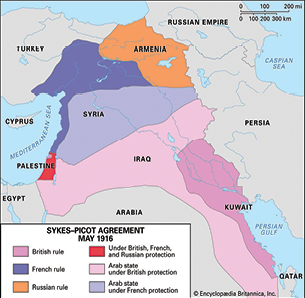
From the imperial cartography of the Sykes–Picot Agreement to today’s grey-zone contests in West Asia and the Indo-Pacific, geopolitics has evolved from controlling geography to shaping outcomes-yet recent wars reveal that strategy, intelligence, and political intent remain as contested as territory itself.
“The Devil’s finest trick is to persuade you that he does not exist” Charles Baudelaire.
As we review the geopolitics of persuasion around us, in Europe as well as in our intimate neighbourhood, it is impossible to remain uninformed by history. The region loosely termed West Asia, has been central to humankind for millennia. The recent conceptual origins of the conflict(s) however, could be pegged to the post-World War I period.
The victors of the War, promised the Arabs independence and the support for a Jewish homeland in Palestine for. These proclamations of course were coloured with the need to retain a prize for all the sacrifices of the Allies, and in this region primarily the British and the French. It would be useful to remember that the final capture of Iraq, then Mesopotamia, came at the cost of close to 63,000 Indians killed, wounded and taken prisoner, among other nationalities. It also featured one of the most ignominious and comprehensive military disasters at Kut al-Amara, 29 April 1916.
Much like the Berlin Conference of 1884-5, concerning Africa, the Sykes Picot agreement of 1916, had in secret, already carved up West Asian territories between the British and French. The British Campaign sought to secure Mesopotamia, since this would ensure control of Oil interests in the region. Travelling further on the Coast, Aden was captured by the British in 1839 and together with several protectorates along the Arabian Sea and Persian Gulf was administered from the Bombay Presidency. Britain as a consequence controlled the sea, the critical littoral as well as the Suez and Persian Gulf.
As an eccentric outcome of the Round Table Conference of 1931, which was centred on Indian realities, the first partition in the sub-continent, that of Burma on 01 Apr 1937, and Aden as well as the protectorates, shortly thereafter took place. It is all the more interesting since on the main Indian issues, there was no progress of significance. Of course, there was an Imperial, long, over the horizon view, which would stumble miserably, in a decade. The retreating phenomenon of the British Empire and several other erstwhile colonies, as we are too keenly aware, has left bleeding sores over the globe, but this is beyond the purview of our discussion.
The British Empire had followed a trajectory that had gained currency during the period of European colonisation. DNA for control of Geography, could easily be pegged to the Treaty of Tordesillas, of June 1494, between Portugal and Spain. Not only was the known Globe divided, but occupation of territory and control of seas became central. Control of Geography, meant land, seas, resources, markets, populace. This gave licence over the known world for capture and control. Colonisation was a gentrified term for ruthless exploitation.
Absolute control fired by hugely disproportionate comprehensive power of European Nations gave birth to the central concept of Unconditional Surrender. Its first manifestation by two democratically elected governments was during the American Civil War. By the time of the Second World War, the Allies carried forward the critical thought, that all options must be available to the Victors, including control of geography. Hence, Unconditional Surrender.
In West Asia and the Indian Ocean, post-independence of India and Pakistan, British control and influence was ensured through critical territories, and the Gulf Residency which continued to function till 1971. The abrupt departure of the British in 1971, precipitated the US move into this region, which went through various stages. The Geography of oil and trade was pugnaciously awakened into a new era, with developments in Iran and Egypt. Mohammad Mossadiq during his Premiership in Iran, (1951-53), nationalised the Iranian Oil company striking directly at British influence and finance. After his removal by a coup, the new ruler, the Shah, renegotiated an agreement with the British on the oil companies, negating the nationalisation. Shortly thereafter the Egyptian nationalisation of the Suez Canal in July 1956, with the inability of some European nations to change the status, indicated a high watermark of independence, in what was supposed to be controlled geography.
Further east the division of the Korean Peninsula, and emergence of a vibrant independent Viet Nam, severely damaged any aspirations of geographic control. A direct challenge in the physical form was commenced in 1974, by China in the South China Sea, with the capture of the contested Paracel islands, from Viet Nam. We are well aware of the advanced claims and expansion that China has orchestrated in the South and East China Seas. The contest for the Pacific which was unambiguously American controlled, is well underway in the Western Pacific.
Control of Geography with shaky outcomes, gave way to control of ‘Outcomes’, and the ‘Grey Zones’ in between. Alliances, politico economic controls, expeditionary capabilities and in territory orchestrations, all sought to control ‘Outcomes’. What remained occluded and diffused were the dismal failures of both these concepts. This obfuscation and blurring was mainly due to media and perception management. Exemplars of such failures were Viet Nam, Afghanistan and Iraq. The fall of Dien Bien Phu 1954, and Saigon 1974, were events as powerful as the outcome of the Russio-Japanese war 1905. Afghanistan should have changed, the way politico-military planners approached, complex situations and imagined outcomes. USSR expelled in 1979-1989. US and various multinational entities, 20 years endeavour terminated in 2021. Pakistan the ‘great orchestrator’, stumbling in the detritus of its claimed super-scheme in Afghanistan, stymied and stung at every turn. Tormented now at the hands of converged Baloch and Afghan initiatives. Unintended and complex outcomes in the two Iraq wars and several more conflicts, could have served as early indicators, that something was amiss. General Staffs and political decision making was desultory and irresponsible at the least.
The complexity, and lethality in the present milieu surpasses everything of these earlier conflicts. The archetypes are before us in the Russia-Ukraine conflict and the wider West Asian conflicts. Strategies and tactics, plans and perceptions, the unknown realities and motivation in and out of uniform, have all been inexorably pulled into a space seemingly on the edge of a Black Hole. Modern science asserts that Black Holes while swallowing matter and light and everything in between, also bleed from the edge elements into Space. Even AI assisted intellect, cannot ascertain what goes where. It seems, the concept of control of outcomes which is all we have to work with, will need to partner the ‘dark side’ to be of any convincing utility.
Realities of the Mise-en-Scene
In my view we need to steer clear of acronyms, so called truisms, labels, and shibboleths. Revolutionary transformations in Information and communications, technology (specifically computer, chip and AI), perceptions, aspirations, and ambitions have created a multi layered ‘organism’ that we live in. The problem starts with the fact that it’s an ever evolving and mutating set of phenomena. Most of it is human centred. A lot of it is beneficial to the trade and business of violence. It is fired by big money. It is predicated on what Amitava Ghosh calls “the unthought future.”
Any perspective planning beyond a two/three-year window, is merely indicative. Politico military strategies are in danger of being defeated well before becoming visible. The shifting nature of human engagement with the environment, far outpaces the capabilities of the human mind, to contend with it. We are overawed and engulfed at every point of the politico military cycle, and yet seek to direct outcomes and end states.
Let’s face the fact that while weapons and materials evolve, mutate and proliferate, we still stumble with the intellectual tools of the past to contend with them. The two conflicts in question have demonstrated that strategies aims and objectives all were stymied. There is nothing to suggest that any of the initial strategic thought survived beyond 72 hours in Ukraine, and 24 hours in the various recent conflicts in the West Asian Region.
The Strategic High Ground
Strategy and grand strategy have held the high ground in human affairs since the advent of armed conflict. It became a major determinant of outcomes in all human undertakings as society and cultures evolved. In politico military affairs, political direction and vision without firm underpinning in military realities, runs multiple challenges and risks. That is why nations invest in highly competent and capable general staffs. I use the term general staff related to our armed forces as an expression that includes commanders and staff at all levels.
General staff in our case is based on a fine mix between competent and capable commanders, supported by younger highly professional and dynamic staff. Military excellence is a result of this synergy. Collectively in apex matters general staff must present workable solutions for political directions as well as have the courage to speak truth to power, when such solutions are absent, or have the potential to run astray. Consequences of a breach in this compact will be scripted in loss of human lives, livelihood, futures and varying degrees of destruction and misery. More significantly the aims and objectives will be lost.
In history there is a fine example in Hitler’s grandiose campaign against Russia, Barbarossa. The much-touted German General staff, had severely deficit intelligence when they opened the campaign. The General Staff had for the main lost all spine and were directed by the whims, fancies and delusions of Hitler. They had to recoil from a poorly thought, executed and supported thrust to Moscow. It was in Stalingrad where, however, their main shame was to await them. The commanding General on the Stalingrad front was the Army Commander, Paulus selected by Hitler, who had neither commanded a division or a corps. The final outcome was the capitulation of the German 6th Army and 4th Panzer Armies, with 91,000 prisoners including 22 General officers captured by the Russians, Feb 1943. Despite the overpowering autocratic style of Stalin, he choose to listen to his general staff, and was able to enable execution of the double envelopment of the German Armies. To this end Russian Commanders displayed far more moral courage.
The outcomes and lack of outcomes in the Russia-Ukraine and wider West Asian conflicts are all too apparent. Strategy today supported by its most important pillar Intelligence, cannot be narrowed down to one plan, one set of outcomes. We have to revisit evolution of Courses of Action, and probably evolve each Course into a finite plan, and pursue a calibrated combination. In implementation well disposed reserves in all domains and dimensions must now centrally inform strategy. Finite mechanisms and procedures need to be in place to prevent being overawed, by speed and velocity of events as well as momentum of consequences. Retaining initiative and primacy is an existential challenge.
All strategic planning, now must be accompanied by a Strategic Vulnerability Assessment. This assessment must run in parallel time and space to the operational plan and intent. A dedicated talented and independent minded ‘Enemy’, must function in the General Staff, throughout the course of the visualised conflict. In parallel a team of innovators must be at hand to offer technical and hard ware recommendations.
Information, Communication, Perception, Intent
The central issue is how do you look and evaluate that will o wisp, that informs human intent, intentions and motivation. Both the current conflicts in discussion have failed despondently to do any of this. It is an elementary proposition that you can arm, equip and supply a population. Them being willing to fight is another issue. Furthermore, them being able to sustain conflict under extreme punishment and while suffering awful privations, is another dimension of human behaviour. Military Intelligence of all descriptions has to enter this vacuous and ill-defined province. This was and has become a central factor in execution of any offensive design.
The commonly thought measures of carrying perceptions and ideas, together with those that seek to control access, are inadequate to view this comprehensively. Human predilections and mindsets have always been central to conflict. What sets up precipitate challenges, is rates of change of opinions, intensity of intentions, and the degree of passion for a cause/denial of your outcomes.
Governments and General Staff must plan for wars and conflict. There is however a huge difference in planning for National Security, and waging offensive manoeuvres and war. The promise that the 21st Century held was of a world focussed on human development and progression. Science, technology, even AI held out great hope for humanity at large. Nations had built the architecture of the international systems no matter how imperfect, but peaceful and consultative. Generations however have been robbed of their futures, and the potential of their lives. We must however remain driven by a hope for better futures.
“the gates of hell are open night and day;
Smooth the descent easy is the way:
But to return and view the cheerful skys,
In this the task and mighty labour lies.”
Virgil The Aenid (29-19 BCE )
