

 Login
Login
Articles
Cyberpeace
Sub Title : A brief on Cyberpeace India and interview with its dynamic founder- Mr Vineet Kumar
Issues Details : Vol 19 Issue 6 Jan – Feb 2026
Author : Editorial Team
Page No. : 60
Category : Military Technology
: January 22, 2026
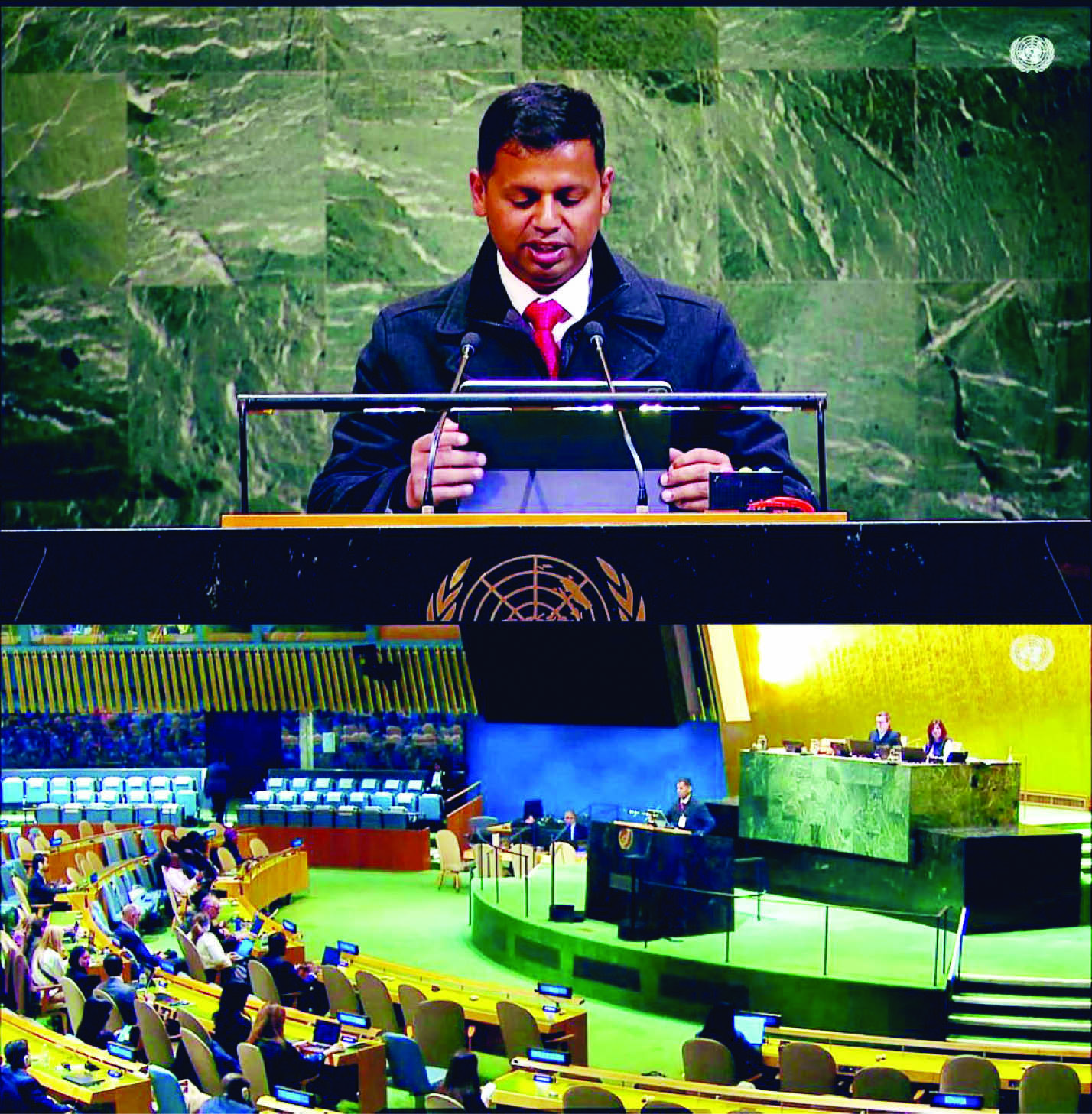
Interview : Vineet Kumar, Founder, Cyber Peace
Vineet Kumar is the Founder and CEO of CyberPeace, a Delhi-based NGO focused on cybersecurity, digital trust, and cyber policy. He works closely with governments, industry, and academia to strengthen cyber resilience, promote responsible technology use, and advance India’s national digital security interests.
CyberPeace is a Delhi-based non-profit organisation working at the intersection of cybersecurity, public policy, and national security. It focuses on building safer digital ecosystems through research, capacity building, and stakeholder engagement. With an emphasis on cyber awareness, data protection, and responsible technology use, CyberPeace seeks to strengthen India’s digital resilience while promoting stability and trust in cyberspace at both national and global levels.
South Asia Defence & Strategic Review caught up with Cyberpeace CEO and Founder, Mr Vineet Kumar for an informative fireside chat. Excerpts from the interview:-
Defstrat: What is your vision for cyberpeace in India, and how is CyberPeace working towards achieving it?
Vineet: My vision for CyberPeace in India is to build a digital nation where every citizen can use technology with confidence, trust, and safety. Cyberspace should strengthen democracy, economic growth, and social inclusion, not become a space of fear, fraud, or exploitation. For India to truly lead in the digital era, cyber safety, digital rights, and responsible innovation must become part of everyday life for citizens, institutions, and businesses alike.
CyberPeace works toward this vision through a strong blend of policy leadership, technology, and community action. We actively support national and global policy making through research, white papers, and formal recommendations on issues such as data protection, cybercrime, and AI safety. Our inputs have helped shape major frameworks including India’s digital personal data protection regime. At the same time, our CyberPeace Dialogues, expert roundtables, and engagements with Parliament, ministries, and international bodies such as the UN General Assembly, Valdai Group, WSIS, St Petersburg International Economic Forum (SPIEF), Internet Governance Forum etc., bring policymakers, law enforcement, industry, and civil society together to create practical solutions. The reach has expanded to more than 112+ countries so far and we only aim to grow every year.
On the ground, this vision is delivered through initiatives such as CyberPeace Centers of Excellences setup across India and Globally, national and Global hackathons/Cyber Exercises with UN, police and defense agencies, and large scale awareness programs with schools, universities, traders, women, and youth. Our threat intelligence platforms, quick reaction teams, and survivor helpline provide real time protection and support, ensuring that cyber safety is not just discussed but experienced by people across the country.
Defstrat: How do you think individuals can contribute to creating a safer online environment, and what role can CyberPeace Corps play?
Vineet: A safer online environment is created when citizens move from being passive users to responsible digital participants. Individuals contribute by practicing cyber hygiene, questioning misinformation, respecting others online, and reporting harmful or suspicious activity. These everyday actions, when taken by millions, create a powerful defense against fraud, abuse, and digital manipulation.
CyberPeace Corps plays a central role in making this happen. It is a nationwide and global network of trained volunteers who serve as cyber first responders, community educators, and digital safety ambassadors. Through awareness sessions in schools, colleges, villages, and workplaces, the Corps helps people understand risks such as scams, online abuse, deepfakes, and misinformation. Volunteers also support victims by guiding them to reporting systems and recovery pathways.
The CyberPeace Corps is strengthened by programs such as cyber awareness campaigns, eRaksha competitions, women focused digital safety initiatives like the Digital Shakti, Digital Jan Shakti capaigns, youth and defence based hackathons, eSports competitions and community outreach drives. Together, these efforts turn cyber safety into a people driven movement, ensuring that trust, dignity, and security are protected across the digital ecosystem.
Defstrat: Cyber threats are evolving rapidly. What are some of the biggest challenges you face, and how is CyberPeace tackling them?
Vineet: Cyber threats today are evolving in volume, sophistication, and impact. One of the biggest challenges we face is the human element of cyber risk, from phishing and financial fraud to online harassment and misinformation, where technology alone cannot provide solutions. Attackers increasingly exploit low digital literacy, trust deficits, and gaps in awareness, particularly among vulnerable communities such as women, children, senior citizens, and first-time internet users.
Another major challenge is the asymmetry between attackers and defenders. Cybercriminals rapidly adopt emerging technologies like AI, deepfakes, and automated social engineering, while institutional responses such as legal frameworks, enforcement capacity, and public awareness often lag. This gap is especially visible in developing digital ecosystems, where scale and speed outpace preparedness.
At CyberPeace, we tackle these challenges through a multi-stakeholder and prevention-first approach. We combine on-ground capacity building with policy advocacy, threat research, and industry collaboration. Our work spans cyber hygiene training for citizens and law enforcement, real-time threat intelligence and dark web monitoring, and targeted interventions during crisis periods such as COVID-19, when cybercrime surged dramatically. Initiatives such as the Cyber Chaupal conducted at Jamtara, a hub of cyber crime not long ago, enables CyberPeace to work at the grassroot issues.
Equally important is our focus on translating technical risks into accessible knowledge for policymakers, institutions, and the public so that cybersecurity and digital safety are not treated as niche technical issues, but as a core element of digital trust, safety, and governance. By bridging the gap between technology, policy, and people, CyberPeace aims to foster long-term cyber resilience rather than relying on reactive security responses.
Defstrat: What’s been the most significant impact of CyberPeace initiatives, and how has it helped people?
Vineet: One of the most significant impacts of CyberPeace’s work has been its ability to translate cybersecurity from a technical concept into a practical, people-centric safety mechanism at scale. Through our flagship programme, the CyberPeace Initiative, CyberPeace has trained over 2.3 lakh cyber first responders across the world and impacted millions of Netizens in the process. These Cyber First responders come from diverse backgrounds, including law enforcement, educators, students, civil society organisations, and community volunteers, creating a distributed, grassroots network of cyber support.
This approach has enabled faster identification of cybercrime incidents, improved victim confidence in reporting, and more effective first-level response, particularly in regions where access to specialised cybercrime units is limited. For vulnerable groups such as women, senior citizens, children, and first-time internet users, this has meant timely guidance, reduced financial and emotional harm, and clearer pathways to redressal.
Beyond individual impact, CyberPeace’s initiatives have strengthened institutional and systemic preparedness by building capacity among law enforcement agencies, supporting cybercrime awareness during crisis periods, and contributing research-driven insights to policy and governance discussions on platforms such as UN Security Council CTC, UN IGF, ITU WSIS, Global Cybersecurity Forum, UN Cybercrime Convention, St Petersberg International Economic Forum(SPIEEF) 2025, UN General Assembly, Valdai Club Annual Forum to name a few. By focusing on prevention, capacity building, and collaboration, CyberPeace has helped foster long-term cyber resilience rather than short-term, reactive responses.
Defstrat: How can schools and educational institutions incorporate cyber safety and digital literacy into their curriculum?
Beginning where habits are formed, in classrooms, not simply in textbooks, is the most efficient way to promote online safety. Digital literacy should be taught in schools and universities as a life skill rather than an elective, much like traffic safety or civic education. Nowadays, children must learn to question and verify before learning to code, just as they must learn to swipe before learning to write. Thus, age-appropriate and multilayered cyber safety education is necessary. Fundamentally, students need to comprehend what a digital footprint is, how personal information moves, and why privacy is rarely entirely restored once it is lost. They should be taught practical skills at the next level, such as how to use social media safely, how to spot phishing and deepfakes, how to comprehend consent online, and where to report abuse. Discussions about AI ethics, false information, and the legal ramifications of online misconduct must be part of the curriculum for older children.
Teacher readiness is equally crucial. In order to guide students through real-world events rather than abstract theory, educators need to be taught in both context and tools. Lastly, to develop a common vocabulary of digital accountability, institutions should collaborate with parents, law enforcement, and civil society.
Defstrat: What advice would you give to young people interested in pursuing a career in cybersecurity and Cyberspace?
Vineet: A career in cybersecurity and cyberspace is about bearing a feeling of responsibility in a world that now depends on networks and data, not just about mastering tools or solving challenges on a screen. These days, technology affects democracy, the economy and even human dignity. Thus, my first piece of advice to young people is to develop both your skills and your ideals. With systems that millions rely on, you will be trusted. Integrity is just as important as intelligence. Secondly, never stop learning. You must keep up with the daily evolution of cyber dangers. Learn the basics like networks, operating systems, cryptography, and programming while maintaining an interest in cutting-edge fields like digital forensics, AI security, and policy. Understand the human aspect at the same time, including why individuals fall for scams, how false information spreads, and how conflict now manifests itself online. Lastly, keep in mind that cyber peace involves more than just detection, it involves protection. The goal is to make the digital environment safer for all users, not just the most powerful ones. You will discover that you are doing more than just advancing your career if you approach this profession with humility and discipline.
