

 Login
Login
Articles
Indian Space Association Round-up: India’s New Space Ecosystem Strengthens Strategic Capability
Sub Title : India's expanding commercial space sector is becoming a vital pillar of national security, technological innovation and strategic resilience
Issues Details : Vol 20 Issue 3 Jul – Aug 2026
Author : Editorial Team
Page No. : 70
Category : Regular Features
: July 28, 2026
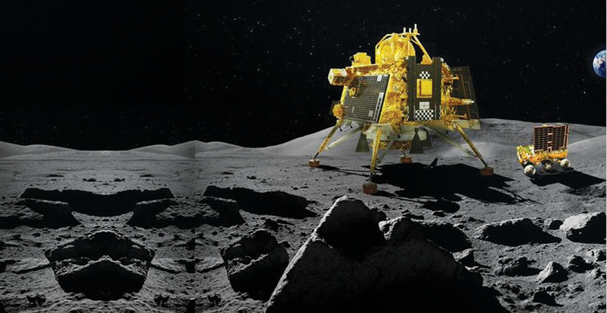
Based on the Indian Space Association’s May and June 2026 newsletters, this round-up highlights the key developments shaping India’s space ecosystem from technological breakthroughs and private-sector innovation to regulatory reforms and international partnerships that are strengthening the country’s strategic and defence capabilities.
For decades, India’s space programme was viewed primarily through the prism of scientific achievement and developmental applications. Today, however, space has become an integral pillar of national security, strategic competition and economic resilience. The developments witnessed during May and June 2026 clearly demonstrate that India is steadily building a comprehensive national space ecosystem in which ISRO, IN-SPACe, the Indian Space Association (ISpA) and an expanding private industry are working in tandem to strengthen both economic competitiveness and strategic capability.
What distinguishes the current phase of India’s NewSpace revolution is not merely the emergence of private launch companies or satellite manufacturers. Rather, it is the growing convergence of commercial innovation, defence requirements and geopolitical strategy. Nearly every major development over the past two months carries important implications for military capability, intelligence gathering, strategic autonomy or international influence.
The scientific achievements of ISRO continue to underpin India’s long-term strategic ambitions. Chandrayaan-2’s Dual Frequency Synthetic Aperture Radar has identified compelling evidence of subsurface water ice in permanently shadowed craters near the Moon’s south pole, while Chandrayaan-3’s innovative “hop” experiment has yielded unprecedented insights into the thermophysical characteristics of lunar regolith. Beyond their scientific value, these findings contribute directly to India’s aspiration to become a leading participant in future lunar resource utilisation, deep-space exploration and cislunar infrastructure—domains that are increasingly assuming geopolitical significance.
Meanwhile, ISRO successfully completed the hot test of its 175-tonne Semi-Cryogenic Engine Power Head Test Article, bringing India significantly closer to an indigenous heavy-lift launch capability. Such propulsion technologies will not only support ambitious civil space missions but also enhance India’s ability to independently deploy heavier strategic payloads and next-generation national security satellites.
Equally significant has been the remarkable acceleration of India’s private space sector.
Skyroot Aerospace became India’s first space-tech unicorn, reflecting growing international investor confidence in India’s launch ecosystem. GalaxEye’s successful launch of Mission Drishti, featuring the world’s first operational OptoSAR satellite combining Synthetic Aperture Radar with multispectral imaging, represents a major leap in persistent Earth observation. Such systems possess obvious dual-use potential, providing high-resolution imagery irrespective of weather conditions or daylight, making them invaluable for military surveillance, border monitoring and maritime domain awareness.
Pixxel similarly strengthened India’s strategic credentials after securing a contract from the U.S. National Reconnaissance Office while simultaneously announcing India’s first orbital AI-enabled data centre satellite. The integration of onboard artificial intelligence with hyperspectral imaging reflects an emerging trend towards real-time intelligence processing in orbit, significantly reducing latency for defence and disaster-response applications.
Dhruva Space’s ₹105 crore Research, Development and Innovation Fund support for Project Garud, alongside its strategic collaboration with Finnish SAR specialist ICEYE, further illustrates the increasing sophistication of India’s private satellite manufacturing capabilities. The proposed modular communication satellite platform and expanding assembly facilities have considerable relevance for future sovereign satellite constellations supporting both civilian communications and defence networks.
International partnerships have also become increasingly aligned with India’s broader strategic objectives. Bellatrix Aerospace’s collaboration with South Korea’s TelePIX on Very Low Earth Orbit satellites, CYRAN AI’s agreements with France’s Safran Aircraft Engines, SatSure’s collaboration with Safran.AI, and multiple Indo-European partnerships facilitated through ISpA demonstrate India’s growing integration into trusted technology ecosystems among like-minded nations.
This expanding network of technology partnerships complements India’s broader geopolitical outreach while reducing dependence on legacy suppliers and enhancing technological resilience.
One of the most strategically important developments during the period was the continued liberalisation of India’s launch sector.
Following the earlier transfer process for the PSLV, IN-SPACe invited Expressions of Interest for end-to-end technology transfer of the country’s heavy-lift LVM3 launch vehicle. This represents a fundamental shift in India’s approach to space industrialisation. Rather than remaining solely a government-operated capability, India’s most powerful launch systems are gradually transitioning towards an industry-led operational model.
Such reforms are essential if India intends to compete effectively in the rapidly expanding global launch market while simultaneously maintaining assured access to space for national security missions.
Regulatory evolution has proceeded alongside technological advancement. IN-SPACe released comprehensive authorisation guidelines for Space Situational Awareness (SSA) activities, establishing an important framework for debris monitoring, conjunction assessment and orbital safety. As space becomes increasingly congested and contested, SSA capabilities are rapidly emerging as indispensable elements of national security infrastructure. India’s decision to establish clear regulatory mechanisms at an early stage reflects growing recognition that space governance will become as important as launch capability itself.
The Indian Space Association continued to perform an increasingly influential role in shaping the ecosystem. Through international workshops, industry dialogues, policy consultations and participation in major multilateral forums, ISpA has emerged as a critical interface between government, industry and international stakeholders. Its Space Industry Capability Workshop involving delegates from Africa and Southeast Asia, together with leadership discussions during the IN-SPACe Industry Connect, demonstrates India’s willingness to position itself as a capacity-building partner for the Global South while simultaneously promoting indigenous commercial capabilities.
At the geopolitical level, India’s hosting of the BRICS Heads of Space Agencies Meeting in Bengaluru represented another significant milestone. With representatives from eleven BRICS nations discussing remote sensing cooperation, space sustainability and future governance mechanisms, India reinforced its credentials as a responsible space power capable of shaping multilateral norms. In an era where space is increasingly contested among major powers, India’s emphasis on sustainability, transparency and peaceful cooperation enhances its diplomatic standing while supporting broader strategic objectives.
Taken together, the developments of May and June 2026 demonstrate that India’s space programme is entering a new phase. The distinction between civilian and defence applications is becoming progressively less relevant as advanced Earth observation, artificial intelligence, launch vehicles, communications satellites and space situational awareness increasingly serve both domains simultaneously.
The trajectory is now unmistakable. Space is no longer simply a scientific endeavour or commercial opportunity; it has become an indispensable component of India’s national security architecture, technological sovereignty and geopolitical influence. The momentum witnessed over these two months suggests that India’s NewSpace ecosystem is evolving into one of the country’s most important strategic assets, with implications extending far beyond Earth’s orbit.
