

 Login
Login
Articles
Iran’s Great Reversal: From Western Ally to Regional Adversary (1960s–2020s)
Sub Title : Iran’s transformation reshaped Middle Eastern geopolitics and strategic alignments.
Issues Details : Vol 20 Issue 1 Mar – Apr 2026
Author : Ashwani Sharma, Editor-in-Chief
Page No. : 19
Category : Geostrategy
: March 21, 2026
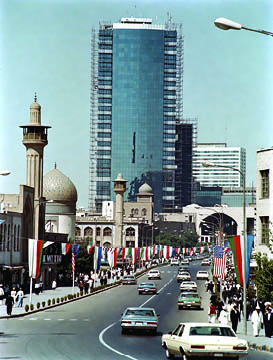
Iran has undergone one of the most dramatic transformations in modern history, shifting from a pro-Western monarchy to an Islamic theocratic republic. This change profoundly reshaped its domestic society, economy, and foreign relations, particularly with the United States and Israel, from alliance to deep enmity.
In the 1960s and 1970s, under Shah Mohammad Reza Pahlavi, Iran was a key U.S. ally in the Middle East. The relationship dated back to the 1953 CIA-orchestrated coup that reinstated the Shah after ousting Prime Minister Mohammad Mossadegh, who had nationalised oil. The U.S. provided extensive military and economic support, viewing Iran as a bulwark against Soviet influence during the Cold War. Iran received advanced American weaponry, and the Shah pursued rapid modernization and Westernization. Relations with Israel were also cordial and strategic. Despite no formal diplomatic ties (to avoid alienating Arab states), the two cooperated closely under Israel’s “periphery doctrine,” which sought non-Arab allies. Iran recognized Israel de facto in 1950 (second Muslim-majority country after Turkey), supplied oil, and engaged in intelligence sharing, arms deals, and even covert military cooperation.
This era ended abruptly with the 1979 Islamic Revolution. Widespread discontent over the Shah’s authoritarianism, economic inequality, rapid Westernisation, and perceived corruption fuelled mass protests. Led by Ayatollah Ruhollah Khomeini, the revolution toppled the monarchy in February 1979, establishing the Islamic Republic. Khomeini denounced the U.S. as the “Great Satan” for backing the Shah and Israel as the “Little Satan” and a “Zionist entity” to be eliminated. Iran severed ties with both nations. The U.S. embassy hostage crisis where 52 Americans were held for 444 days, cemented hostility. The U.S. imposed sanctions, froze assets, and backed Iraq during the devastating Iran-Iraq War (1980–1988), further deepening animosity.
With Israel, the shift was equally stark. Pre-1979 pragmatic partnership gave way to ideological opposition. Iran adopted support for Palestinian causes and anti-Zionism as core foreign policy pillars, backing groups like Hezbollah (formed 1982 with Iranian help) in Lebanon and later Hamas. Israel viewed revolutionary Iran as an existential threat due to its rhetoric, proxy networks, and eventual nuclear ambitions.
The 1990s–2000s saw escalating tensions. Iran’s nuclear program, revealed in 2002, prompted U.S. accusations of pursuing weapons (labelled part of the “Axis of Evil” by President George W. Bush). Sanctions intensified. Israel conducted covert operations, including assassinations of Iranian scientists and the Stuxnet cyberattack (2010). Proxy conflicts raged in Lebanon, Syria, and Yemen.
A brief thaw occurred under President Barack Obama with the 2015 JCPOA nuclear deal, limiting Iran’s program in exchange for sanctions relief. However, President Donald Trump withdrew in 2018, reimposing “maximum pressure” sanctions. Tensions peaked with the 2020 U.S. drone strike killing IRGC commander Qasem Soleimani, prompting Iranian missile retaliation against U.S. bases.
By the mid-2020s, relations deteriorated into open conflict. Escalations involving proxies, direct strikes, and Iran’s missile/drone capabilities culminated in large-scale U.S.-Israeli operations against Iranian targets in early 2026, reflecting decades of accumulated mistrust, nuclear fears, and regional power struggles.
Iran’s journey from U.S.-aligned monarchy with Israeli ties to revolutionary state locked in confrontation highlights how ideology, geopolitics, and historical grievances can reverse alliances overnight. Today, the Islamic Republic remains defined by resistance to Western influence and opposition to Israel, shaping its identity and the broader Middle East.
