

 Login
Login
Articles
Reimagining Wars
Sub Title : Character of warfare is changing rapidly and there’s a need for serious analysis of future wars
Issues Details : Vol 19 Issue 6 Jan – Feb 2026
Author : Editorial Team
Page No. : 30
Category : Military Affairs
: January 22, 2026
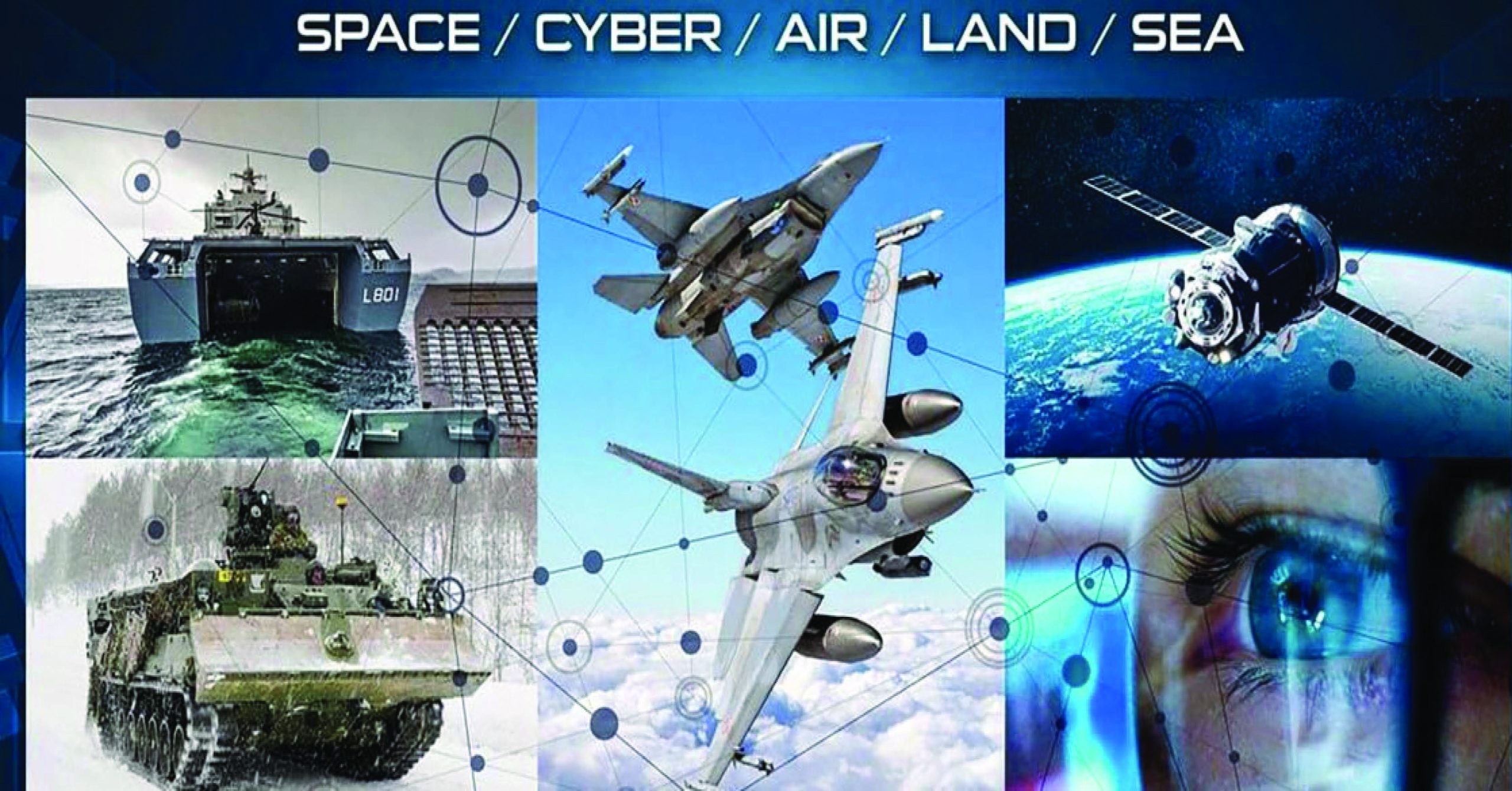
India’s reform journey is moving in the right direction, but far too slowly. The threats we face require urgency. Creating integrated theatre commands and empowering them is now a must. If we don’t accelerate decision-making and joint planning, we risk being brilliant in equipment but weak in execution. The next war will reward speed and integration and India must ensure its structures deliver both.
Modern warfare is changing faster than at any time in history. New technologies, new domains, and new tactics are rewriting the old ideas of how armies, navies, and air forces fight. But while the battlefield has moved ahead, the structures that control these forces often remain rooted in the past.
India faces these issues too, as it marches on the path to modernisation. Our threats are real and immediate. We have contested borders, difficult neighbours, and a region that is rarely calm. In such a situation, the Indian military cannot afford to be slow, divided, or confused. It must be organised to fight the next war not repeat the patterns of the last one. The question therefore is direct- are India’s defence structures keeping pace with battlefield realities?
Force Structures
For decades, the Indian armed forces have been built around the three services silos. The Army fights on land, the Navy at sea, and the Air Force in the skies. Each service has its own commands, budgets, and priorities. This made sense when wars were fought largely within separate domains. Today that logic is weakening.
Conflicts like the Russia-Ukraine war have shown that land forces depend heavily on drones, satellites, cyber tools, and precision fires from the air. Naval operations are shaped by space-based ISR and long-range missile deterrence. Air forces need ground-based logistics, air defence grids, and electronic warfare support.
Yet India still plans and procures mainly in platform-centric terms. We count battalions/regiments, fighter squadrons, and ships but not always the integrated capability they produce together. Weapon systems with stand-off ranges, increased lethality and precision and autonomous systems are all added to one service or the other, augmenting the service or the larger platform’s capability but not exploiting the new technologies’ full potential. Theatre commands are discussed, but real integration remains limited.
This creates gaps. A future war may require rapid joint responses across domains. But our current system often encourages each service to expand itself rather than blend seamlessly with others.
Preparing for the next war requires a change in mindset from adding more units to creating more integrated effects.
Command Philosophies
Technology is not the only driver of change; command philosophy is equally important. The Indian Army has traditionally relied on corps and command level manoeuvre warfare. The Air Force has focused on air superiority and strategic strike. The Navy has developed around sea control. These philosophies evolved independently. But the next war will not respect these neat divisions.
India has begun experimenting with joint doctrines and the idea of Integrated Battle Groups (IBGs) at the tactical level. However, at higher levels, command philosophies still reflect legacy thinking. Decisions often pass through multiple layers, files move slowly, and inter-service coordination can be cumbersome. In a fast-moving conflict, this can be dangerous.
Future wars demand flatter structures, quicker approvals, and empowered theatre-level commanders who can control assets from all services. A commander fighting a China contingency in Arunachal Pradesh or Ladakh should be able to task air, space, cyber, and logistics resources without waiting for Delhi to mediate every move.
True joint thinking is not just about co-locating officers from different services. It is about creating a unified chain of command that thinks as one force. India’s structures must evolve to support that philosophy.
Theatre Integration: An Idea Whose Time Has Come
Perhaps the most debated reform topic in India is theatre commands integration.
The Kargil war in 1999 first underlined the need for better jointness. Since then, successive committees have recommended Integrated Theatre Commands. The appointment of the Chief of Defence Staff (CDS) was a major step forward. But progress has been slow.
Services have genuine concerns. The Air Force worries about fragmentation of limited air assets. The Army fears loss of operational flexibility. The Navy wants to protect its global role. Yet the battlefield argument for integration is stronger than all these anxieties.
India today has 17 single-service commands. Most advanced militaries are moving toward 3 or 4 integrated theatres. Without theatre commands, India finds it difficult to create a coherent plan against a two-front threat. Logistics are duplicated, intelligence is scattered, and assets are not always used optimally.
The next war will require integration in three areas:-
- Integrated Planning. Joint threat assessments and unified operational plans,
- Integrated Operations. Commanders controlling cross-domain assets,
- Integrated Logistics. common supply chains, maintenance hubs, and communications networks.
The creation of theatre commands will not solve every problem, but not creating them will certainly magnify future ones. India must move from debating integration to executing it.
Decision-Making Speed
One critical factor often ignored in India is decision-making speed. We focus heavily on hardware like new tanks, fighters, missiles etc, but not enough on the tempo of command. Bureaucratic systems in India are famously slow. In peacetime this is frustrating, while in wartime it can cost lives.
A future conflict will unfold with unprecedented speed. Drones will spot targets in minutes. Missiles will be launched quickly. Cyber attacks will demand instant responses. Information warfare will require real-time political and military coordination. If decisions remain stuck in multi-layered processes, even the best technology will fail to deliver.
India thus needs the following:-
- Faster procurement approvals,
- Delegated financial powers to theatres,
- Real-time intelligence sharing,
- Crisis management cells that combine political and military leadership.
The ability to decide quickly is itself a warfighting capability. Without it, India risks having 20th century speed in a 21st century war.
Institutional Reform vs Political Comfort
Reform is never easy. It disturbs old hierarchies and threatens established interests. In India, many defence reforms remain trapped between military conservatism and bureaucratic caution. Political leaders understand the need for change, but also fear the turbulence it may create. But the cost of avoiding reform is far higher.
India cannot assume that the next war will resemble Kargil or even the 1971 conflict. A China contingency will involve long-range precision fires, cyber and space domains, maritime signalling, and continuous surveillance. This demands a new institutional architecture.
Theatre commands, drone corps, integrated ISR directorates, common communications networks, and empowered commanders are not fashionable ideas, but they are necessities.
India must be prepared to ask uncomfortable questions:-
- Are we integrating fast enough?
- Are commanders empowered?
- Are services thinking jointly?
Is the bureaucracy enabling or delaying?
Such introspection is essential if the country is to be truly ready for future conflict.
Are India’s Structures Ready?
The honest answer is – not yet, but they can be.
India has taken important steps like the CDS system, joint logistics initiatives, better coordination with industry, and tactical-level experimentation. But higher-level integration and speed remain works in progress. However, the battlefield will not wait for India to be perfectly comfortable.
Preparing for the next war means accepting that structures must evolve continuously. More importantly, reform must be seen as a national project, not as an inter-service tug of war. Only then will India’s military be able to fight the wars of tomorrow with clarity and confidence.
