

 Login
Login
Articles
Smoke on the Water- And Fire in the Sky
Sub Title : The Western Pacific is becoming the world’s most volatile strategic theatre, where great-power rivalry, military modernisation and nuclear risks converge.
Issues Details : Vol 20 Issue 4 Sep– Oct 2026
Author : Lt Gen Sanjiv Langer, PVSM, AVSM (Retd)
Page No. : 47
Category : Geostrategy
: September 23, 2026
The Western Pacific is no longer merely a theatre of competing maritime claims; it is becoming a crucible of strategic rivalry, military modernisation and nuclear risk. From the Sea of Okhotsk to the South China Sea, this article examines the gathering storm.
It’s common when referring to the Western Pacific to use the generic term of the South China Sea, or East China Sea. The region is however far more expansive, in geography, competing strategies, and a deeply roiled historical milieu. At present there is a lot of ‘Smoke on the Water’, but the world risks both, fire on the water and in the sky, emanating from this region.
North to South the region comprises the Seas of Okhotsk, Japan, Yellow, East China, South China and those North of the Indonesian Archipelago. It is one of the most strategically congested, and highly polarised regions of the Globe, with three nuclear powers, and a fourth nuclear weapons capable. Six among the top 20 economies of the world are littoral countries. Other vibrant economies are resident and the Australian continent is not too distant, to be irrelevant.
The Sea of Okhotsk, has a most unique geography and hydrology. Bounded by the Kamchatka Peninsula and the Siberian Coast as well as Sakhalin Island. It has a most distinctive south eastern margin, in the form of the Kurile Islands and the coast of Northern Hokkaido. This Sea is also known as a beating heart of the Pacific, pumping oxygen, cold water and nutrients to the Pacific. With a ring of Russian Ports that are kept all weather by ice breakers, its icy depths and margins are akin to an Infinity Pool, ideal for Russian Submarines. Its water with high salinity is among the densest in the world.
With the March 2014 award of the UN on the issue of the ‘Peanut Hole’, in favour of Russia, the entire Sea is a Russian entity, with no International Waters. Resultantly, it is an unambiguous Russian strategic space, with privileged access through Straits of Tartary and the Kuriles.
It has enormous significance and implications for Sino-Russian convergences, especially in view of intensified joint naval manoeuvres. Additionally, let us not for a moment lose sight of the assessed 10 billion barrels of oil and trillions of cu feet of Gas that are in this region.
Japan has definite access to this Sea from its Northern Hokkaido ports, but military exploitation of these is constrained. Which does not for a moment take away from the strategic significance of Hokkaido, with Sea of Okhotsk to the North and Vladivostok across the narrow Sea of Japan to the West. Kuril and Ryukyu Islands (including Okinawa), and Taiwan, all have violently contested histories. A look at the map explains this. They were for a significant period all under Japanese control. It is therefore no wonder how they facilitated the launch of Imperial Japan, post the Meiji Restoration in 1868.
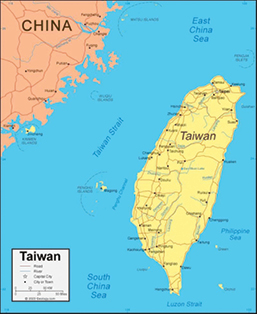
The Sea of Japan on its west has Russia, North Korea and South Korea. Chinese access to the sea was lost in 1860. Except for a minor highly circumscribed access via the Tumen River, Chinese vessels need to transit through international waters, (Tsushima or Korea Strait) to enter the Sea of Japan. The great crescent of the Chinese Mainland, as it protrudes into the Yellow and East China Seas, must contend with the strategic entities of Korea, Ryukyu Islands, chief among which is Okinawa, and opposite its gut is Taiwan, 130-180 Km away, with its closest administered Island 2.1 Km away.
As the Chinese mainland draws a South Western arc, away from Taiwan towards Canton, it fronts the South China Sea, a heavily contested and militarised zone. Here sharp and inflexible positions and claims are the source of a presently intractable strategic contest between China, Taiwan, Vietnam and the Philippines, with claims also by Malaysia and Brunei. Further south are the seas North of Indonesia, with the strategic and critical Indonesian Straits of Malacca, Sunda, Makassar, Lombok, Kalimantan, Alor and Ombai.
China has been on a path of strategic assertion for decades. With an eye on super power status and competitive affirmations, it has chosen a path to an ambitious destiny, with its own overpowering justification. As a consequence, when a maritime view from China is engaged in, the geo strategic milieu is challenging. Whether its history, ambition, resurgence or grand standing, can be debated, but sometimes you need to be careful what you wish for.
The Northern Chinese coastline on the Yellow Sea after the short North Korean Coast, faces the 2,413 Km South Korean Coast line that wraps around upto the Sea of Japan. South Korea sits 400 Km across the sea from China. A central view across the Chinese coastline confronts the commanding position of the Japanese Islands, 2982 Km flight distance, with Okinawa at 400 KM (approximately). Thereafter Taiwan. A foray into the South Eastern direction, brings China, into its hotly contested South China Sea, where Vietnam, Philippines and Taiwan are firmly opposed to Chinese claims. Consequently, the Chinese maritime ambitions when translated to sea power, cannot access the Pacific, Indian or Southern Ocean without transiting through Straits, or enclosed seas, on whose littoral the majority of states are watchful of them, to say the least.
It also explains to some degree the historic voyages of the Chinese Admiral Zeng He, 1405 to 1433 AD with all their scale, sophistication and reach into the Indian Ocean. While the initial voyages were restricted to the South China Sea and Malacca, the destinations were, Sri Lanka, India and Africa. It was driven by trade, aspirations for tutelage, and establishment of presence. Current Chinese Maritime ambitions echo this past heritage. Their year-on-year forays into the Indian Ocean, with calibrated extended outreach, follows an older compulsion to expand into open waters. There is little expansion into the open Pacific, for factors that are immediately evident.
An instructive historical parallel, emerges in the build-up to the first voyage of Zeng He, 1405. Kublai Khan, in China, launched two massive invasions of Japan in 1274 and 1281 AD. They were defeated, not insignificantly, also due to enormous Typhoons considered ‘Kamikaze’, divine wind, by the Japanese. This gave rise to a Japanese centred, multi ethnic entity the Wako Pirates. They dominated the inland seas and raided Korea and China with impunity. At their peak of dominance, the Wako controlled seas from Korea to Indonesia. Their presence remained from the 13th to the 17th Centuries. In 1404 a year before the first voyage, China and Japan (Yoshimitsu Shogun), signed the Kango Treaty, one of its ingredients was the Japanese Commitment to curtail the Wako.
Recent Chinese claims in the inland seas commence with the publication of the maps with the 11 Dash Line, in 1947. This was later modified to a 9 Dash line to accommodate Vietnam, and now a 10-dash line to include Taiwan in 1984. As the prelude to rapprochement with the USA had commenced in 1970, in this year China occupied the Amphitrite group of the Paracel Islands. By 1971/72 normalisation of relations with the US were finalised and US Troops withdrew from Vietnam in Jan 1973. In 1974, the Chinese engaged in an armed conflict with Vietnam and occupied the Paracel Islands. This heralded a trajectory of Chinese assertion in the South and East China Seas, which continues unabated.
I wish to record two broad conclusions. The seas opposite China have always been aggressively contested, and crowded with competing strategies. Out of area influences that arrived via the Indian Ocean in the Colonial Period are still significant. Secondly, I do hope readers will appreciate the unique and gifted position of the Indian Coastline and Island Chains. Exploited and violated by colonial powers, we recommenced on the starting blocks in Aug 1947. The decision of a nascent polity to demand Andaman and Nicobar Islands, as integral to India needs to be remembered always.
This overview should also help place in perspective, the Chinese aggressive demand of ‘Oxygen’ in the Indian Ocean. With 21 projects, including 13 major ports in the Indian Ocean Region. In addition, the dedicated push to have connectivity to and domination of the high waters of the Bay of Bengal and Arabian Sea, has multiple objectives. Belt and Road initiatives are only some of the visible aspirations. Extensive Chinese Ocean mapping in this area, including within the EEZ of other nations is one such element. The chronology of dominance in the Indo-Pacific region can be argued in many ways. Today however there are a ‘basket’ of arrangements and more formal alliances, that seek to limit preferential dominance of the region. Chinese objectives in the Indian Ocean and their spiralling consequences are not the subject of our discussion here. Let us return to the ‘Smoke on the Water’.
The two immediate priorities for China, are Reunification of Taiwan, and unequivocal domination of the South China Sea. While Japan, South Korea and Australia are under the US nuclear umbrella, Taiwan and Philippines are not. US Nuclear weapons deployed in Taiwan and the Philippines were withdrawn in the 70’s. While Taiwan attempted to follow an independent nuclear programme, Philippines constitutionally forbade it in 1987 and further reinforced this in 2021. The US coerced Taiwan to discontinue its nuclear ambitions. While all the US Pacific allies, are reassessing their security compulsions in light of the recent US abstruseness, Taiwan stands in the eye of the storm with no nuclear assurance.
Russia and China are potent nuclear entities while North Korea remains a wild card. Its spasmodic display of strategic thought, is calculated to display a combination of impunity, unpredictability and potency. China did take some pleasure for decades in being able to, mould North Korean outlook. That era seems to have passed. Playing with China and Russia, firing ballistic missiles across Japan, intransigence and obduracy mixed with emotive interludes with ROK, there is a complex game at hand. North Korea’s role in a regional conflict remains inscrutable.
China has mastered militarisation of the Grey Zone, together with an unending flow of brinkmanship, against Taiwan, the South China Sea entities and to some degree Japan. Reunification of Taiwan is a natural consequence from its perspective. We are familiar with their capabilities. Tiny Taiwan in comparison, significantly presents an equally unyielding ‘David’ challenge, to the ‘Goliath’ PRC.
Taiwan ranks 20/22end in the world economies, with a population of 23.3 million. A life expectancy at birth of 81.16 years and 50.6 % of the population with university degrees. 62.1 % of the GDP is provided by the Service Sector, and 38% is attributed to industry. 50-60% of the worlds IT chips are manufactured in Taiwan and more significantly up to 80% of the Hi End chips originate here. It ranks 6th in the World Competitive, and 4th in the innovation capability indices. It has once again reinforced its pro-sovereignty outlook with the elections in 2024, installing William Lai as President. It has one of the most vibrant and free medias in Asia.
Unsurprisingly for a country of this nature, it has opted for a massive asymmetric defence system. The asymmetric ‘Porcupine Strategy’, centeres on making an invasion of Taiwan prohibitively expensive. It is supported by low-cost mass produced coastal and sea-based drones, mines, anti-missile defences as also masterful cyber capabilities. The vision is to make its surrounding seas and air a Hellscape for an invader. There is no thought to go quietly into the night.
It might be relevant to hold a lamp to all the modern genres of conflict that have emerged, since the Russia-Ukraine War. No contact and distance war has transited into completely new innovative domains. As we go to print Ukraine is mass producing, wheeled armed robotic vehicles to replace infantry assaults. Tanks and armoured vehicles have suffered excessive punishment. The wider West Asian Conflict has demonstrated the irrefutable effects of masterful air power. An enormous politico strategic capability of Missiles and long-distance drones is now manifest. But, if I am not wrong, there has been no capture and holding of territory so far, through remote means.
Military General Staffs are paid to win future wars. In a territorial context so far, it is unlikely that capture of territory can succeed by remote and intelligent means, alone. Hence the centrality of the Taiwanese Strategy, of creation of a ‘Hellscape’. There are also other supportive developments in this region. Japan unfazed by the US swings, has taken it upon themselves to extend military cooperation to Korea, Taiwan and the Philippines. The offer is also extended to Australia, but the reactions there are more muted. Okinawa opposite the great Chinese bulge, now houses almost 70% of resident US capabilities in Japan.
Japan and South Korea rank second and third in world shipbuilding. Japan has mastered dual use ship building, commercial and military, both seamlessly integrated. Its Mogami Class multi mission stealth frigates and Izumo Class helicopter destroyers, could now have wider appeal. The Japanese, South Korean and Taiwanese skies are aligned. While China has received great reinforcement by the US pause in the Pacific, as well as the interventions in West Asia, there has been a swift move by the resident entities to ensure their independent futures.
There are great dangers in listening to seductive Siren Songs of perceived strategic outcomes. The ancients speak of Sea Yakshas, with flaming hair and Tridents that sit below the waves waiting for errant ships and crews. The fire breathing Leviathan also lies in wait to consume by fire. However, in the region we speak off the real danger is of the rise of Vadavagni. If forced to rise its Vadavanala (fire), will destroy the world. This does not seem to be a mythical scenario with four nuclear capable entities, imagining they can handle such complex, misaligned geo strategic ambitions.
“Aggression challenges aggression; it does not solve problems; it breeds them” –Dalai Lama
Lt Gen Sanjiv Langer PVSM, AVSM, former member AFT and Dy Chief, IDS
