

 Login
Login
Articles
The Great Game of Energy
Sub Title : Energy security is becoming inseparable from geopoltics national security and strategic autonomy
Issues Details : Vol 20 Issue 4 Sep– Oct 2026
Author : Ajay Singh
Page No. : 60
Category : Geostrategy
: September 23, 2026
Energy is no longer merely an economic commodity; it is a strategic instrument. As sanctions, conflicts and maritime chokepoints reshape global energy flows, the contest for oil, gas and energy routes is acquiring new geopolitical significance with India increasingly caught in the middle.
The Fallacy of Sanctions
The US Congress recently passed, and President Trump has now signed into law, legislation empowering the administration to impose tariffs of up to 100 percent on countries importing Russian oil and gas. It largely targets India and China – the two largest buyers of Russian oil. While ostensibly designed to starve the Russian war economy and couched in moralistic jargon, it is just another gambit in the great game of energy, being played out by the USA to maintain its stranglehold on the world’s most valuable commodity.
Since the Ukraine war began in February 22, the US and the west had resorted to sanctions as the prime weapon against Russia – but with appalling double standards. While Russian oil and gas were sanctioned, it only targeted ship-borne oil. Oil and gas flowing from Russia into Europe through pipelines were not sanctioned since that would have crippled Europe’s economies. Even now, Russian gas and oil provides Europe with the energy required to keep its factories running and their homes heated. Much of it flows through pipelines running across Ukraine itself. The flow was severely hampered when the NORD STREAM pipeline running beneath the Baltic Sea from Russia to Germany was damaged by a mysterious explosion. The circumstances surrounding the Nord Stream explosion remain disputed, with competing allegations about responsibility. To make up for the shortages, the USA helpfully agreed to provide Europe with gas and oil, shipped across the Atlantic in tankers. The only caveat was that it would cost around three times as much.
India had resisted the pressure to reduce oil imports from Russia, with our foreign minister S Jaishankar bluntly stating that “India would do what is best for the country and its 1.4 billion people.” India continued importing Russian oil and gas, on very favourable terms and often in Rupee-Rouble trade. Russia became India’s largest oil supplier, even supplanting Saudi Arabia, till the USA applied 50 percent sanctions as a crude arm-twisting device. India was forced to diversify its purchases and increase procurement of natural gas from USA to around 2.2 million metric tons in 2026 – around 10 percent of its annual requirements. But Russian oil continues to make up over half of our oil imports. Reducing that inflow is not an option – tariffs or no tariffs.
Ironically, Russian crude was refined in Indian refineries and the diesel, petrol and other petroleum products exported to Europe, to alleviate their own requirements. This probably saved the European economy from a recession in 2023- 24. The export of refined oil products has been a major gain for India. In fact, India has also exported a whopping 70% of Russia’s requirement of diesel and petroleum products, after its own oil refineries were hit by Ukrainian attacks.
The sanctions are just a game played by the USA, to be applied selectively – why, it still continues to import nuclear fuel from Russia, even as it imposes sanctions other nations. The underlying aim seems to be to cut off Russian oil from world markets and supplement them with US energy. The US itself is a net oil exporter, exporting almost 10 million barrels per day. It also holds almost 45 billion barrels of oil reserves, in the vast oil basins of Texas and New Mexico. This means that it could well emerge as one of the major oil exporting powers of the world, especially if other energy exporters are curbed. And it seeks to enhance these reserves by seizing oil resources from other countries – like Venezuela, which could give it a strangle hold on global energy in the coming decades.
The Battle for Control of Energy
When the USA invaded Venezuela and spirited away President Nicolas Maduro in January 2026, on trumped up charges of narco-terrorism, the real target was the vast oil reserves of the country. Venezuela holds an estimated 303 billion barrels beneath its soil – accounting for almost a fifth of the world’s known reserves. In an act comparable to the gunboat diplomacy of the 19th century, the USA then signed a deal with the installed government of Venezuela to take control of 65 billion barrels of its oil – which Trump called “THE BIGGEST OIL DEAL IN HISTORY.” This would be the first step of taking over the rest of its oil. Trump has blatantly followed up with a threat, “To takeover Iran’s oil, like we did with Venezuela.” which is an indicator of the underlying motives of the war.
When USA invaded Iraq in 2003 on completely unfounded charges, it siphoned out much of the country’s oil during its occupation till 2010. This was justified as “compensation.” Perhaps they have a similar plan for Iran, which has been thwarted by the staunch defence put up by the Iranian people, and the rising political cost of the long war.
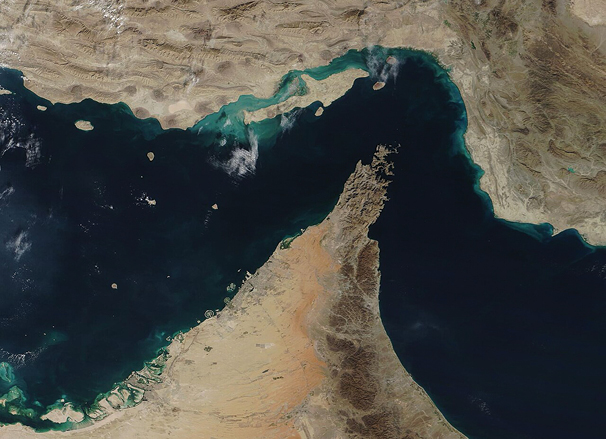
The Iran War has now become all about control of energy and energy routes. Iran has played its sole card masterfully. By blocking the Straits of Hormuz, they have cut a major oil artery of the world. The USA has responded by imposing their own blockade targeting Iranian shipping. And to compound the issue, the Iranian-allied Houthis launched a perfectly timed offensive in Southern Yemen, to take over the coastal areas of the Red Sea and the Bab el Mandab Straits, the alternate route to the Straits of Hormuz. This has blocked the two main oil routes through which one fifth of the world’s energy trade transits. With that, oil prices have gone through the roof. Brent crude hit $110 per barrel (it was $60 before the war.). There has been shortages of fuel, food and fertilisers, as nations across the world reeled under the impact of the war needlessly caused by the USA.
The Iran War has now become a war of energy sustenance. The pain is also being felt within the USA, where the price of gasoline has jumped from $3 per gallon to $6 dollars now. This might be the single most important factor which could prompt Trump to bring some kind of closure to the war – at least before the midterm elections of November.
The Petrodollar and it’s Waning Supremacy
Most of the wars of this century and the previous one have hinged over the control of oil and energy. This is also the reason why the oil-rich Middle East has been in a state of perpetual turmoil as nations try to assert their own influence over it. As Kissinger famously put it, “Oil is too precious a commodity to be left in the hands of the Arabs.” That underlying sentiment has led to continual US presence there for the past four decades.
The great game of energy took a new dimension in 1974 when Saudi Arabia entered into an agreement with USA to sell oil only in dollars, in return for US protection. Other OPEC nations soon followed suit and the dollar became the international currency for all oil purchases. It was a complete windfall for the USA. The dollar was no longer linked to gold, and the USA could merely go on printing money, which would be universally required for the purchase of oil.
The USA goes to great lengths to punish anyone who threatens the supremacy of the petrodollar. The survival of the House of Saud depends on Saudi Arabia continuing to sell oil only in US dollars. Saddam Hussain and Gaddafi were eliminated, not because they pursued their nation’s nuclear programs – but because they asserted that they would sell their oil in other currencies. President Maduro of Venezuela too began selling oil in other currencies like the Yuan, and was rapidly removed. The threat to the petrodollar is also one of the reasons why sanctions have been placed on India and in China. Many of the Russian oil transactions were made in Yuan and Rupee-Rouble trade. This would have been the first step to de-dollarisation, which could upend the US economy. As it is, the US economy is reeling under $40 trillion of debt – an amount even greater than the US GDP. The continual supremacy of the dollar linked to oil is essential if the world’s largest economy is to remain afloat.
The Impact on India
India is unfortunately at the receiving end in the great game of energy. India has limited domestic oil and gas reserves relative to its consumption. We import over 80 percent of our crude oil and over 45 percent of natural gas and are self-sufficient only in coal. An increase of $1 per barrel of oil increases the import bill by $1.5 to 1.8 billion, and there has been a 48 percent increase in the oil bill in the past year alone caused by the wars. The only saving grace is that Indian oil refineries export refined oil products across the world.
Energy vulnerability will continue to be India’s Achilles heel, and our dependence on oil imports is unlikely to end soon. Artificial Intelligence, data centres, and the establishment of semiconductor plants and industry will raise the requirement even more. Renewable energy has been given a thrust, but not to the extent required. Nuclear energy provides just 3 percent of its electrical power, a far cry from the 20 percent envisaged. Here too, the USA has tried hard to push its Westinghouse and Small Modular Reactors to India, while Russia has offered cheaper but more reliable reactors. This lucrative nuclear power reactor deal will come under US pressure, and their usual arm-twisting tactics.
The great game of energy will continue to be played across the world and the battle for control of energy sources and the security of energy lanes will go on – very often in boardrooms and government offices. The Iran war has shown how control of the choke points can become future flash points, and crucial waters like the Straits of Hormuz, Bab al Mandab and Malacca can be weaponised. The US continues to have its fingers on the levers, to control energy importers like India and China, and sideline other exporters like Russia. As the global requirement for energy increases, the stakes will increase, and the great game of energy will continue for quite some time to come.
Ajay Singh is the author of 8 books and over 250 published articles. He is a regular contributor to DEFSTRAT
