

 Login
Login
Articles
The War in the Electromagnetic Field
Sub Title : The next war will be fought in the EM field as CEMA attains Supremacy over kinetics.
Issues Details : Vol 20 Issue 4 Sep– Oct 2026
Author : Ashwani Sharma, Editor-in-Chief
Page No. : 51
Category : Military Technology
: September 23, 2026
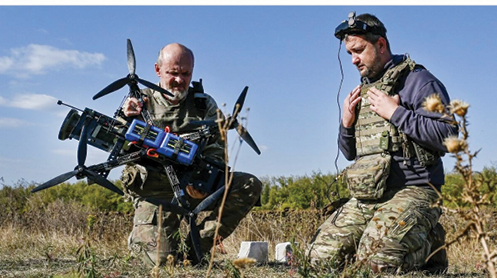
Modern warfare is increasingly being fought in a domain that cannot be seen, occupied or physically defended. The electromagnetic spectrum has become critical to sensing, communicating, navigating and striking. The ability to use this space while denying it to an adversary could shape the next war.
There is a battlefield which has no boundaries, no trenches and no physical geography. It cannot be occupied, photographed or mapped in the conventional sense. Yet every modern military force depends upon it. Aircraft fly through it, ships navigate through it, radars search through it, missiles exploit it, satellites communicate through it and commanders depend upon it to understand what is happening on the ground. It is the electromagnetic spectrum.
For much of military history, control of the physical domain was the primary objective. Armies sought the high ground, navies sought control of the sea and air forces sought air superiority. Today, there is another kind of high ground, one that is invisible but increasingly decisive. It is the ability to use the electromagnetic spectrum while denying, degrading or deceiving the adversary’s ability to do the same.
The wars of recent years have provided a glimpse of what this contest will look like. Ukraine has become a vast laboratory for electronic warfare, with drones, communications systems, navigation aids, radars and jammers locked in a continuous cycle of adaptation and counter-adaptation. The conflicts in the Middle East have similarly demonstrated the importance of electronic attack, intelligence, surveillance and precision targeting.
The Price of Connectivity
The significance of this transformation can best be understood by considering how dependent modern military forces have become on electromagnetic connectivity. A fighter aircraft is no longer simply an aircraft. It is part of a network of radars, satellites, command systems, data links and other aircraft. A tank formation is no longer merely a collection of armoured vehicles. It is increasingly connected to UAVs, satellite imagery, artillery, communications networks and battlefield management systems. An air-defence missile is only as effective as the sensors and command architecture that tell it where to look and what to engage.
The modern military has therefore acquired extraordinary reach and precision, but it has also acquired extraordinary dependence. This is the paradox of the information age, as the more connected a military becomes, the greater the number of connections that an adversary can attack.
At its simplest, EW involves finding and understanding an adversary’s electromagnetic emissions, attacking or disrupting them, and protecting one’s own systems from similar attack. But as modern systems become software-defined and increasingly intelligent, these functions are becoming closely interconnected.
The contest is now one of continuous adaptation. A radar searches for an aircraft; the aircraft detects the radar and changes its behaviour; the radar changes its frequency or waveform; the aircraft responds; a jammer attempts to interfere with the radar; and the radar adapts again. The entire cycle can take place within seconds. This is what makes electronic warfare different from many conventional military technologies. A platform may remain physically unchanged, but its electronic vulnerability can alter almost overnight.
Ukraine and the New EW Race
Ukraine has demonstrated this with unusual clarity. The conflict has produced an extraordinary pace of innovation in unmanned systems and electronic warfare. Both sides have been forced to adapt continuously as communications links are jammed, navigation signals disrupted and drones hunted by increasingly sophisticated countermeasures. Research by France’s IFRI has also highlighted the successive generations of unmanned warfare emerging in the conflict, with electronic warfare and autonomous technologies becoming increasingly integrated into operations.
One of the most interesting responses has been the emergence of fibre-optic FPV drones. Conventional drones depend upon radio-frequency communications and can therefore be vulnerable to jamming. Fibre-optic drones replace the radio link with a physical fibre, making conventional RF interference largely ineffective. It is a relatively small technological development, but it illustrates a much larger principle. The moment an electronic countermeasure becomes effective, the weapon evolves to circumvent it.
The same principle applies to satellite navigation. Modern military forces have become deeply dependent upon GNSS for positioning, navigation and timing. Precision weapons, aircraft, ships, UAVs and ground formations all exploit satellite-based navigation. Yet satellite signals are relatively weak when they reach the Earth’s surface. An adversary does not necessarily need to destroy a satellite; he can simply interfere with its signal.
Jamming can prevent a receiver from obtaining a usable navigation signal, while spoofing can create false information and potentially convince a system that it is somewhere other than where it actually is. This creates an important vulnerability: one of the most critical military capabilities which is ‘precision navigation’ which can be attacked without a single missile being fired.
For India, this has major implications. As the armed forces become increasingly networked and dependent upon space-based services, resilience must become a central design principle. Navigation cannot depend upon a single source. Communications cannot depend upon a single network, and intelligence cannot depend upon a single satellite.
Radars – Lucrative Targets
Radar presents another interesting dilemma. A radar must transmit electromagnetic energy in order to see, but that transmission also announces its presence. The radar which detects an enemy aircraft can therefore become a target itself. This has produced a technological contest between increasingly sophisticated radars and increasingly sophisticated methods of defeating them. Frequency agility, low-probability-of-intercept waveforms, passive sensors, distributed radar networks and electronic deception are all part of this contest.
The traditional idea of a powerful radar at a fixed location providing the principal picture of the sky is gradually giving way to a more distributed architecture. One sensor may detect, another may classify, a third may provide targeting information and a fourth may engage. The adversary may not even know which sensor enabled the engagement.
Artificial Intelligence Enters the Spectrum
The electromagnetic spectrum is simply too crowded and complex for human operators to analyse every signal in real time. Modern forces may have to deal with thousands of friendly and hostile emitters across an enormous range of frequencies. Artificial intelligence offers the possibility of making sense of this environment.
Algorithms can identify patterns, classify emitters, compare current signals with historical databases and identify anomalies. More importantly, AI makes possible what is increasingly being called cognitive electronic warfare. Traditional EW systems rely heavily on libraries of known threats. If a system recognises a particular radar, it knows the response to employ. Cognitive EW seeks to go further. Instead of asking only whether an emitter is recognised, it attempts to understand what that emitter is doing and determine the most appropriate response.
This could turn the electromagnetic battle into a contest between competing algorithms. It also has a direct bearing on defence procurement. An EW capability frozen at the time of manufacture could rapidly become obsolete. Future systems must be capable of receiving new threat libraries, software and algorithms throughout their operational life. Defence procurement will therefore increasingly have to resemble the software industry, where continuous upgrades can be more important than the original specification.
EW, Cyber and Space Converge
Another development that India needs to watch closely is the convergence of electronic warfare and cyber warfare. Traditionally, cyber operations have been seen as attacks on computer networks and information systems, while EW has been associated with operations in the electromagnetic spectrum. That distinction is becoming increasingly difficult to maintain.
Modern electronic systems are computers, while modern computer networks depend upon electromagnetic communications. A cyber attack can disrupt a radar; electronic interference can prevent a cyber operator from reaching his target; and a satellite communications system can be attacked through its software, its ground infrastructure or its electromagnetic link. The objective is ultimately the same: to disrupt the adversary’s ability to sense, communicate, decide and act. The future contest may therefore be better understood as a struggle for information superiority rather than as separate cyber and EW campaigns.
Space adds another layer to this contest. Satellites have become indispensable to military operations, providing communications, navigation, surveillance, weather information and targeting data. But this dependence also creates vulnerability. An adversary can attempt to jam satellite communications, interfere with navigation signals, attack ground stations or employ cyber means against satellite networks.
India’s answer cannot be to retreat from space. It must be to build resilience in space. Distributed satellite constellations, multiple communications paths, protected ground infrastructure and the ability to replenish space assets quickly will become important. A small number of highly capable satellites may provide excellent performance, but a larger and more resilient constellation could provide greater strategic value in wartime.
An Indian Challenge
The electromagnetic battlefield will not be confined to one theatre. Along the LAC, Indian forces will operate in difficult terrain where communications are already challenging and where China has invested heavily in information-centric warfare. In a crisis, communications, navigation, UAV operations, satellite links and surveillance networks could all be subjected to interference.
On the western front, a conflict with Pakistan could rapidly involve drones, precision weapons, electronic attack and counter-drone operations. The spectrum could become contested from the opening stages. In the Indian Ocean, the contest would extend across enormous distances and involve maritime surveillance, satellite communications, radar networks, UAVs and increasingly autonomous systems.
This makes the electromagnetic spectrum a genuinely tri-Service problem. The Army, Navy and Air Force cannot afford to maintain separate approaches to it. A fighter aircraft operating in contested airspace, a naval task force operating hundreds of kilometres offshore and an Army formation along the LAC may all depend upon the same satellite navigation, communications and data architecture. India needs an integrated approach to spectrum management, electromagnetic intelligence and electronic warfare. More importantly, EW must become part of operational planning rather than a specialist function added after an operation has already been designed. Every major military plan should consider what the adversary needs to see, what he needs to communicate, how he navigates, which of these capabilities can be denied and which of India’s own capabilities must be protected at all costs.
The Economics of Electromagnetic Warfare
The electromagnetic contest also changes the economics of warfare. A sophisticated aircraft may cost hundreds of millions of dollars, yet its effectiveness can be seriously degraded if it cannot communicate, navigate or receive targeting information. A multi-million-dollar missile can potentially be defeated through deception rather than destruction. A powerful radar may be forced to shut down because its own emissions expose its location.
This does not make expensive platforms obsolete. It makes their electromagnetic resilience an essential part of their value. India’s acquisition system should therefore ask not merely whether a new aircraft flies faster or a new radar detects farther, but whether the system can continue to operate when the spectrum is denied. That should become as fundamental a requirement as range, speed or payload.
There is an equally important industrial implication. Electronic warfare is a field where the ability to innovate rapidly may be more important than producing a technically perfect system once every fifteen years. India therefore needs an EW ecosystem linking the armed forces, DRDO, established defence companies, start-ups, semiconductor manufacturers, universities and software developers.
The country will need greater domestic expertise in RF components, antennas, electronic intelligence, signal processing, artificial intelligence, secure communications and semiconductor technology. Most importantly, the armed forces must provide rapid feedback to industry. The electromagnetic battlefield changes too quickly for a traditional linear model of requirement, tender, development, testing and induction to remain the only mechanism for creating capability.
The New High Ground
The electromagnetic spectrum is becoming the nervous system of modern warfare. Sensors are the eyes, communications are the nerves, command networks are the brain and weapons are the muscles. Electronic warfare attacks the nervous system. This is why the electromagnetic contest cannot be treated as merely another branch of military technology. It is becoming a condition for the effective employment of almost every other military capability.
The next war may begin with a missile launch, an air strike or a drone swarm. But before that happens, another battle may already be underway i.e. the battle to see, to communicate, to navigate, to deceive, to disrupt and, above all, to keep one’s own networks alive. In the industrial age, armies fought for the high ground because it allowed them to see farther and dominate the battlefield. In the information age, the equivalent high ground is invisible. It is the electromagnetic spectrum.
India’s objective should not be to dominate the spectrum permanently. No country is likely to achieve that in a sophisticated conflict. The realistic objective should be to achieve electromagnetic superiority at the time and place where it matters, while ensuring that the adversary cannot do the same. That will require technology, doctrine, training, industry and, above all, a change in mindset. The spectrum is no longer merely the medium through which military systems communicate. It is itself a battlespace.
