

 Login
Login
Articles
Turbulence on The Flanks
Sub Title : India’s neighborhood is in a state of chaos. Not just Pakistan and Bangladesh, but Nepal too is suffering.
Issues Details : Vol 19 Issue 5 Nov – Dec 2025
Author : Ajay Singh
Page No. : 40
Category : Geostrategy
: December 5, 2025
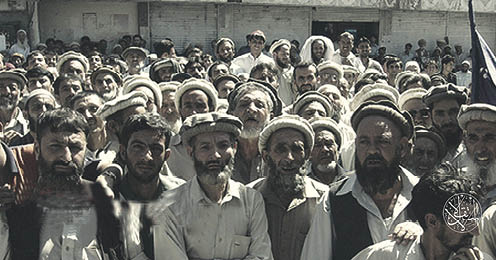
Pakistan and Bangladesh are spiralling into political turmoil, military overreach, and rising fundamentalism, creating instability on India’s flanks. Army dominance in Pakistan and chaotic transitions in Bangladesh heighten risks for India, demanding vigilance, restraint, and a focus on India’s own economic and strategic stability
Pakistan’s Internal and External Conflicts
The current speculation in Pakistan is on the state of Imran Khan This cricketer turned politician has been in custody since August 23 and has been rarely seen in recent times -leading to speculations about his health, and perhaps even death. Even from jail, this one-time ‘selected’ Prime Minister has been the nemesis of the army and its Chief Asim Munir. (Their enmity goes back to the time when Imran tried to remove Munir as the DG ISI). His voice still carries mass appeal and his messages are still circulated across Pakistan. In fact, even while he was in jail and his party, the Pakistan Tehreek-e-Insaaf (PTI) banned from election, his candidates still managed to win the largest number of seats in the national elections of Feb 24, contesting as independents.
Imran could be forced to disappear into self-imposed exile, like so many prime ministers before or made to languish interminable in jail. But should he die or suffer serious health issues in custody – it could lead to violent street protests, which could be yet another crisis for Pakistan, or rather, its Army that rules it. But the removal of Imran Khan from politics by any means could be the final nail in the political structure of Pakistan.
But then, the political structure of Pakistan has always hinged upon the Army. It has only become more so under General Asim Munir – now self-promoted as Field Marshal. His predecessor General Javed Bajwa was more balanced in outlook, realising that peace and stability was essential for Pakistan’s growth. Munir has proved to be more rabid and fundamentalist than any of the earlier chiefs – even more than Zia-Ul-Haq. In fact, his only claim to fame is that he knows the Quran by heart. Ever since he took over the Pakistani army three years ago, he consolidated his power ruthlessly. He imprisoned Imran Khan, got in the new pliant ‘selected’ government of Shehbaz Sharif, clamped down on PTI leaders and supporters after the riots of May 24, sacked dissident generals, and followed an increasing religious hard-line that led to the terrorist attack on Pahalgam, and the four-day war between India and Pakistan in May.
Munir has further cemented his power by pushing through the 27th Amendment, which gives which the Army Chief unprecedented powers. The Act was rubber stamped and passed by the puppet parliament in just nine minutes without debate, and was the Pakistani army’s most successful coup, carried out without even using tanks or its infamous 111 Infantry Brigade.
Under this act, the Army Chief has been appointed as Chief of Defence Forces with complete authority over all three forces. It gives him a further five-year term, and a lifetime post of Field Marshal, providing legal immunity for life. (Perhaps the lesson was learnt from the fate of another dictator – General Parvez Musharraf, who was sentenced to death after he fled Pakistan). It gives the army precedence over the judiciary and radically supersedes the powers of the Supreme Court. It also gives the army control of the nation’s nuclear weapons without civilian checks and balances. This is an ominous step and can have dangerous consequences for Pakistan and its neighbours.
To its own population, the Pakistani Army has projected itself as the victor in the four-day war with India. This has bought it back into relevance again. Those in the upper echelons know the damage imposed by Indian attacks, especially on the last night of the war, when 11 airbases and radar stations were hit and rendered inoperable. This could have been exploited to inflict even more crippling damage had the war gone on for even a day more. Unfortunately, they chose to believe their own narrative of a small power punching way above their weight to successfully stave off a much larger adversary.
This narrative has been touted even before the international media and by parroting Trump’s line that he helped bring about the Indo-Pak ceasefire, Pakistan has won his favour once again. Munir has emerged as Trump’s favourite military dictator. The US has been wooed with promises of access to Pakistan’s energy reserves – though geological exploration shows that it holds just around 350 million barrels of proven reserves – a meagre amount which will not be cost-effective to extract. They have also promised access to its rare earths – again with no mines or known deposits. The only thing Pakistan has is its strategic location and it has offered the development of Pasni Port to USA – something which would give it a base in the Indian Ocean to keep an eye on Iran, Afghanistan and even China. But perhaps the most lucrative carrot was the offering of Pakistan’s Crypto Council for digital finance transactions to the World Liberty Financial – a crypto firm linked to the Trump family.
Besides getting back in the USA’s good books – for the time being at least – Pakistan has also mended fences with Saudi Arabia, whom they had antagonised earlier. The signing of the Mutual Defence Agreement between the two nations implies and the promise of even sharing nuclear weaponry, will impact India and its own relations with Saudi Arabia. Pakistan’s wooing of USA and Saudi may embolden it to continue its policy of sponsoring terrorism in India and can even re-raise the Kashmir issue, knowing that it has a hedge to fall back to, should its actions rebound.
Yet, Pak-US ties, may impact equations with China which would not welcome US presence in its vassal state. Pakistan-China ties will always remain steady and China will continue propping it, if only to tie down India on that front. But the $64 billion CPEC is not showing returns, and Chinese investments are drying. The offer of Pasni port to USA, which is just eighty kilometres from Gwadar could be a major clash of interest. This could rebound later, but then Pakistan has always chosen short-term benefits over long-term goals.
Even on its Western borders, relations with Afghanistan have gone downhill – especially after its airstrike in Kabul and Khost in September, which killed 12 civilians. The strike was directed at Noor Wali Mehsud, the head of the Tehrik-e-Taliban Pakistan, (TTP) which Pakistan accuses the Taliban of sheltering on its soil. Afghan retaliation led to clashes along the 2400 km long Durand Line – which the Taliban regime does not recognise and calls ‘The Hypothetical Line.’ The TTP too intensified attacks not just in Waziristan but across the country, including a suicide attack on the High Court in Islamabad. This strike came when the Afghan Foreign Minister was in Delhi for talks, leading to the refrain that the attack was a handiwork of ‘Indian sponsored Terrorists’ – a term they use for all militant activity on their soil.
Peace talks in Doha have failed and another Pakistani airstrike on 25th November in Kabul, killing nine children will invite further retaliation. The shoe is quite squarely on the other foot now. With Baloch freedom fighters also intensifying its actions, both its western provinces of Waziristan and Baluchistan are fast slipping away from government control. And now the strikes are coming to its very heartland.
Bangladesh on the Boil
Bangladesh continues to be on the boil since July 24, when Sheikh Hasina was ousted in the student uprising and forced to flee to India. Since then, it has been in a state of political turmoil and internal chaos. It has taken another turn, when the International Crimes Tribunal (ironically set up by Hasina herself against the 1971 war criminals) sentenced her to death for the killing of protesters during the uprising. India rightly, has refused to extradite her and send her back as demanded – a step that will further vitiate the already souring relationship with the new regime in Dhaka.
When Mohammed Yunus took over as interim Prime Minister, he projected himself as a Nelson Mandela who would provide a healing touch to his fractured country. Instead, his nation has plunged into anarchy, with violence against minorities, the vandalization of Sheikh Mujiber Rehman’s home and properties, the targeting of Awami League cadres – of whom around 400 have been killed – and growing religious fundamentalism. Anti-Indian sentiment has also risen to the surface, which has been fanned by atrocious statements by top leaders warning of cutting of India’s vulnerable chicken’s neck and isolating its North Eastern states.
The national elections promised in February 26 could prove to be a watershed moment for the country. The Bangladesh National Party, back from political wilderness, is expected to come in power with its allies. The ageing Begum Khaleda Zia is in poor health and her son Tarique Rahman could be projected as the Prime Ministerial candidate. Other parties like the hard-line Jamaat-e-Islamia – which had been banned by Sheikh Hasina – and even the National Citizens Party, recently founded by the firebrand student leader, Nahid Islam (who had orchestrated the student riots of July 24) could play a major role in government formation. Both are rabidly anti-India, and this stance could reflect in subsequent government policies.
The Awami League has been banned from participating in the forthcoming elections, but is still a force to be reckoned with. It holds a large dedicated cadre and has wide support within the country. Sheikh Hasina could nominate her son Joy, or daughter Putul as the face of the party to mobilise its supporters. Like Imran Khan’s banned PTI party in Pakistan, Awami League candidates could participate as independents, and like the PTI could still win a sizeable number of seats, maybe even emerge as the largest party.
Fortunately, the Bangladesh Army under its Chief, General Waker uz Zaman, has shown remarkable balance and maturity. It has remained apolitical and stayed in the background. But the Chief has advised the interim government to remain moderate, uphold law and order, and hold elections as promised. Their stance is a huge stabilising factor for the nation. But unfortunately, Bangladesh has a history of military coups. It has witnessed 29 attempted coups and seen two periods of military rule – from 1975-1990, and again from 2007 – 2009. The continued turbulence and sense of drift could draw the army in again.
Implications for India
Even Nepal has been scorched when students took to the streets in September to protest against a social media ban imposed by the government. That was the trigger to release the pent-up anger and frustration at the rampant corruption and ineptitude of the self-serving political parties. The Nepali Congress, Maoists and the Communists have played musical chairs with the seats of power, even as their country tottered in economic and social churn. The protests forced the army to step in, parliament was dissolved and an interim government appointed. Such has been the frustration with the political parties, that there have been calls for a return to monarchy. Hopefully the next elections – tentatively scheduled in March 26, will provide much need political stability and economic development. That will also help India rebuild ties with this beautiful mountain kingdom.
It is a dangerous that neighbours on both flanks are falling into political anarchy and religious fundamentalism. Both nations are also facing acute economic and social churn that will only be aggravated if their chaos continues. Both nations also harbour strong anti-Indian sentiments. Pakistan has been sponsoring terrorism on Indian soil for decades, and this policy is unlikely to change. In Bangladesh, Sheikh Hasina took action against anti-India groups, but a new regime could actually encourage them. Fundamentalists on either side could launch a terror attack in India – which could escalate and go out of control.
China will exploit this situation to advantage. It has already made deep inroads in both countries. It suits them to tie down India with skirmishes against Pakistan, and a troubled relationship with Bangladesh. This will affect our regional standing, put paid to our plans for regional connectivity, and divert us from economic growth.
At the moment – like we did with the Taliban regime in Afghanistan – we should adopt a ‘wait and watch’ posture. Hopefully, Bangladesh will still get back on the rails. Pakistan of course, will continue in the same manner that it has for decades. However, its growing internal instability could tie down the army and prevent it from causing mischief in India. But the same internal instability could also be used by the Army to foster tensions with India, divert the attention of its own people, and project itself again as the sole saviour of Pakistan. They would also re-raise the Kashmir issue – which is fast going into irrelevance.
The very instability on both flanks is cause for concern. But then, India can use its own political stability and strength to keep the threat at bay and not be diverted from its own path of economic growth. In our economic success lies long term strength and security.
